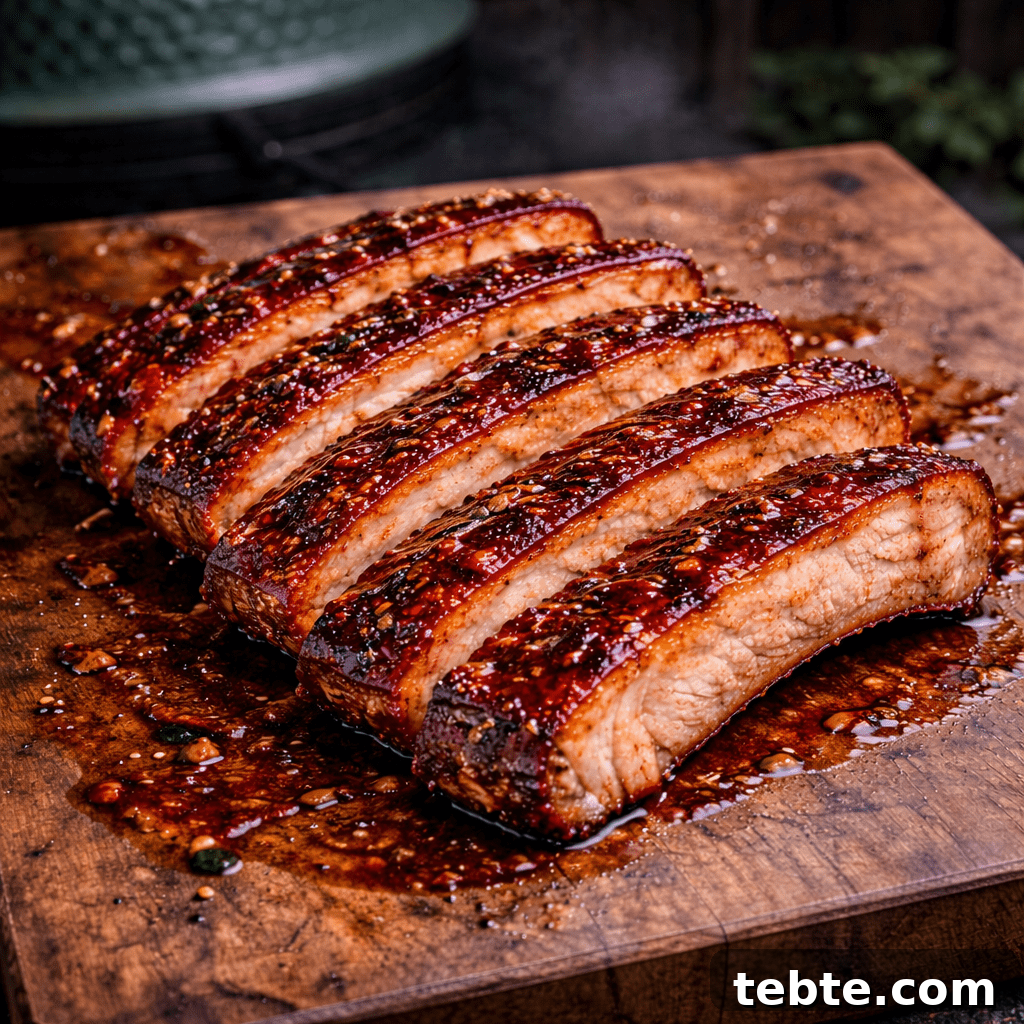
Mastering Spicy Gochujang Glazed Baby Back Ribs on the Big Green Egg is a great way to move beyond standard barbecue and explore a sweet-savory fusion. This recipe blends American low-and-slow techniques with the fermented depth of Korean cuisine. It takes advantage of the Big Green Egg’s heat retention to build a flavorful bark without wrapping the meat in foil. The earthy heat of gochujang mixed into a classic BBQ base creates a glaze that’s both familiar and exciting. Skipping the wrap keeps the pork’s texture firm and satisfying instead of overly soft.
The key is balancing clean hickory smoke with the intensity of the fermented chili paste. Maintain a steady 250°F so fat renders slowly while the pork soaks up smoke from lump charcoal. This produces a mahogany crust that becomes a perfect canvas for the final glaze. Using a convEGGtor for indirect heat helps create a consistent environment similar to a smokehouse, delivering ribs with a nice bite-through texture and a lingering spicy finish.
Step 1: Trimming and Seasoning for the Perfect Bark
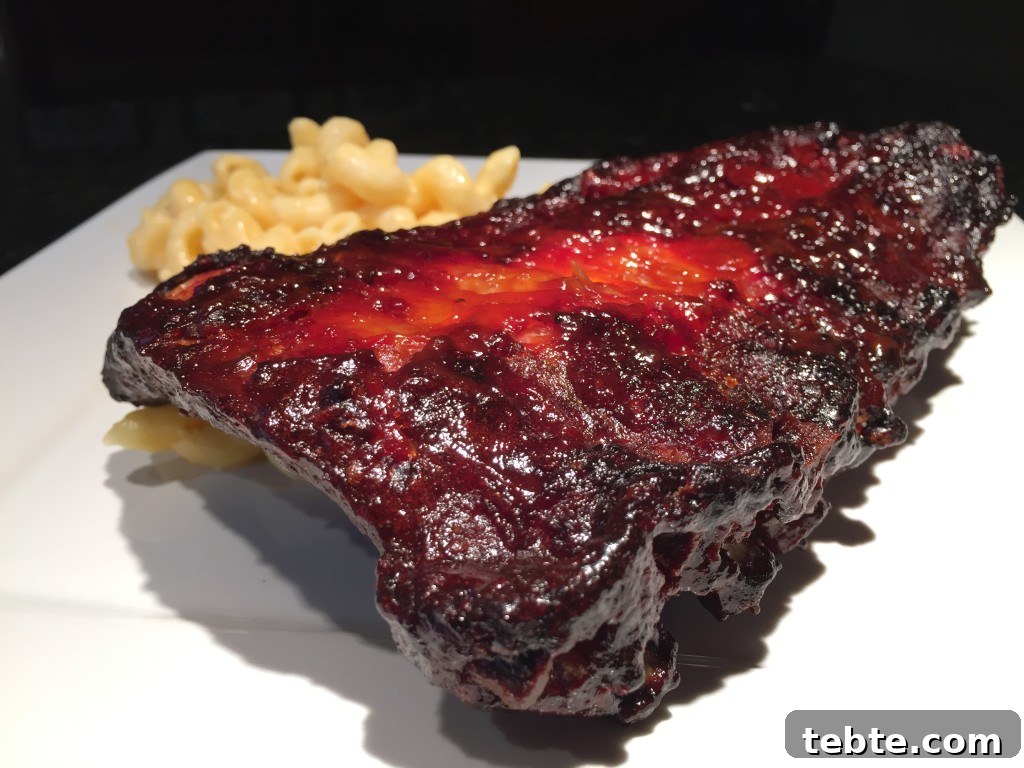
Start with a clean, uniform rack. Remove the silver skin membrane from the bone side using a paper towel and a butter knife so smoke and seasoning can penetrate both sides. Trim any loose flaps of meat or excess thick fat to ensure even cooking. Because baby back ribs are smaller and more delicate than spare ribs, a tidy surface is essential for developing an exceptional crust.
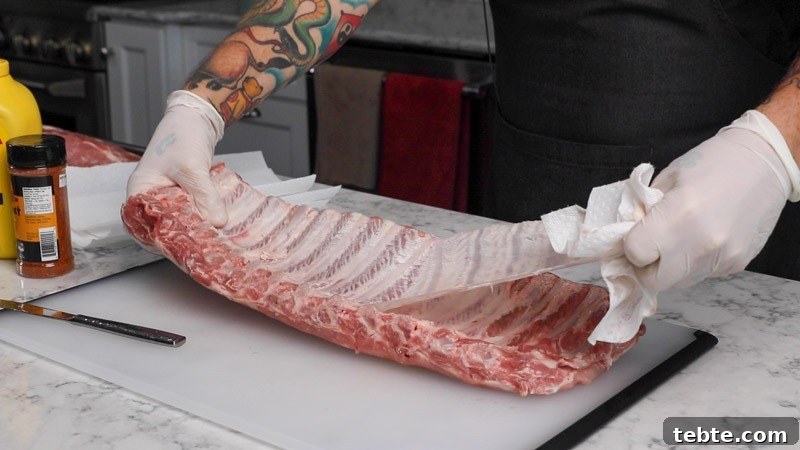
Create a tacky surface so the rub will adhere during the long smoke. Spread a thin layer of French’s mustard over the ribs to act as a binder, then apply your dry rub (three tablespoons; the recipe suggests Meat Church Honey Hog). The mustard flavor will disappear during cooking, leaving a foundation for a rich mahogany bark. Allow the coated ribs to rest about 15 minutes while you stabilize the Big Green Egg at 250°F.
Step 2: Mixing the Secret Fusion Sauce
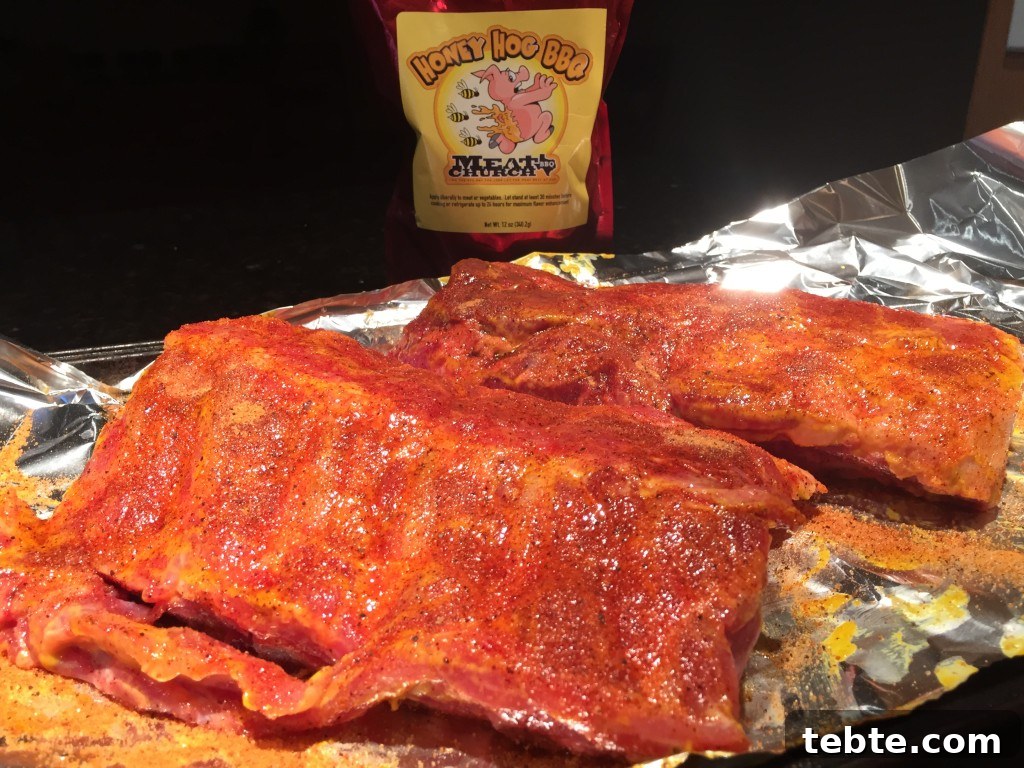
The glaze marries American BBQ sweetness with the savory, fermented character of Korean gochujang. Combine two tablespoons of gochujang paste with one cup of a classic BBQ sauce such as Sweet Baby Ray’s. Whisk until the thick paste is fully incorporated and the glaze is smooth. Gochujang brings a deep umami note and a sticky texture that helps the glaze adhere to the bark. Set the sauce aside until the final hour of smoking.
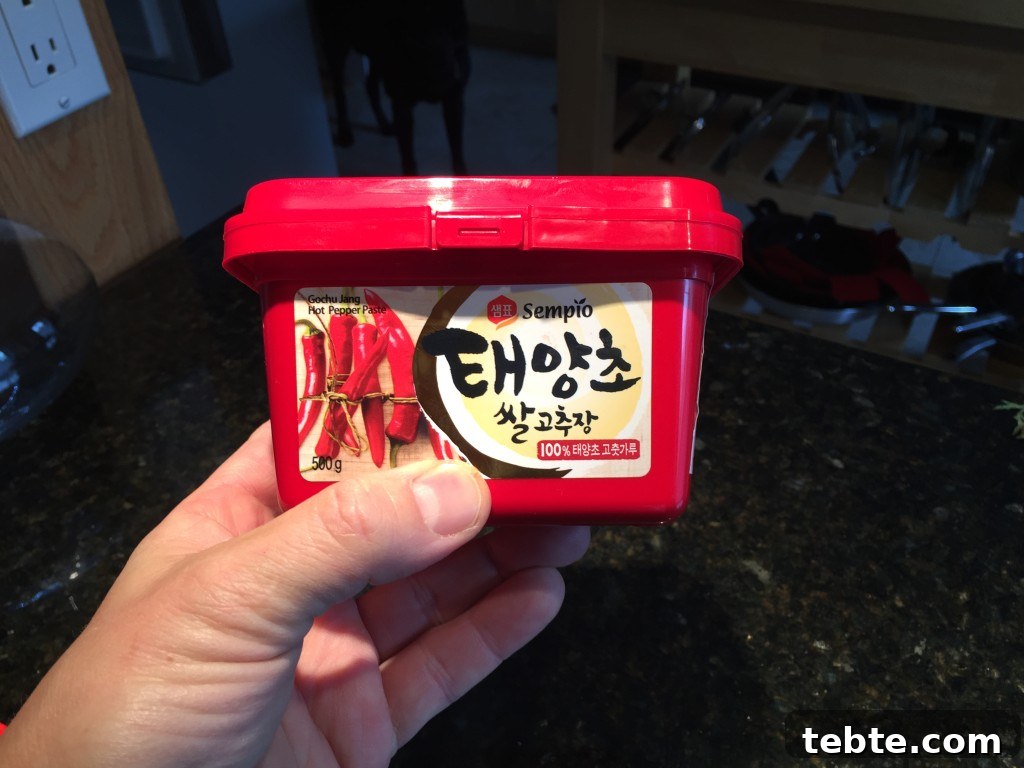
Step 3: The Big Green Egg Setup and the Clean Hickory Smoke
Stabilize your Big Green Egg at 250°F before putting the ribs on. Light lump charcoal and let the ceramic walls heat for at least 20 minutes so the temperature remains steady during the long smoke. Use the convEGGtor for indirect cooking to prevent scorching. Because baby back ribs are leaner, a gentle, consistent environment helps render fat without drying the meat.
Add three to four chunks of hickory to the hot coals for a robust smoke flavor. Wait for the thick white smoke to clear and become a thin, light gray or blue smoke before placing the ribs in the grill. This ensures a clean, aromatic smoke rather than a bitter, over-smoked taste. Hickory provides a savory backbone that complements the fermented heat of the gochujang and helps the rub form a firm, flavorful bark. Once the temperature is stable and smoke is clean, plan for the first three hours of the cook.
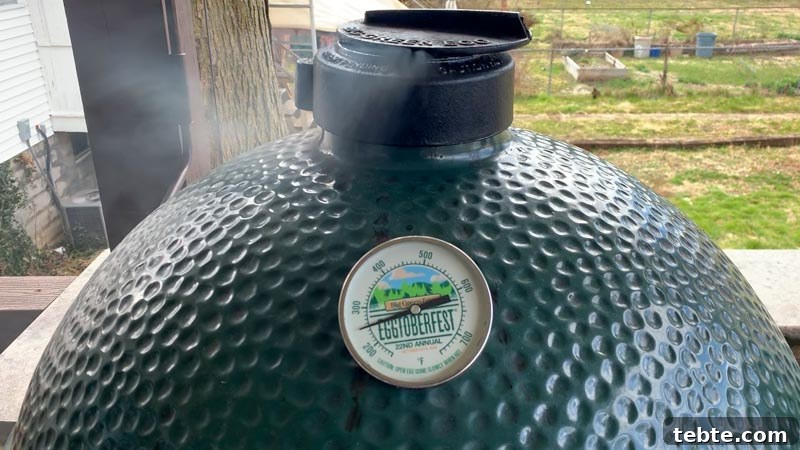
Step 4: The Spritzing Routine and Building the Bark
Maintain surface moisture so smoke continues to adhere while the bark forms. Check the ribs after the first hour to evaluate crust development and spot any dry areas. Use a spritz of equal parts apple juice and apple cider vinegar to keep the surface supple—apple juice aids caramelization while vinegar tenderizes the meat.
Spritz every hour for the first three hours, concentrating on the meatier sections and avoiding spots where fat is already rendering. Work quickly when opening the Egg so heat loss is minimal. This routine helps the ribs develop a deep mahogany color without drying out, and encourages a pronounced smoke ring. At the three-hour mark, prepare to apply the final glaze.
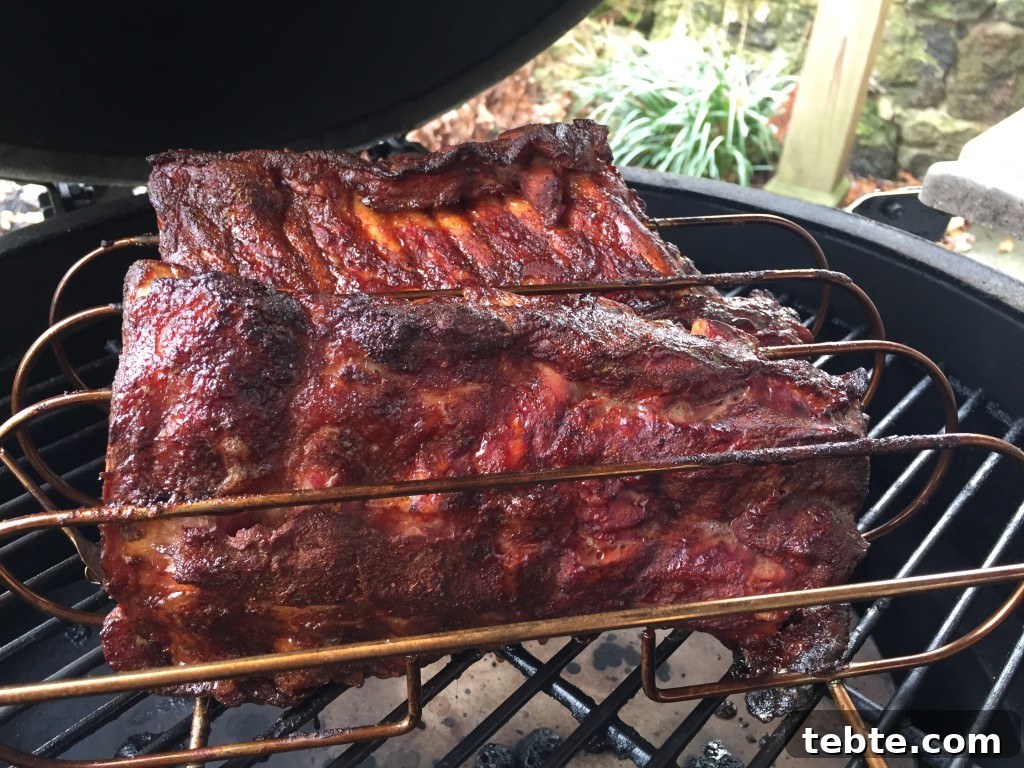
Step 5: Applying the Gochujang Glaze and the Finish
Apply the sauce so the sugars caramelize without burning. At the three-hour mark, brush the ribs with the gochujang-BBQ glaze using a silicone brush for an even coat. Return the glazed ribs to indirect heat for another one to two hours, monitoring until the meat pulls back about a quarter-inch from the bone ends.
Aim for an internal temperature around 200°F–205°F for tenderness. The bend test—lifting the rack from the center with tongs and observing a slight crack but not complete fall-apart—confirms doneness. When the glaze has set and the ribs pass the test, remove them and rest for ten minutes before slicing.
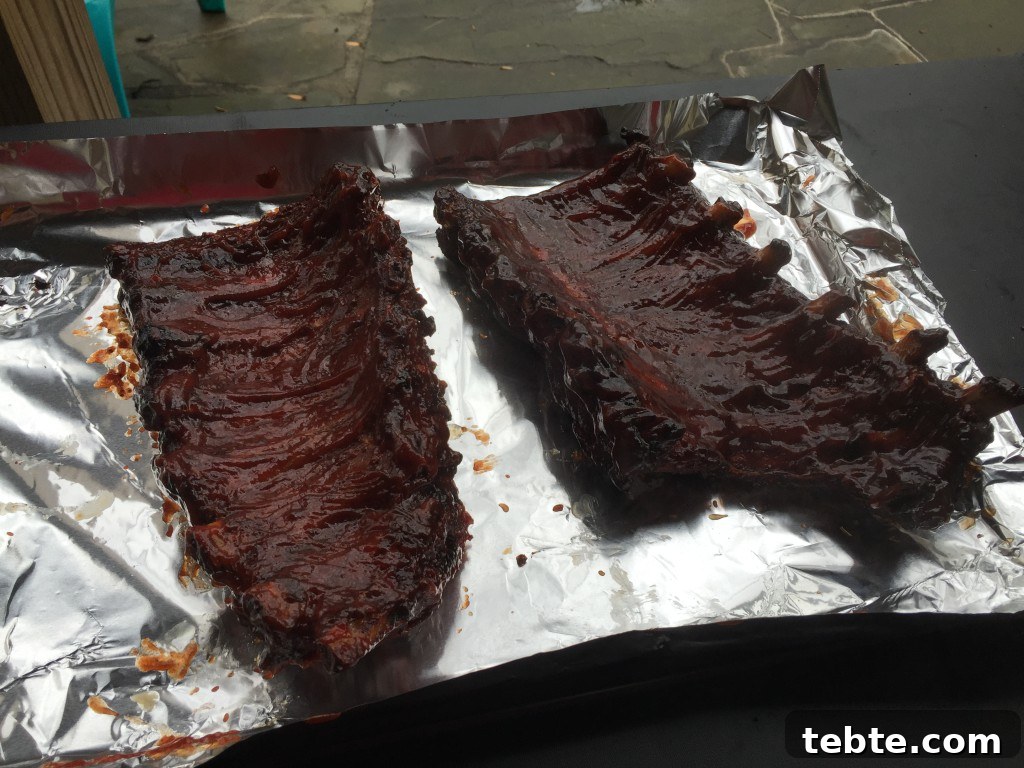
Final Thoughts: The Spicy Gochujang Fusion Experience
These Spicy Gochujang Glazed Baby Back Ribs combine classic American smoke with the bold fermentation of Korean cuisine. The convEGGtor keeps a stable low-and-slow environment so lean pork stays juicy while the exterior turns sticky and mahogany. The no-wrap method preserves a satisfying bite-through texture that showcases the meat. With gochujang’s unique depth, these ribs make a memorable addition to any backyard gathering.
People Also Ask (PAA)
- What does gochujang taste like in BBQ sauce? Expect a deeply savory, slightly sweet, fermented chili flavor. Gochujang adds umami and a lingering, complex funk that pairs well with sweet BBQ sauces, while the sugars in the sauce and rub balance the heat.
- Can I use this glaze on spare ribs? Yes. Spare ribs work well with this glaze and the higher fat content complements the bold fermented heat. Expect the total cook time to increase by about one to two hours; use the bend test to confirm doneness.
- How do I store and reheat leftover gochujang ribs? Store leftovers airtight or vacuum-sealed. Reheat slowly in a 250°F oven with a splash of apple juice to maintain moisture. Reheating gently preserves the glaze and texture better than a microwave.
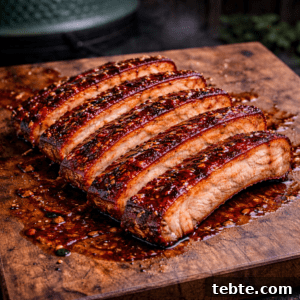
Spicy Gochujang Glazed Baby Back Ribs on the Big Green Egg
Ingredients
- 1 rack Rack of Baby Back Ribs
- 3 tbsp Your favorite rub (I used Meat Church Honey Hog)
- 2 tsp French’s Mustard
- 1 cup Sweet Baby Ray’s Classic BBQ Sauce
- 2 tbsp Gochujang Paste (from a Korean grocery)
- 1/2 cup apple juice (for spritz)
- 1/2 cup apple cider vinegar (for spritz)
Instructions
- Set up the Big Green Egg for indirect grilling with a convEGGtor and preheat to 250°F. Add 3–4 chunks of hickory for smoke flavor.
- Trim the ribs, remove the membrane, spread with yellow mustard, and apply the BBQ rub.
- Mix the Sweet Baby Ray’s BBQ sauce with gochujang paste and set aside.
- Smoke ribs for 3 hours, spritzing every hour after the first hour with a 1:1 mixture of apple juice and apple cider vinegar.
- After 3 hours, glaze the ribs with the gochujang-BBQ sauce and return to indirect heat.
- Continue cooking 1–2 hours more until the ribs pass the bend test and reach roughly 200°F–205°F. Rest 10 minutes before serving.
Nutrition information is approximate.