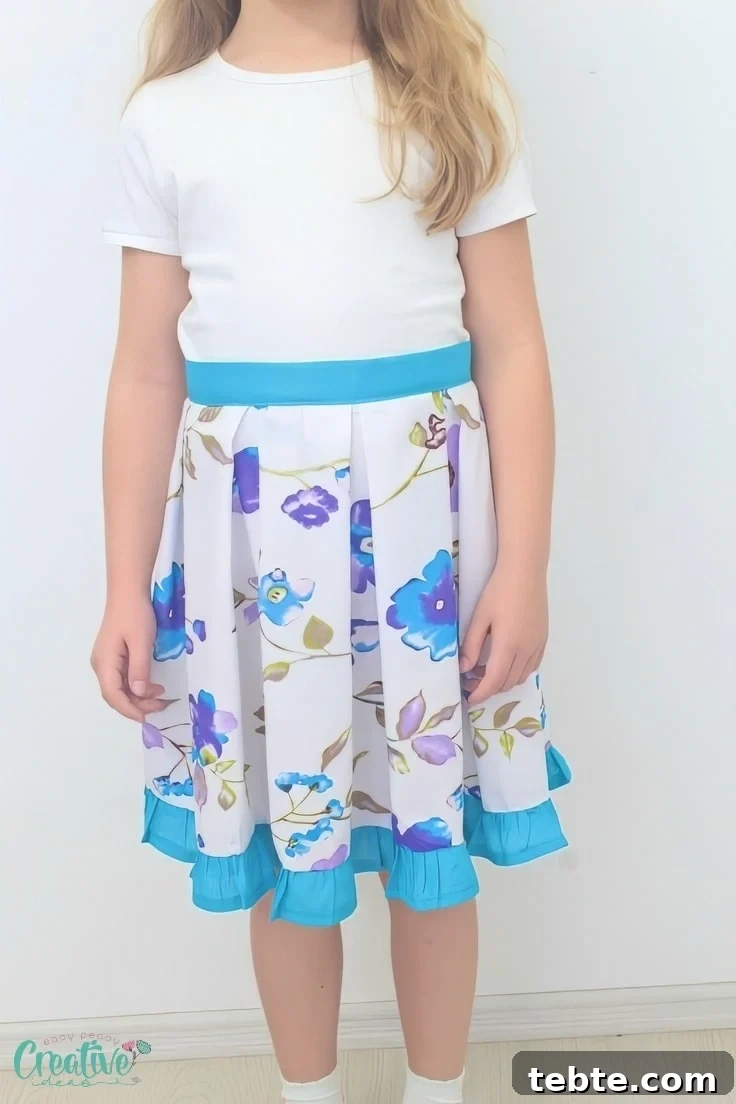
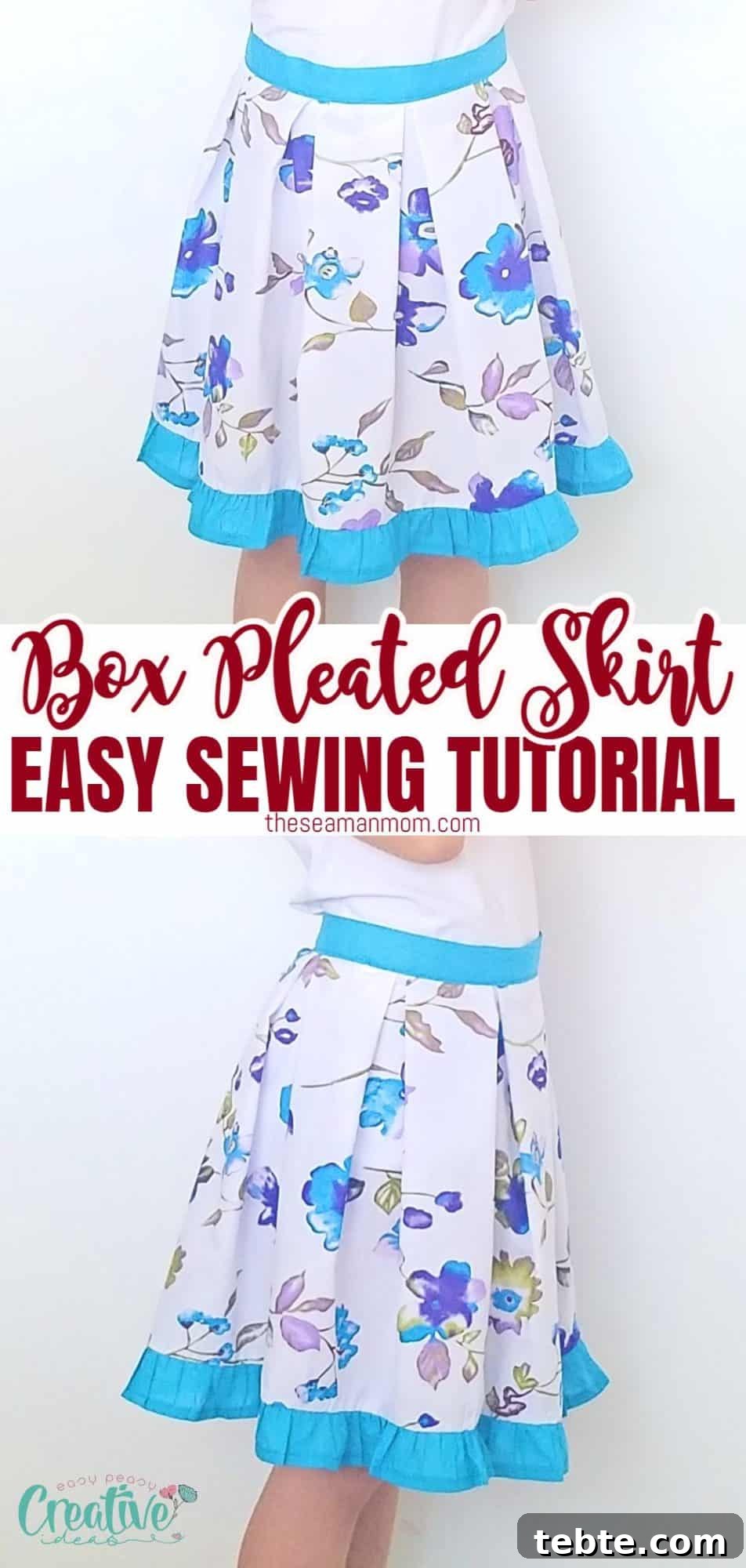
Creating a beautiful pleated skirt is simple with this box pleated skirt tutorial. No pattern is required, and the method works well for sewists of all skill levels. Follow the clear steps to make a charming skirt you’ll enjoy wearing.
Box pleated skirt tutorial
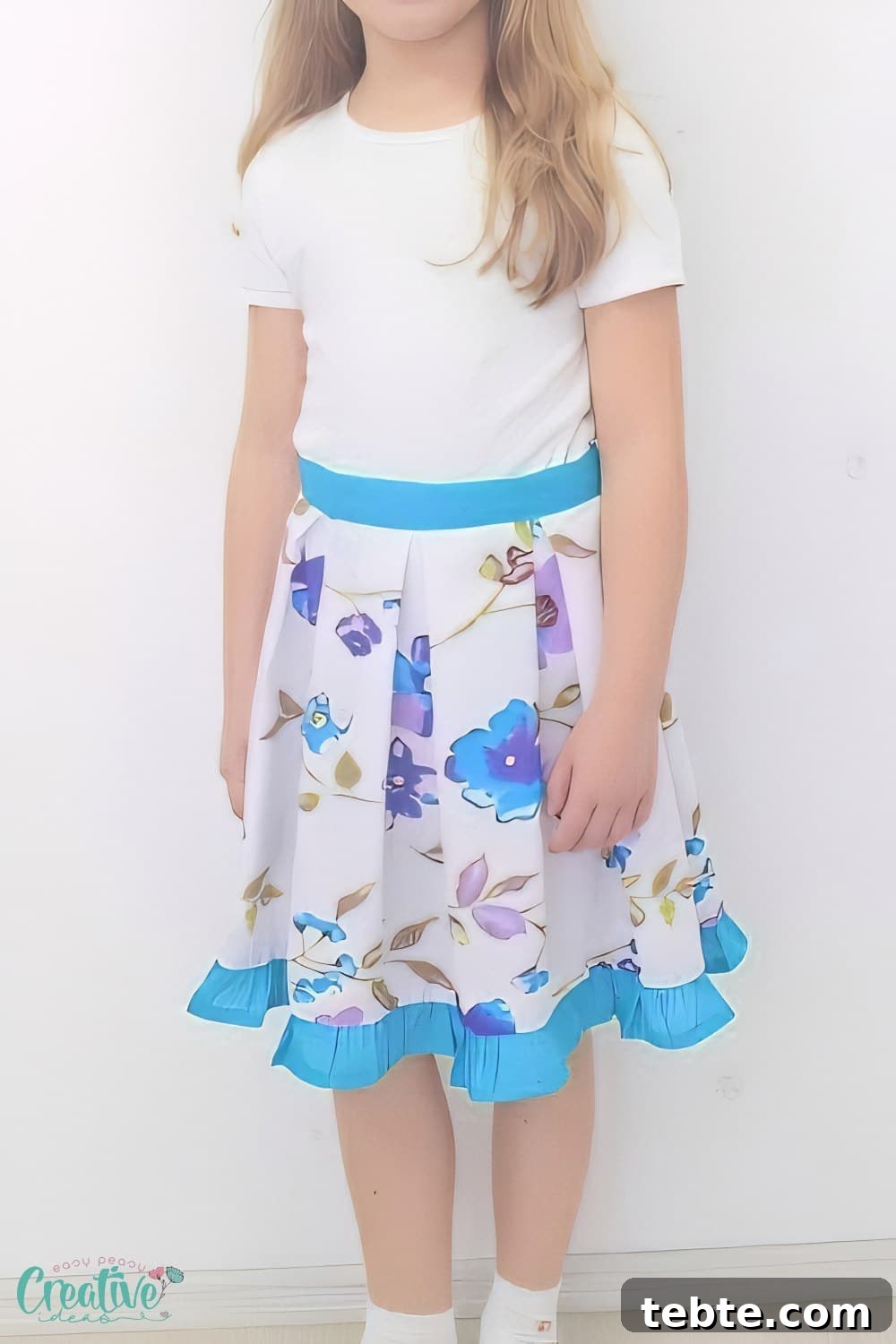
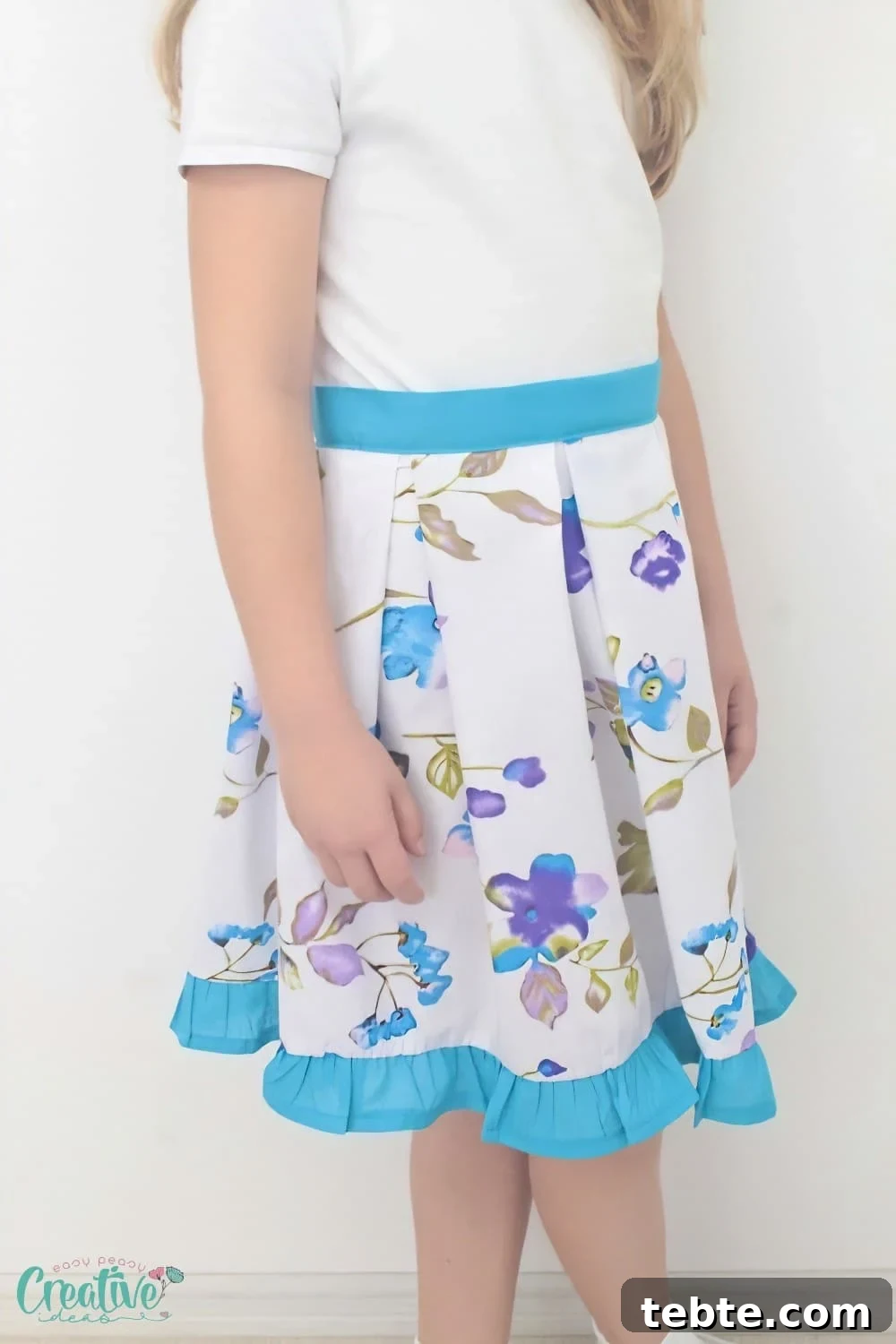
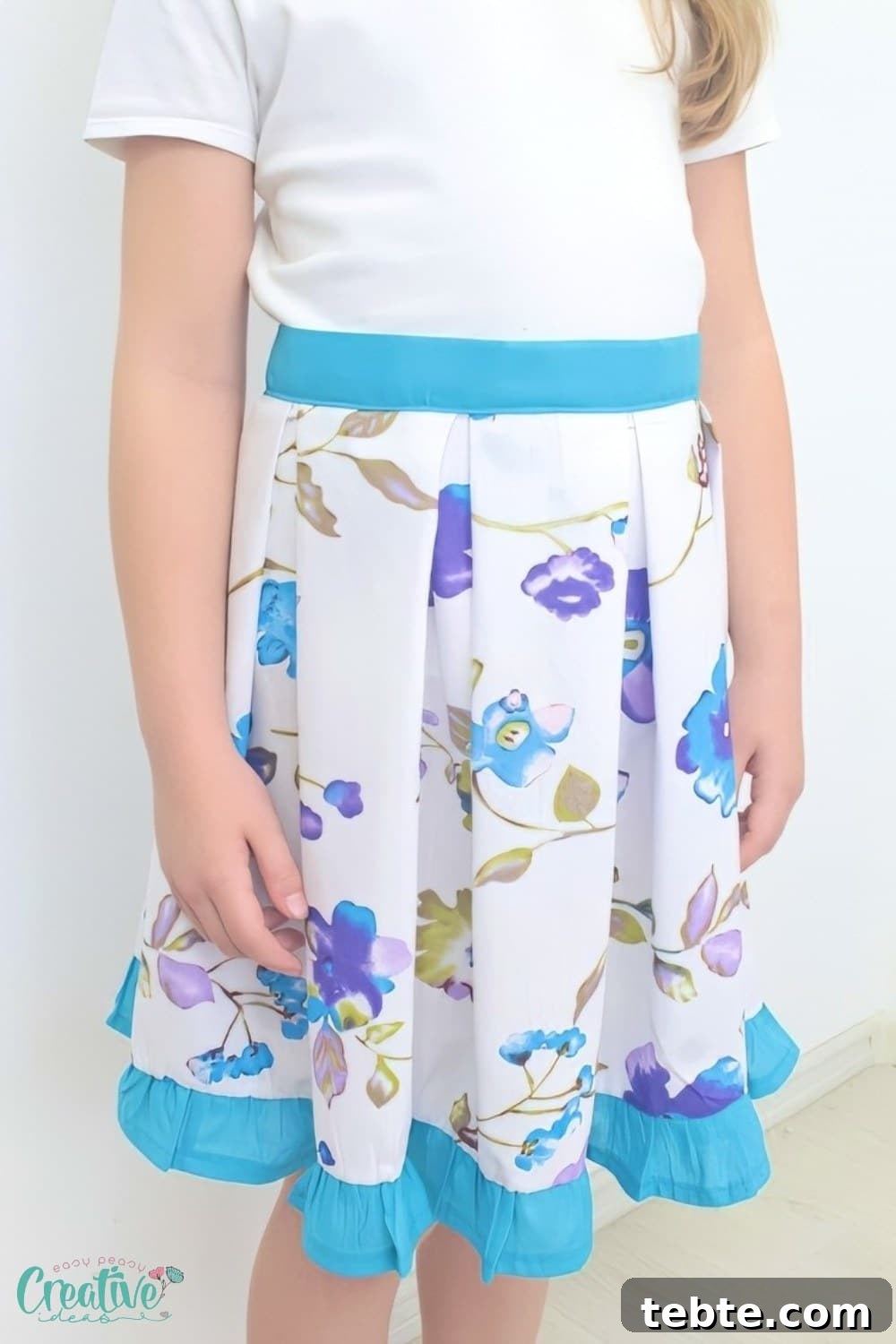
I enjoy sewing for my little one even more than sewing for myself. I wanted to make a skirt for her to echo my wrapped skirt, but adapted for a child. I settled on a box pleated skirt with a small ruffle hem to mirror my own skirt. The result was adorable and very wearable — my daughter loves it and so do I.
Other kids projects you might like:
- Easiest pillowcase dress
- Circle skirt with elastic waistband
- Reversible kids apron
- Round crossbody bag
- Reversible skirt tutorial
- Paper bag skirt
- 10 Minutes A-line skirt with elastic waist
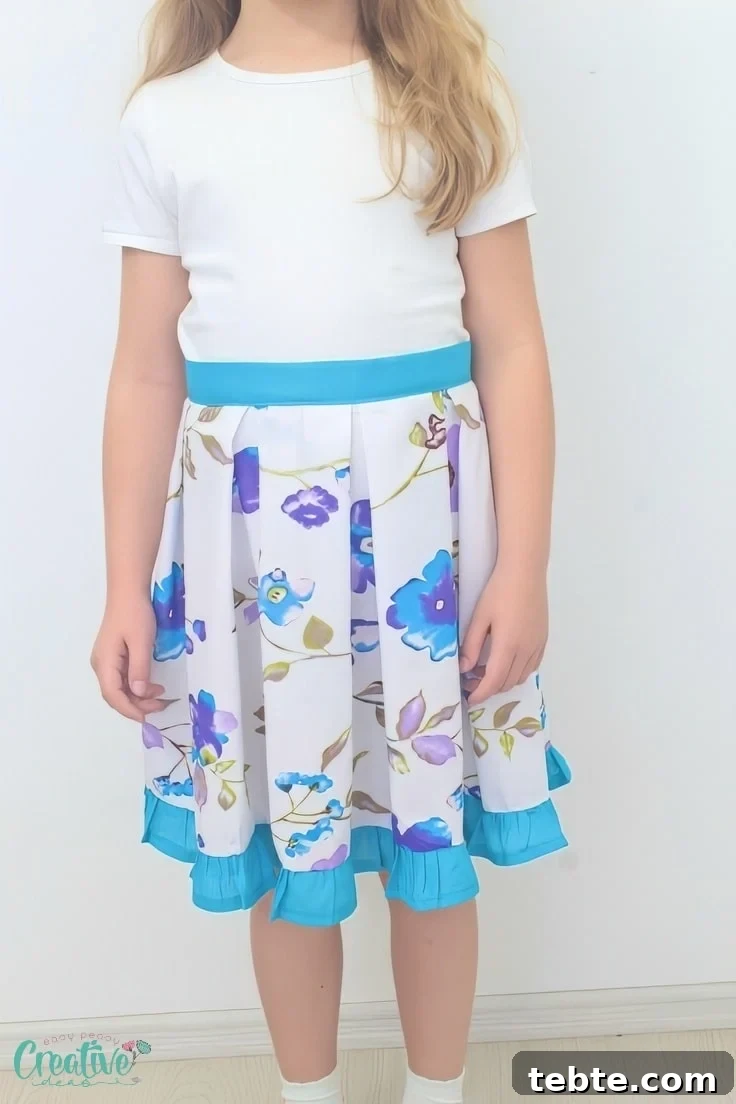
What is a box pleated skirt?
A box pleated skirt features evenly folded pleats that create a neat, structured silhouette. The pleats fold back-to-back so the skirt looks full and tailored. This style works for casual wear and more formal looks, and is often used in children’s clothing and uniforms because of its clean shape.
Which body shapes suit pleated skirts?
Box pleated skirts are versatile. The fullness adds volume for slimmer figures and the defined waist highlights curves on hourglass shapes. For pear-shaped figures, the structure can help balance proportions. Choosing the right length and pleat size helps achieve the most flattering result.
How much fabric do I need?
Fabric requirements depend on skirt length, fullness and the wearer’s size. For an average adult box pleated skirt plan on about 2 yards (1.8 m). For a child’s skirt, roughly 1 yard (0.9 m) is usually sufficient. If you want deeper pleats or extra fullness, add more fabric.
Best fabrics for box pleated skirts
Choose fabrics with enough body to hold the pleats, such as cotton, linen, wool blends, or midweight blends. Lightweight fabrics like silk or chiffon won’t hold crisp box pleats as well, though you can experiment if you prefer softer folds.
Do pleated skirts lose their pleats?
Pleats can relax over time depending on fabric and care. Proper washing, gentle drying and careful pressing help preserve pleats. Some fabrics respond well to steam pressing or a warm iron; others may need professional pressing to restore sharp creases.
How to wash box pleated skirts
Follow these guidelines to protect pleats: hand wash or use a delicate machine cycle with mild detergent and cool water. Avoid high heat when drying to prevent shrinkage or distortion. If ironing is needed, use a low to medium setting and a pressing cloth to avoid flattening or shining the fabric.
How hard is it to sew a pleated skirt?
Box pleats are among the easier pleat styles to sew — they’re wide and quick to fold. The main trick can be inserting a zipper, so practice with zippers if you’re new to them. The rest of this project uses simple straight stitching and one back seam, and you’ll base the construction on measurements rather than a paper pattern.
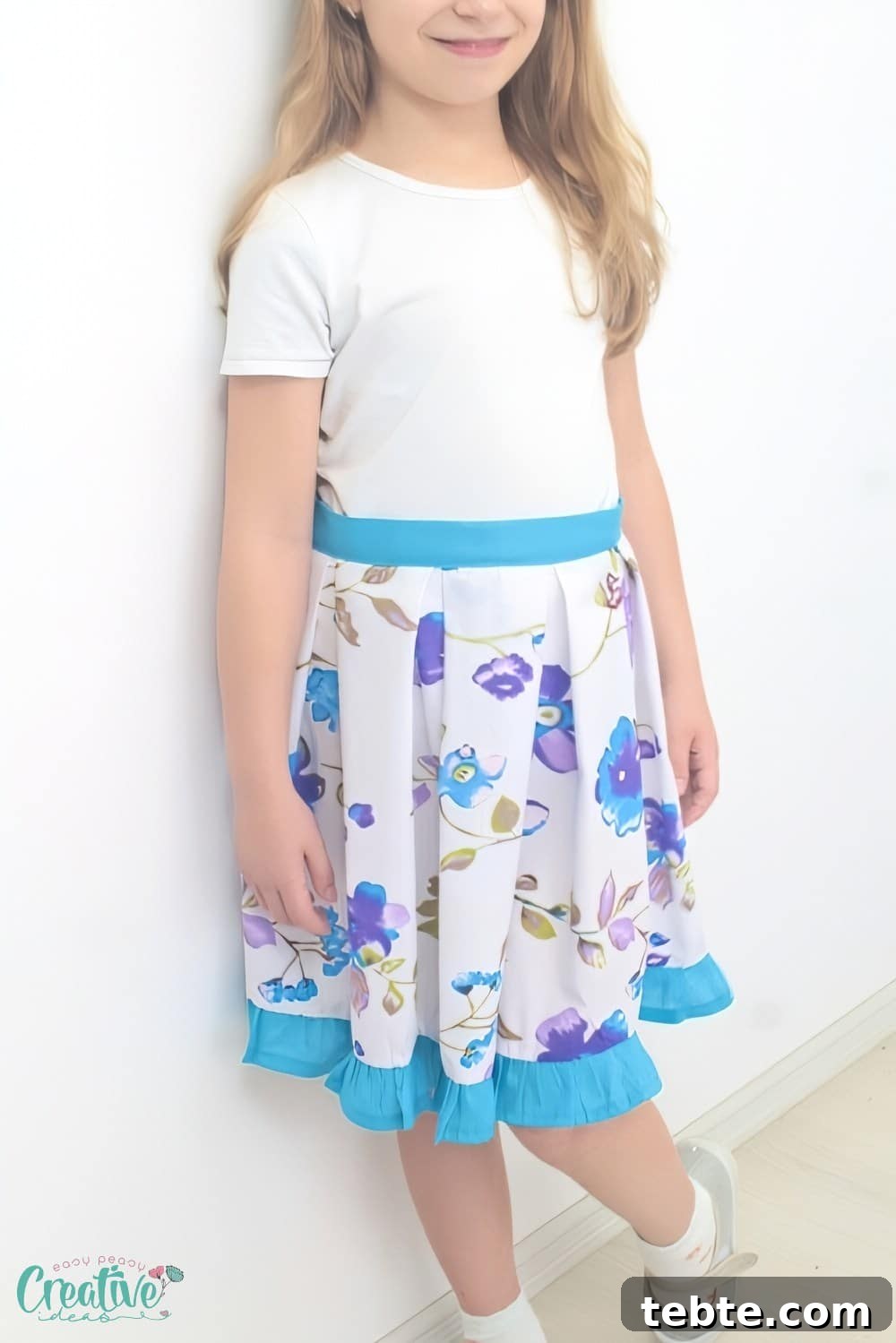
This skirt is a quick, satisfying sew. Pockets are difficult to add without upsetting the pleats, so I don’t recommend them for this simple version. Cotton is easy to work with and gives crisp pleats; knits can also look nice with a different finish and care.
How to make a box pleated skirt
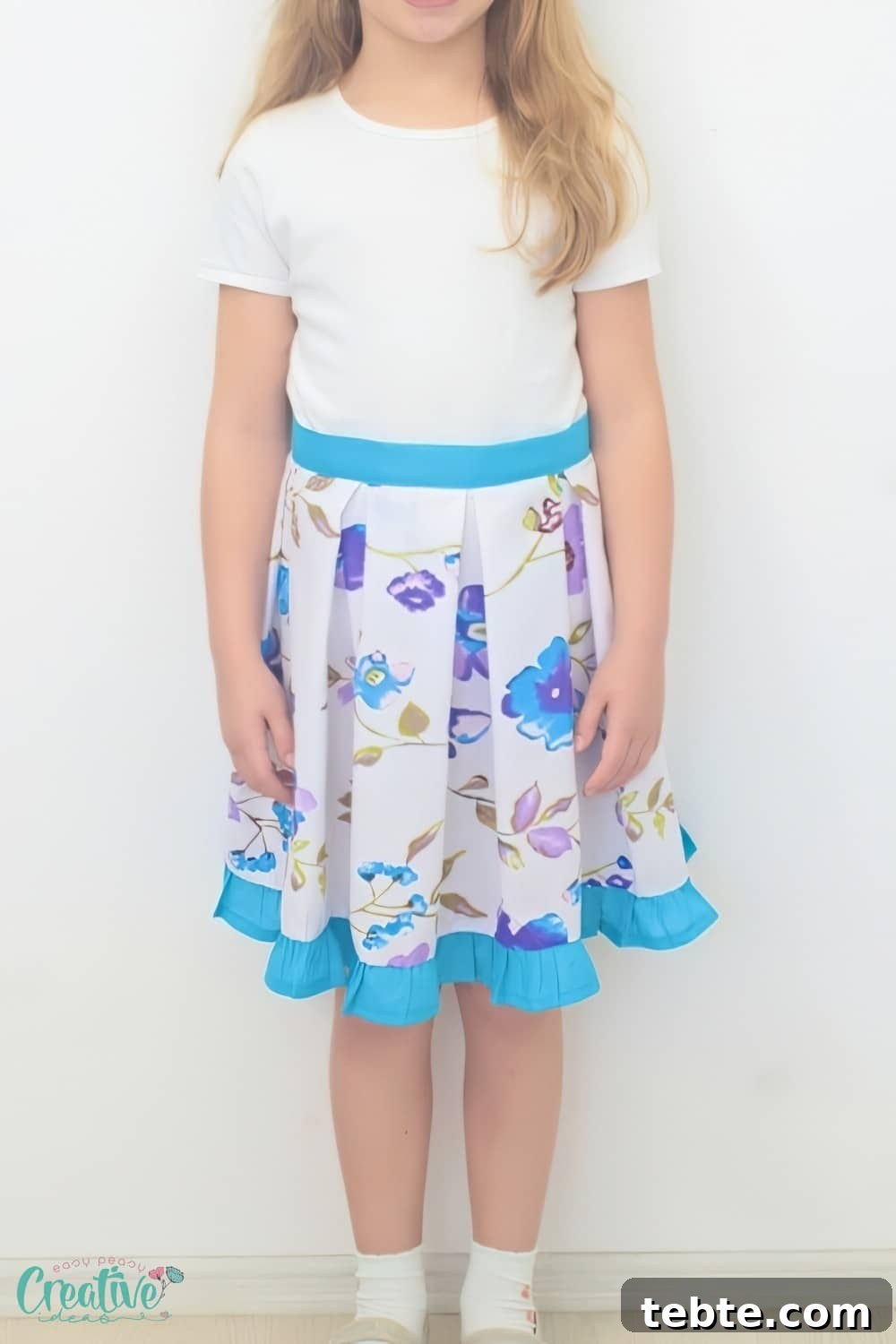
Materials
- Cotton fabric for the skirt
- Contrast cotton for waistband and ruffled hem
- Seam gauge or ruler
- Fabric pen or marker
- Scissors
- Zipper or invisible zipper
- Zipper foot
- Matching thread
- Sewing machine
- Pressing iron
- Serger or zig-zag stitch for finishing
Directions
Preparing the fabric
- Calculate fabric roughly by doubling the waist measurement for the skirt width, plus an inch total for the zipper allowance. For example, for a 24″ waist add 1″ allowance = 25″. If each pleat uses 6″ of fabric (3″ folded in, 3″ out) and you make eight pleats (8 × 3″ = 24″), add 1″ seam allowance and you’ll cut 50″ of fabric width for the skirt panel. Adjust pleat count and width to suit the look you want.
- Cut a long strip of fabric to the desired finished length, remembering to allow for the ruffle hem. For a knee-length skirt subtract the ruffle depth from the total length.
Making the box pleats
- Using a seam gauge, mark the fabric at 1½” intervals across the top edge, leaving ½” at the start and end for zipper allowance.
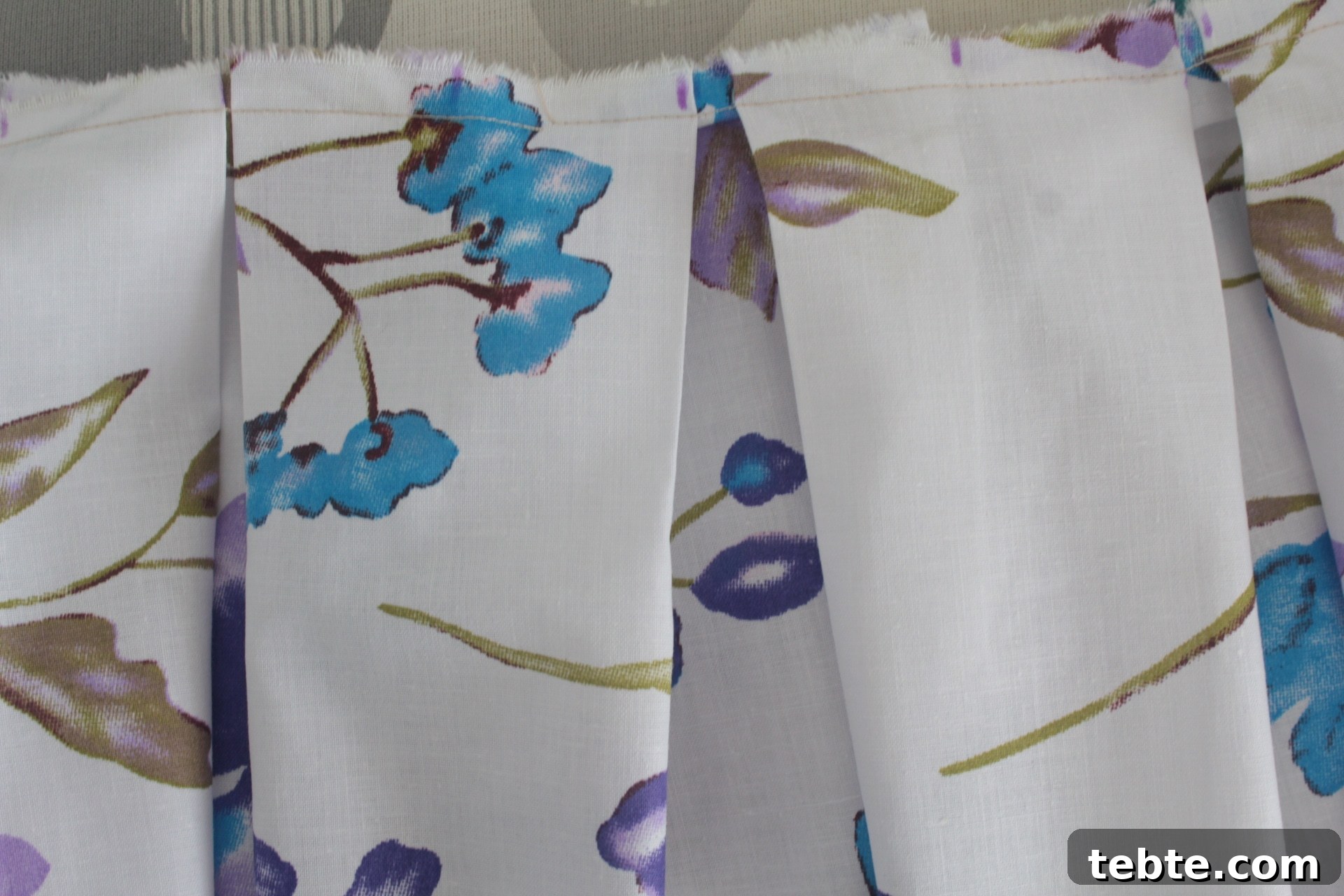
- Form each box pleat by bringing the first and third marks together, folding the second mark underneath so it meets the third on the back of the fabric. Pin in place.
- Continue by bringing the fourth and sixth marks together and tucking the fifth mark inside, and repeat for all pleats.
- Sew the top edge of the pleats with a ¼” seam allowance to secure them, then press the first few inches of each pleat with steam to set the folds.
Making the ruffle
- Cut a strip of contrast fabric twice the length of the skirt hem and the desired width for the ruffle (I used 3″ finished width).
- Hem one long edge by about 1″.
- Gather the opposite edge to create a ruffle to match the skirt hem length.
- With the skirt right side out and the ruffle wrong side out, place raw edges together and sew with a ¼” seam allowance. Finish the seam with a serger or zig-zag stitch, then fold and press the hem.
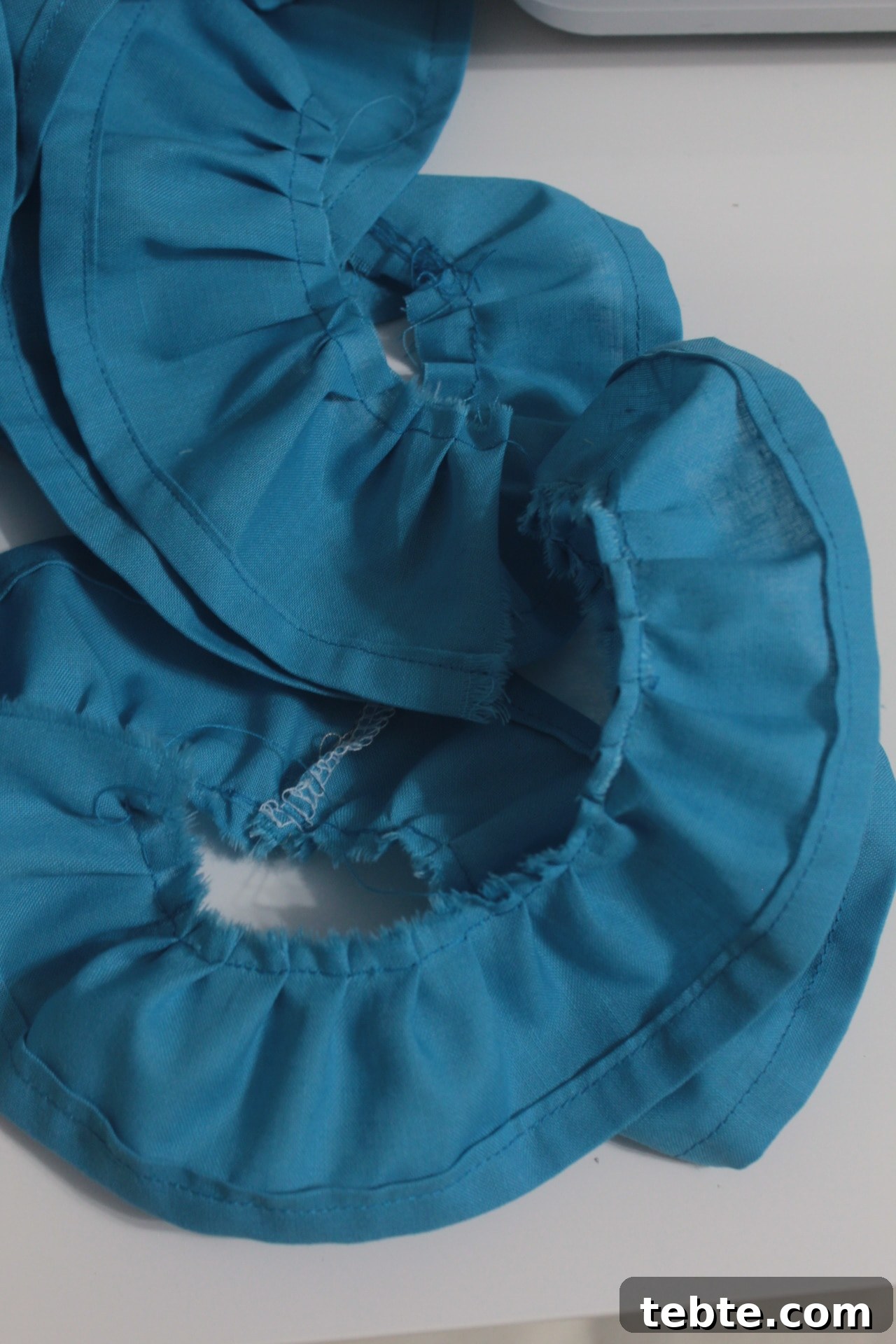
Attaching the zipper
- Fold the skirt in half width-wise, wrong sides together, and sew the back seam with a ½” allowance. This becomes the seam where you’ll install the zipper.
- Attach the zipper to the back seam. Positioning the zipper over a pleat can help disguise it if you prefer a subtle look.
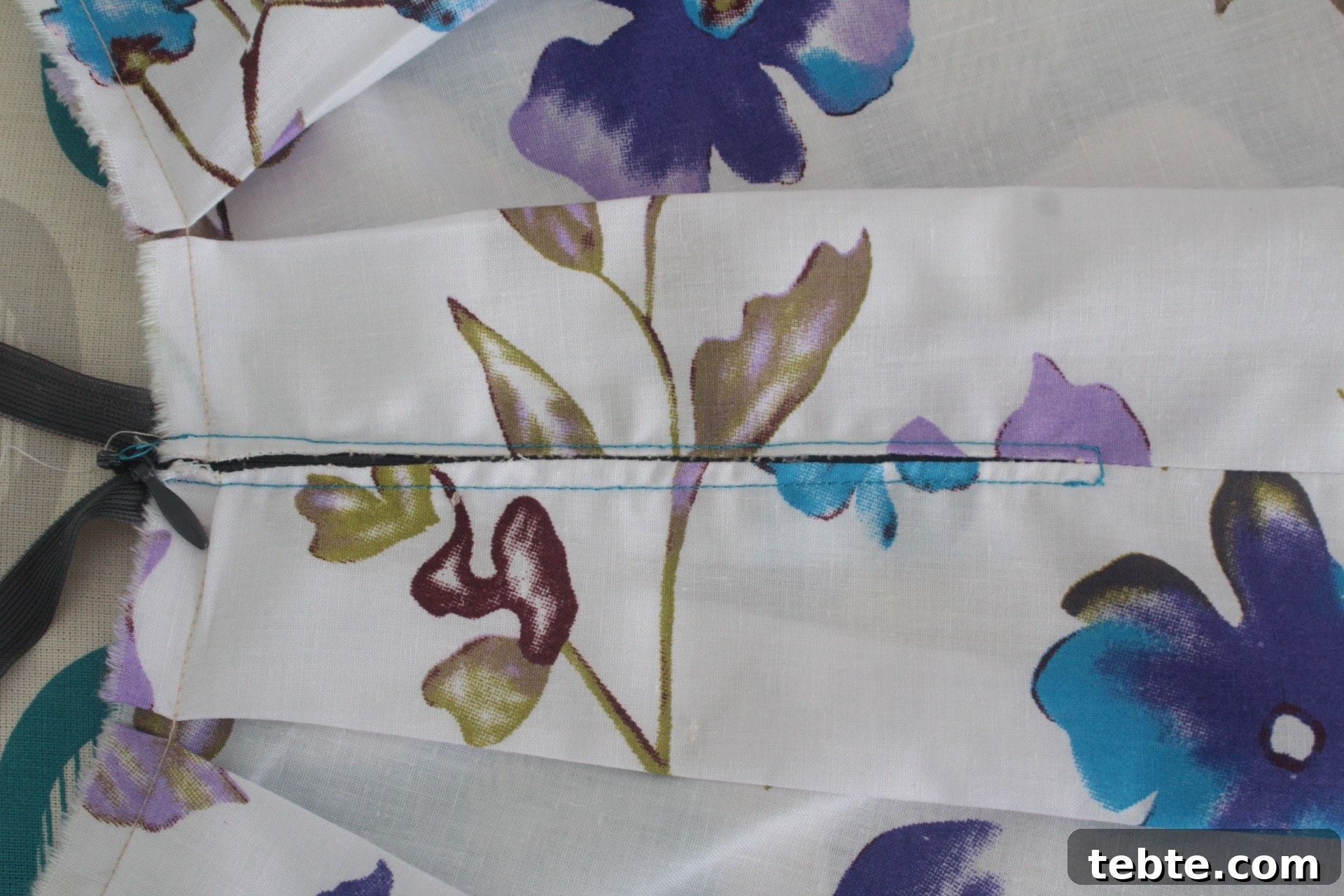
Making the waistband
- Cut a waistband strip the waist measurement plus ½” for folded ends. Make the strip about 4½” wide.
- Fold the strip in half lengthwise and press. Fold the raw ends in ¼” and press, then fold each half under and press to enclose raw edges.
- Sandwich the top edge of the skirt between the waistband folds and stitch close to the inner folded edge (about 1/8″) to secure.
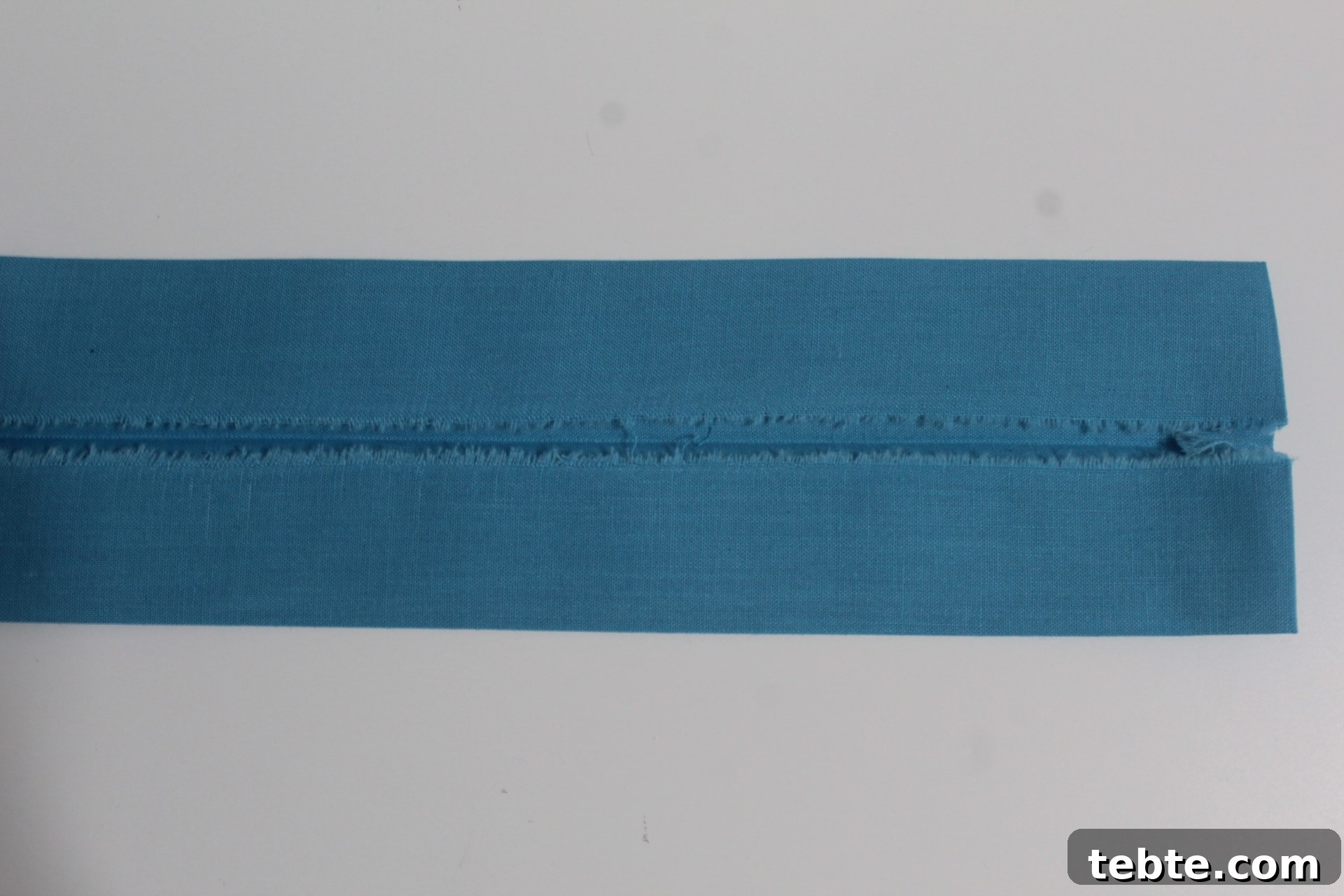
- Give the entire skirt a final press to ensure crisp pleats and a neat hem. Your box pleated skirt is complete — enjoy wearing it!
Feel free to adapt measurements, fabric choices and pleat spacing to suit your style. Experiment with different ruffle sizes or omit the ruffle for a classic box pleat. Most importantly, enjoy the sewing process and have fun creating a special garment for your child or yourself.
Pin to save for later
Print the sewing card

Box pleated skirt sewing tutorial
5 mins
1 hr
1 hr 5 mins
Materials
- Cotton fabric for skirt
- Contrast cotton for waistband and ruffled hem
- Zipper or invisible zipper
- Matching thread
Tools
- Zipper foot
- Scissors
- Fabric pen
- Seam gauge
- Sewing machine
- Pressing iron
- Serger
Instructions
- Cut fabric panel: double the waist measurement plus zipper allowance. For example, a 24″ waist + 1″ allowance = 25″; with eight pleats (8 × 3″) and an extra 1″ gives a total panel width around 50″. Adjust pleat count to change fullness.
- Choose skirt length and subtract ruffle allowance if adding a ruffled hem.
- Mark pleat lines across the top edge at 1½” intervals, leaving ½” at start and finish for the zipper.
- Form box pleats by bringing the 1st and 3rd marks together, tucking the 2nd mark under. Pin and repeat for each pleat.
- Sew the top of the pleats with a ¼” seam allowance to secure them. Press the top few inches of pleats with steam.
- Cut a contrast strip twice the hem length for the ruffle, hem one edge and gather the opposite edge to ruffle. Attach the ruffle to the skirt with raw edges together and a ¼” seam allowance, finish the seam, fold and press.
- Sew the back seam with a ½” allowance and install the zipper at the back seam.
- Prepare a waistband strip (waist measurement + ½” allowance, about 4½” wide), fold and press ends, then sandwich the skirt top and topstitch close to the inner fold to secure.
- Give the skirt a final press. Enjoy your finished box pleated skirt!
Most popular sewing projects:
- Corded bag handles
- Tips for hemming a curve
- Flutter sleeve dress
- How to laminate cotton fabric