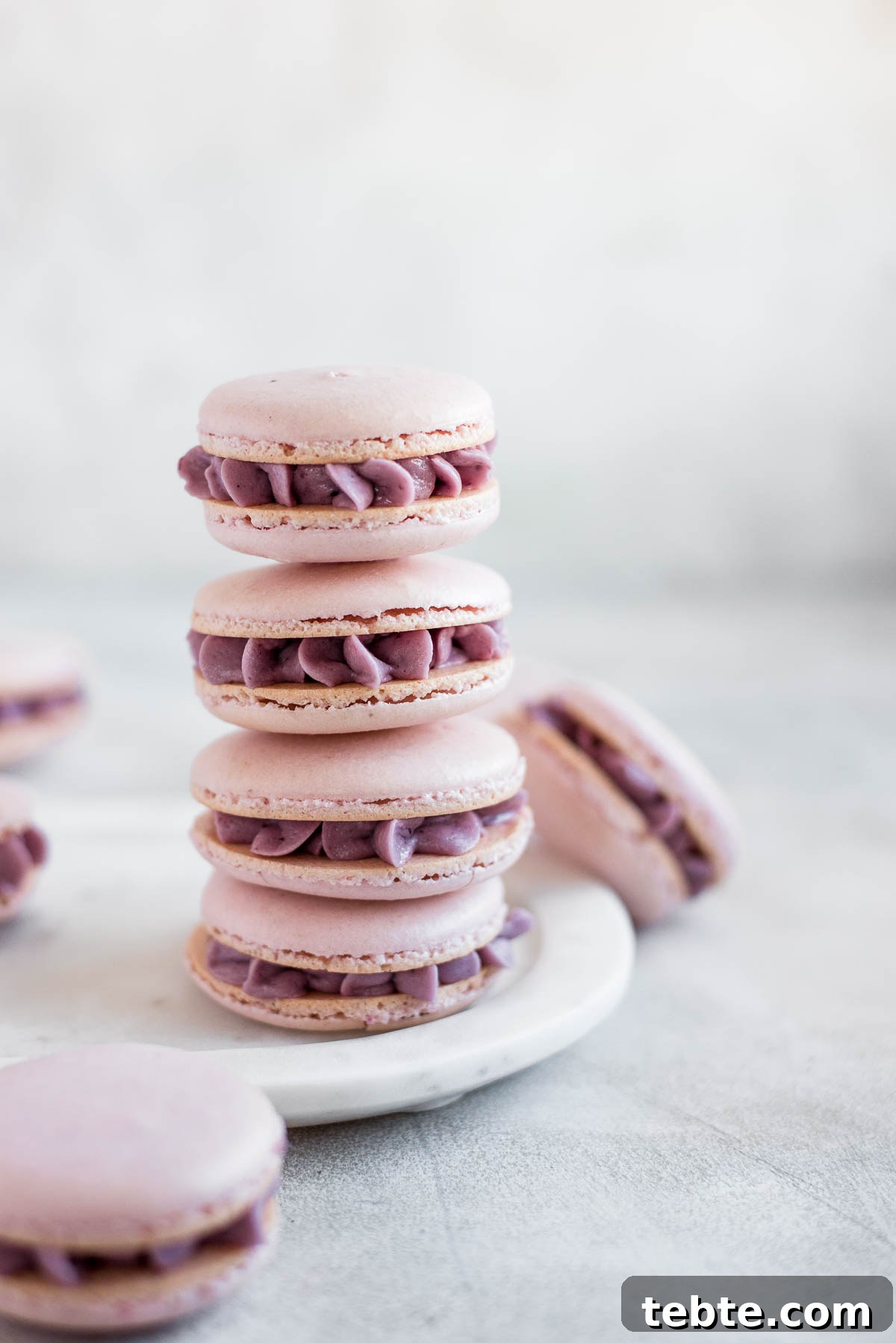
Everything you need to make French macarons: step-by-step photos, clear explanations, and troubleshooting tips.
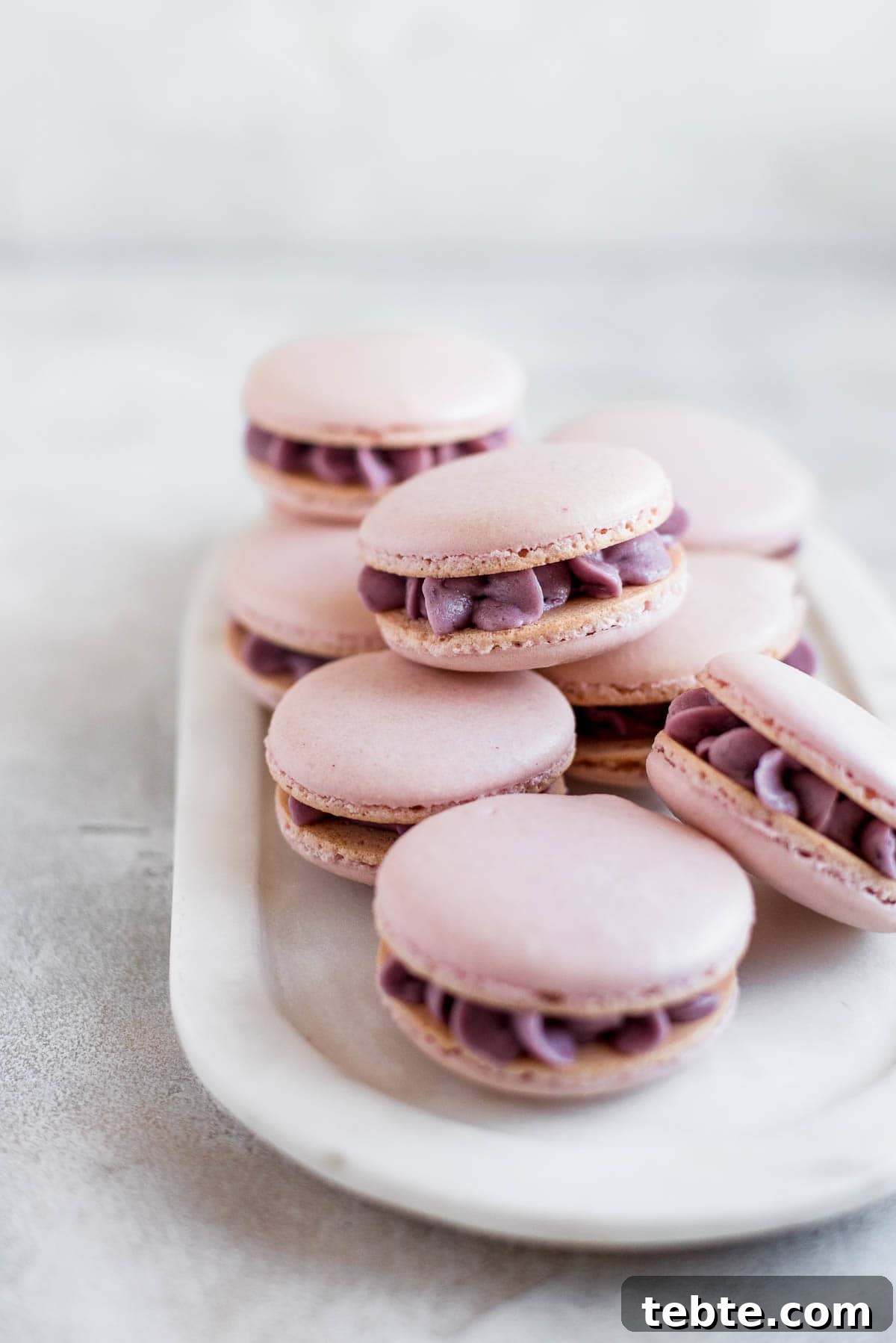
Macarons were the one baked treat I was determined to master. After years of trial and error and taking hands-on classes, I finally learned how to make consistent, reliable French macarons. Below is a complete guide covering ingredients, tools, technique, baking, storage, and common problems so you can make macarons with confidence.
French Macaron Ingredients
Macarons are built from a simple list of ingredients. Precision and quality matter.
Egg Whites
Egg whites must be free of any fat to whip properly and reach stiff peaks. Many bakers recommend aging egg whites (separating them and leaving them at room temperature for a few hours) to slightly dehydrate them, which can improve meringue stability. It isn’t strictly required, but I prefer leaving whites at room temperature for a few hours before whipping.
Substitution: Aquafaba (the liquid from canned chickpeas) can replace egg whites for a vegan version. It works well, though I haven’t tested it extensively.
Ground Almonds
Finely ground, blanched almond flour is the standard. Finer flour gives smoother shells. You can buy quality almond flour or grind blanched almonds yourself if needed.
Substitution: Replace almonds with other nut flours like pistachio for flavored shells, or try nut-free alternatives such as ground pepitas for allergy-friendly versions.
Powdered Sugar
Powdered (confectioners’) sugar provides most of the sweetness and blends with almond flour to form a fine dry mix. This creates a smooth texture in the shells. There aren’t good substitutes for powdered sugar in classic macarons.
Granulated Sugar
Granulated sugar is used to stabilize the whipped egg whites and help form stiff peaks. Use the amount called for; there are no direct substitutes that work the same way.
Salt
A small pinch of salt enhances the flavor of the shells—don’t skip it.
Flavoring
Extracts (vanilla, almond, etc.) are the easiest way to flavor shells. You can also fold in cocoa powder, ground freeze-dried fruit, or spices like cinnamon and cardamom for variety.
Filling
Fillings are limitless: buttercreams, ganache, jams, salted caramel, pastry cream, or even ice cream. Choose a filling that complements your shell flavor and store the finished macarons appropriately.
Tools You Need to Make French Macarons
Macarons are detail-oriented, but the tool list is fairly short. A few precise tools will make a big difference.
- Kitchen scale – mandatory for accuracy. Measure by weight, not volume.
- Food processor and fine-mesh strainer or sifter – to combine and refine almond flour and powdered sugar.
- Stand mixer or hand mixer with a clean, dry bowl and whisk – for stable meringue.
- Rubber spatula – for gentle folding and scraping the bowl.
- Round piping tip and piping bag – for consistent, round shells.
- Silicone baking mats (preferably with macaron guides) or parchment – for even heat and grip.
- Heavy-duty rimmed baking sheets – to prevent warping.
Steps to Make French Macarons
Weigh Your Ingredients
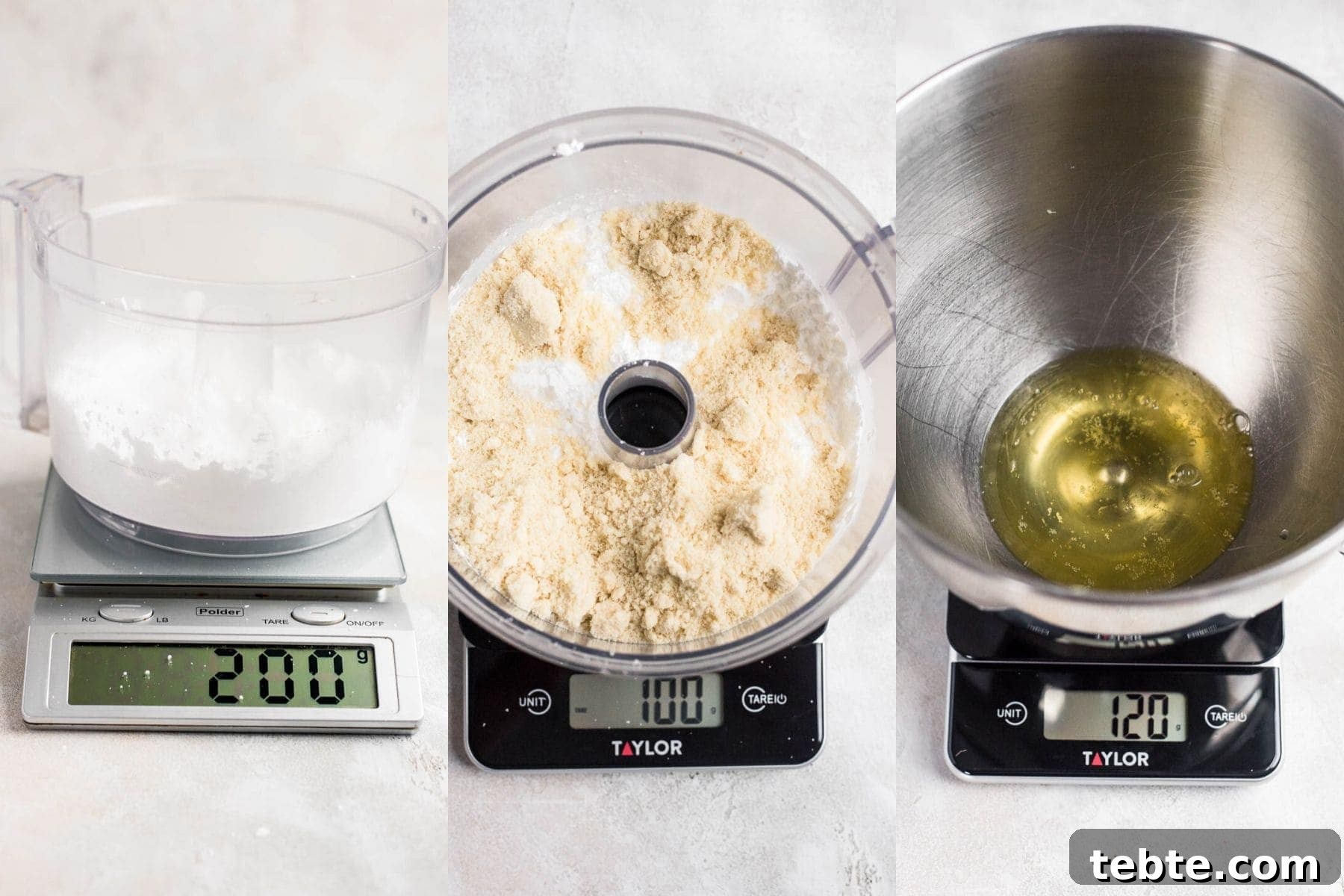
Use a kitchen scale. For this recipe you’ll need: 200 g confectioners’ sugar, 100 g almond flour, 120 g room-temperature egg whites, and 40 g granulated sugar. Weighing ensures consistent results.
Prepare Ingredients
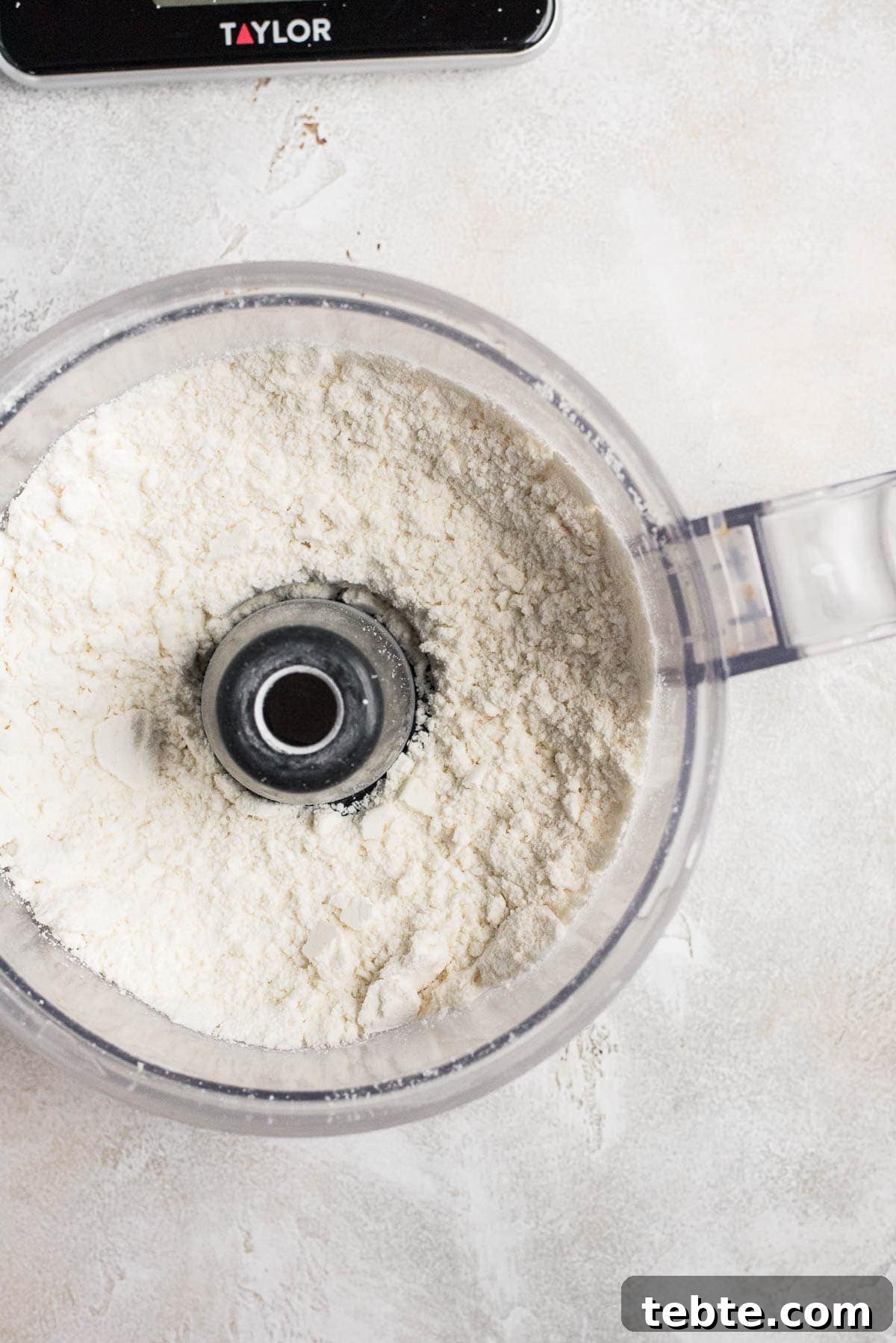
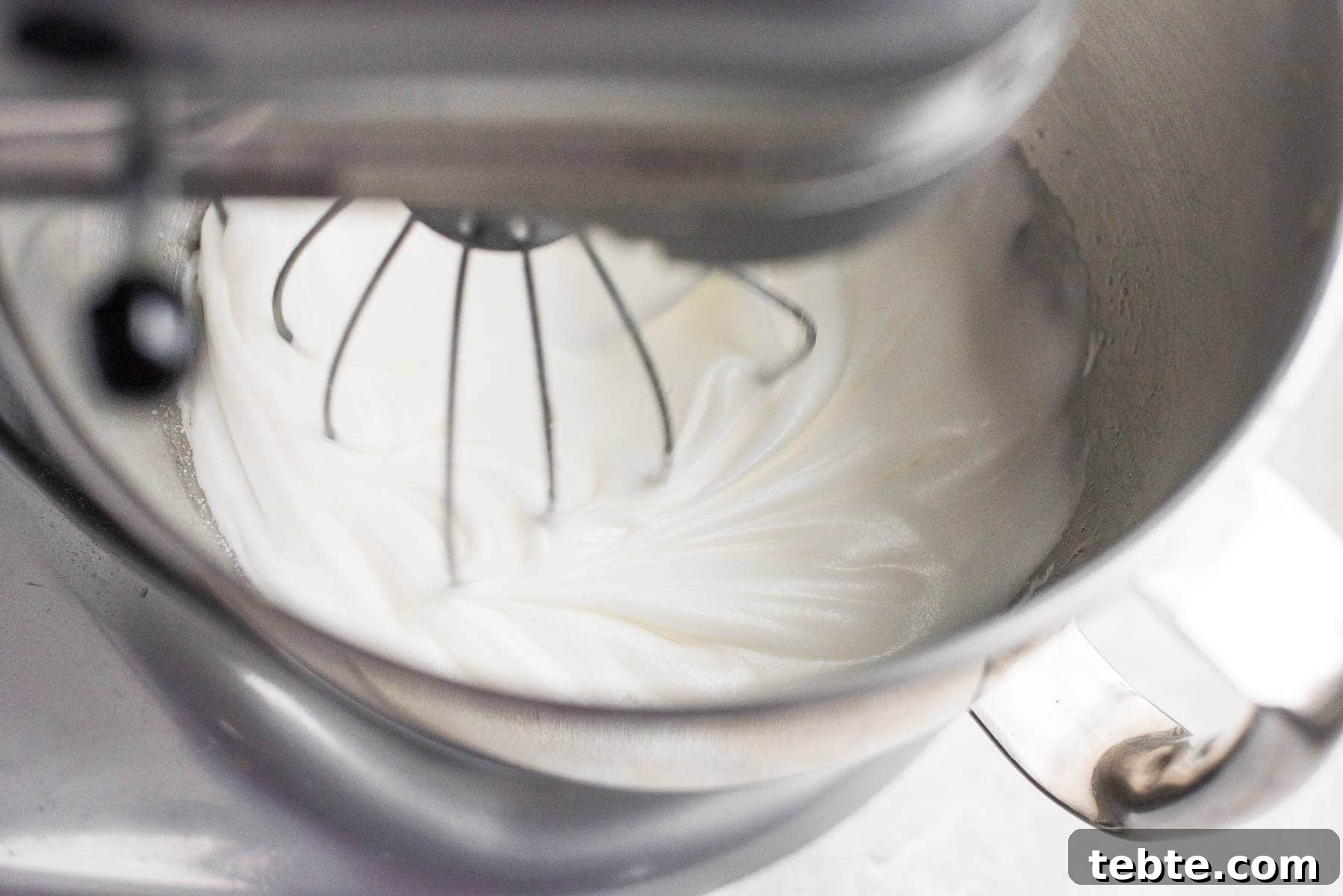
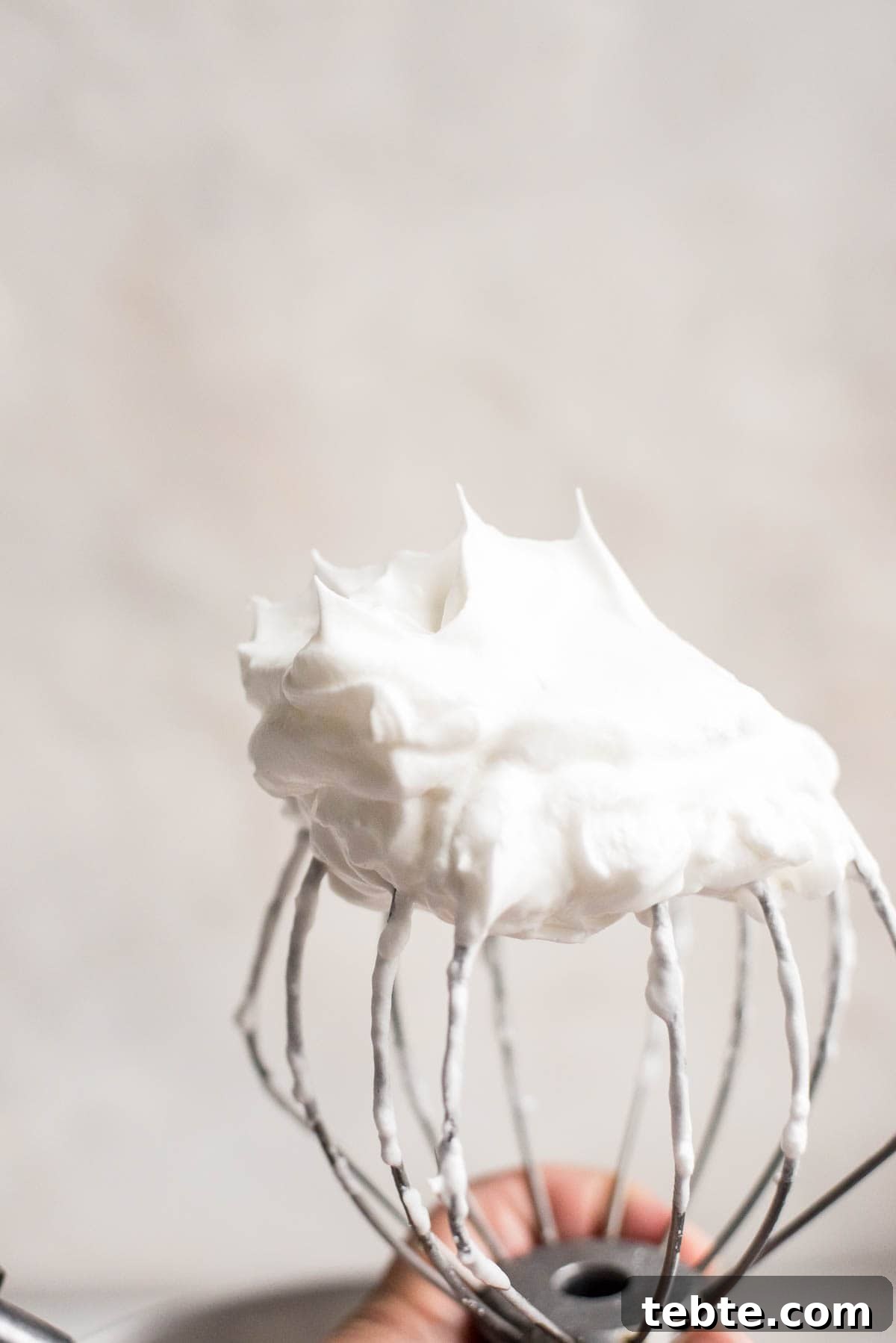
Process powdered sugar and almond flour together until very fine, then sift to remove any large pieces. Whip egg whites on medium-low until foamy, add a pinch of salt, then increase speed. When they reach soft peaks, gradually add granulated sugar and whip to stiff peaks (the meringue stands straight up when the whisk is lifted).
Mixing Your Batter (Macaronage)
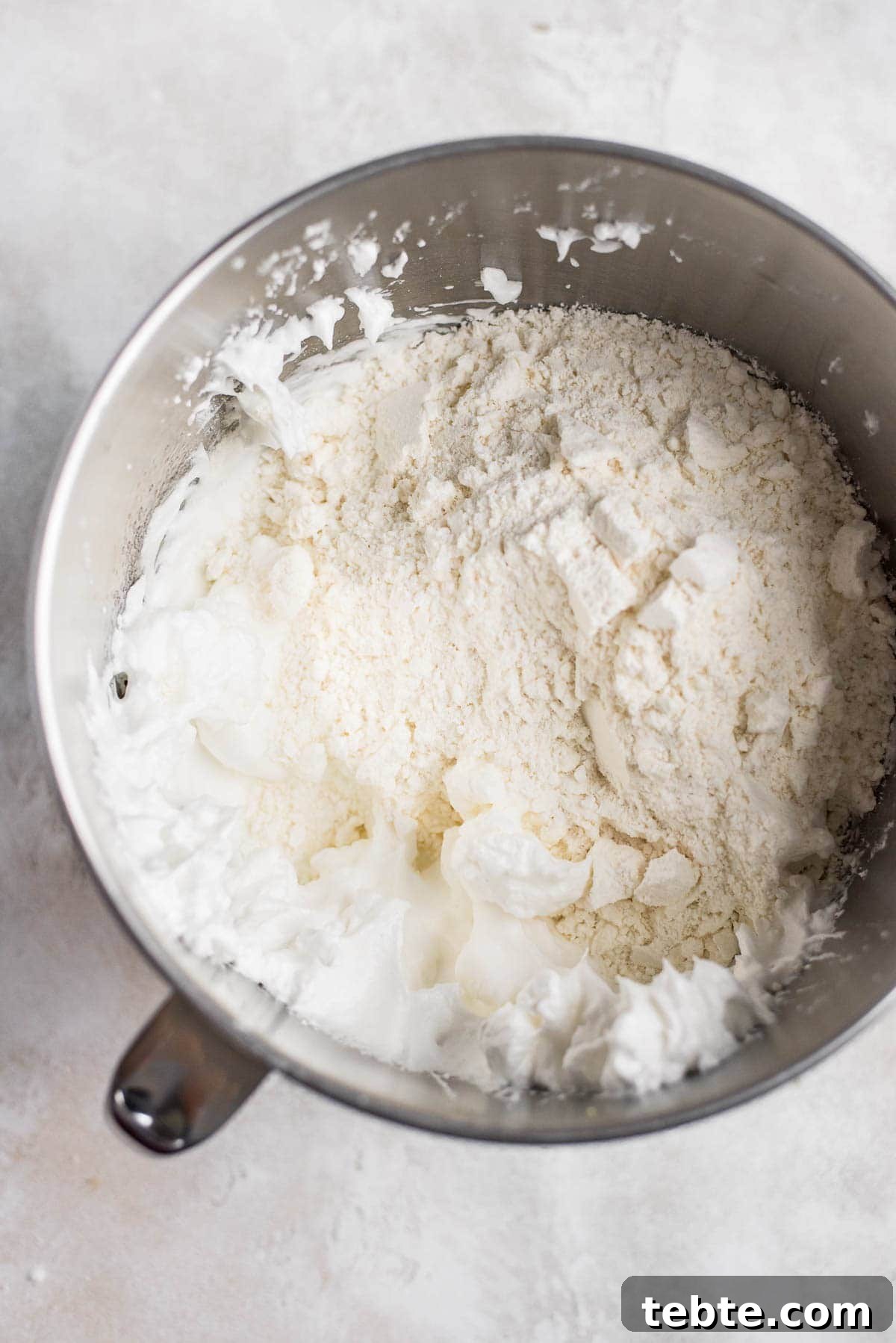
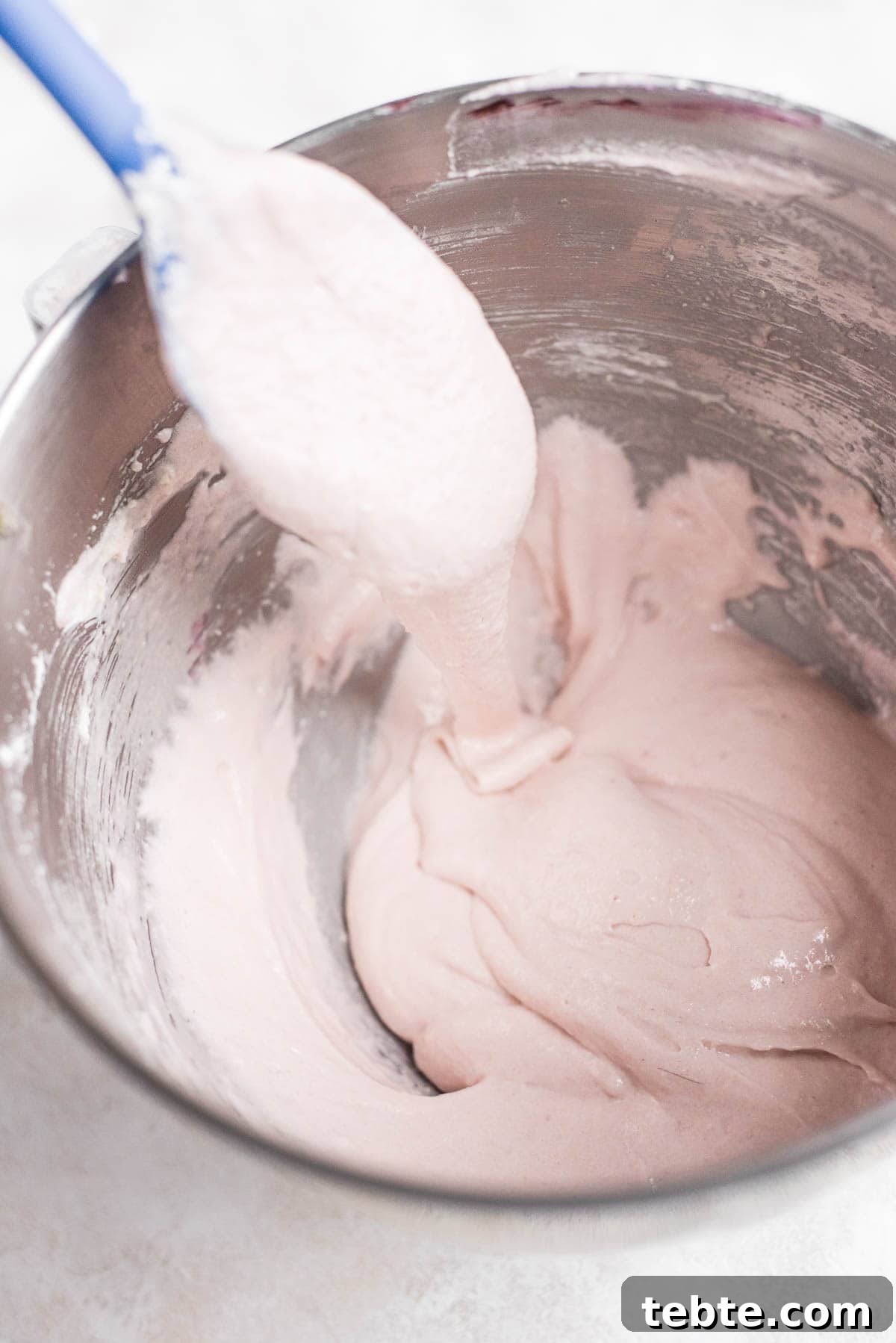
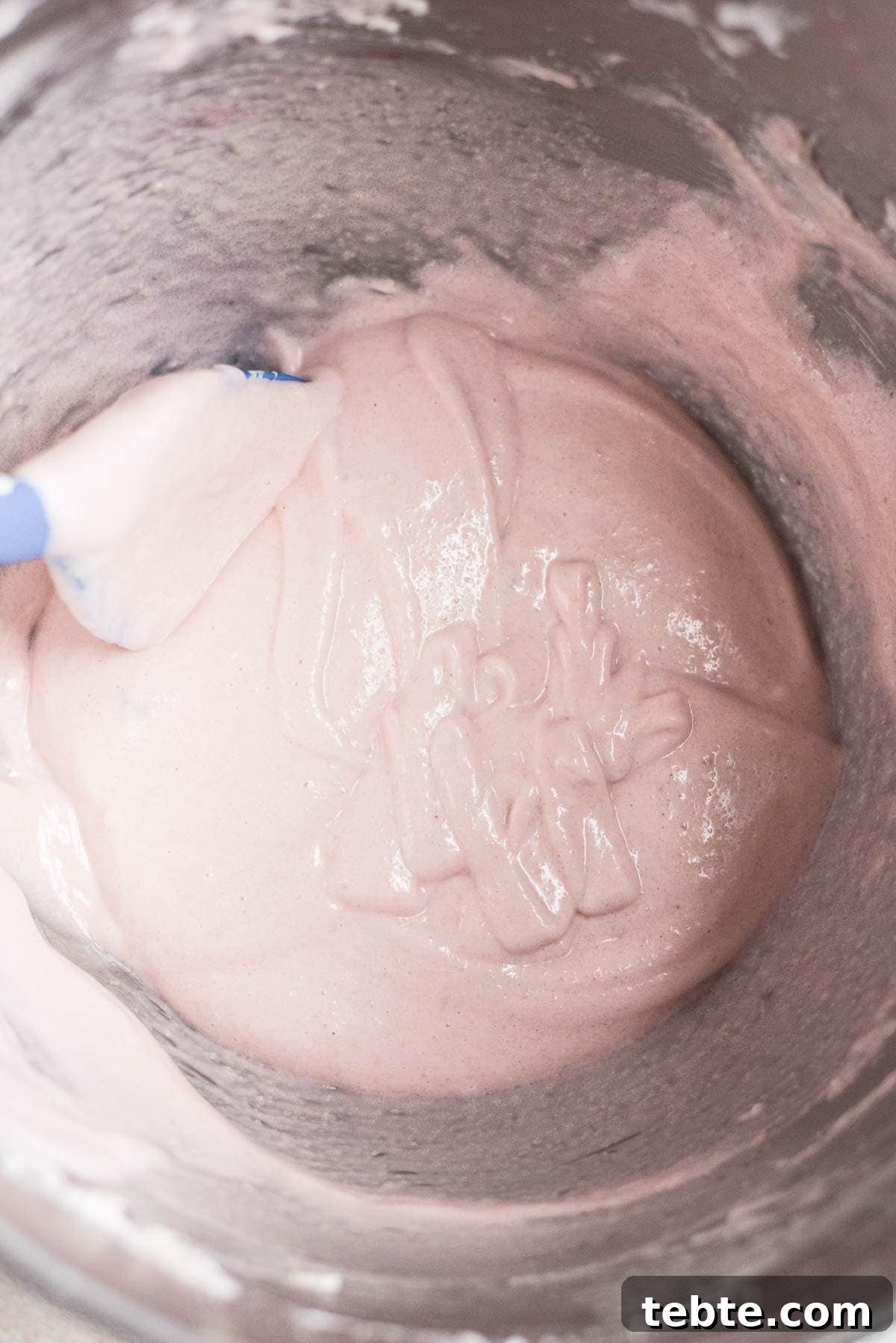
Fold the sifted dry mix into the meringue with a spatula. Scrape bowl sides and bottom frequently and fold gently to deflate air. The goal is a ribbon-like consistency: when you lift some batter, it should fall in a ribbon that slowly melds back into the batter, moving like lava. Stop as soon as you reach that texture—overmixing or undermixing will cause problems.
Piping Your Batter
Fit a piping bag with a plain round tip and fill it halfway for easier control. Pipe rounds onto a silicone mat or parchment with guides to keep shells uniform.
Baking Your Macarons
Tap the trays to release air bubbles and pop any remaining bubbles with a toothpick. Let piped shells rest until they develop a skin on top, about 30–60 minutes depending on humidity. Preheat oven to 325°F (163°C). Bake one sheet at a time on the middle rack: bake for about 5 minutes, rotate the sheet 180°, then bake another 5 minutes. Shells should lift easily from the mat when done. Cool on the baking sheet briefly, then transfer to a rack to cool completely before filling.
Adding Food Coloring
Gel or paste food coloring is best for macarons because it won’t thin the batter. Some colors brown more easily while baking; choose a brand formulated for baking. Add just a few drops when folding in the dry mix to achieve even color without overworking the batter.
Storing Your French Macarons
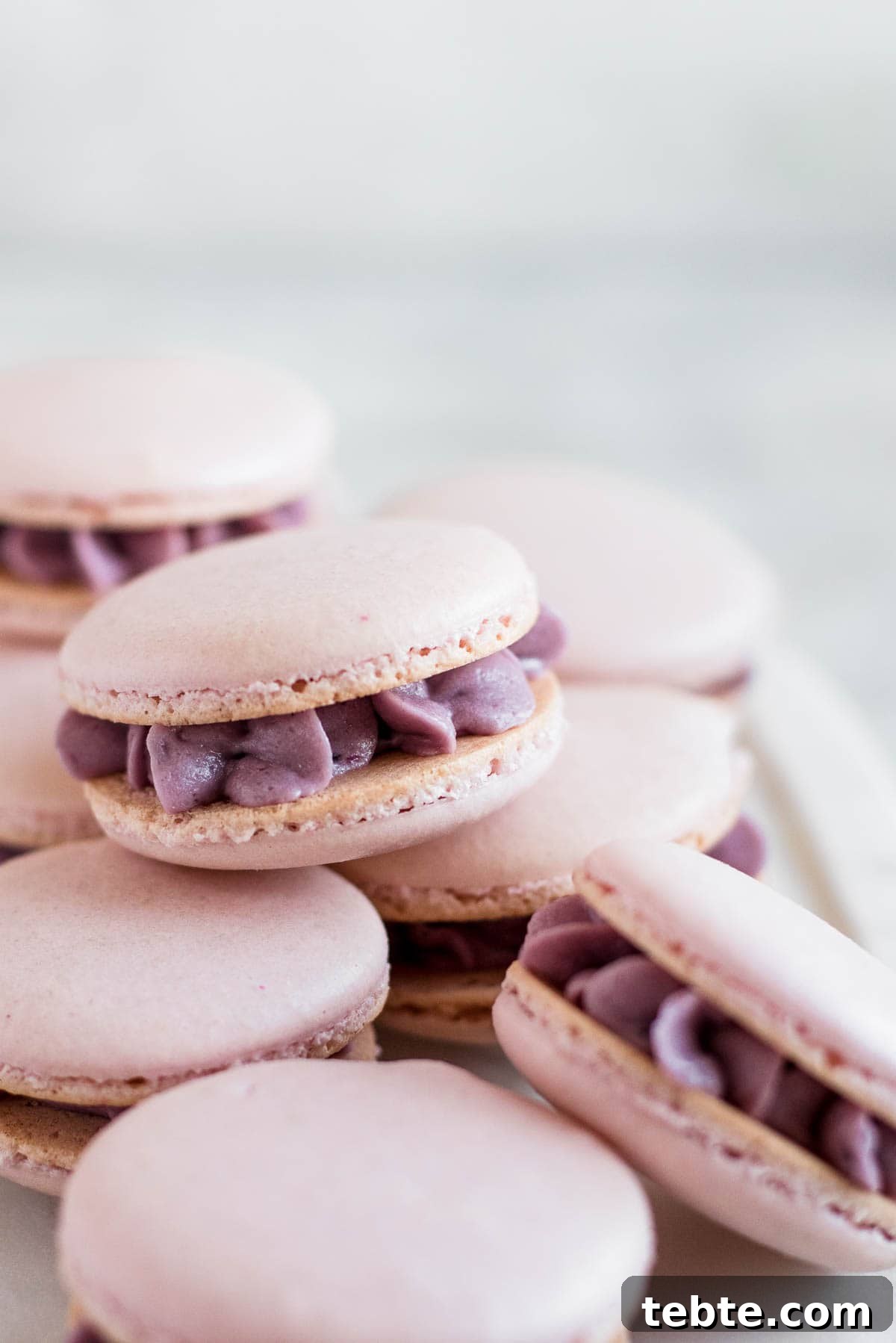
Storage depends on the filling. Fillings with fresh fruit, pastry cream, or similar perishable ingredients must be refrigerated. Buttercream and ganache fillings can often be stored at room temperature for short periods, but refrigeration helps the flavors develop and keeps texture stable. For long-term storage, freeze filled macarons; thaw them in the refrigerator before serving. Always keep macarons in a rigid, airtight container so shells don’t get crushed.
Troubleshooting
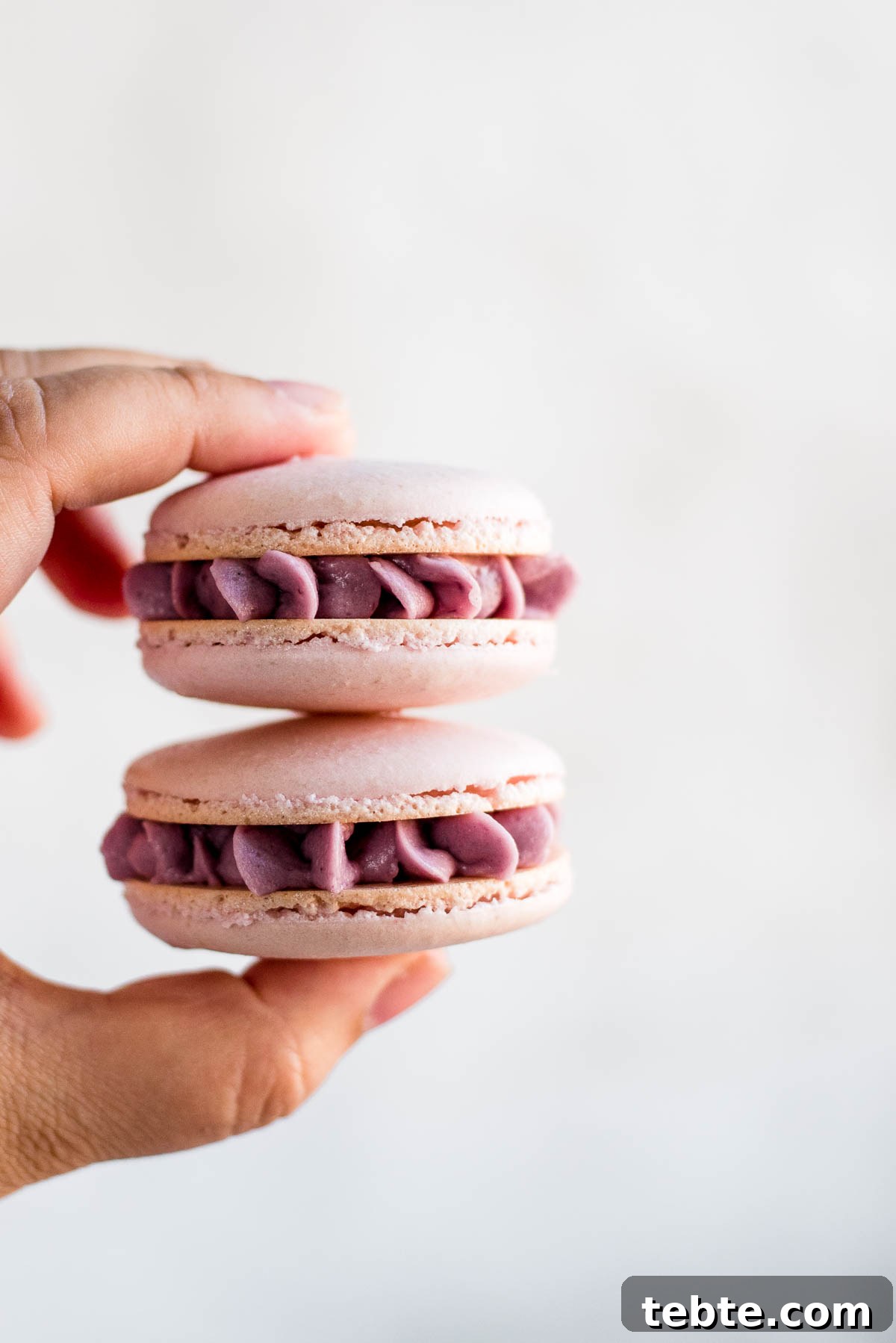
- Hollow shells: Batter may be overmixed or shells underbaked.
- Cracked tops: Batter overmixed or oven temperature too high.
- No feet: Oven not hot enough, shells didn’t rest long enough, or they rested too long.
- Uneven shells: Improper mixing texture or uneven oven heat.
- Browned shells: Oven too hot or coloring not suitable for baking.
- Spreading: Batter too wet or overmixed.
The Most Important Thing About Macarons
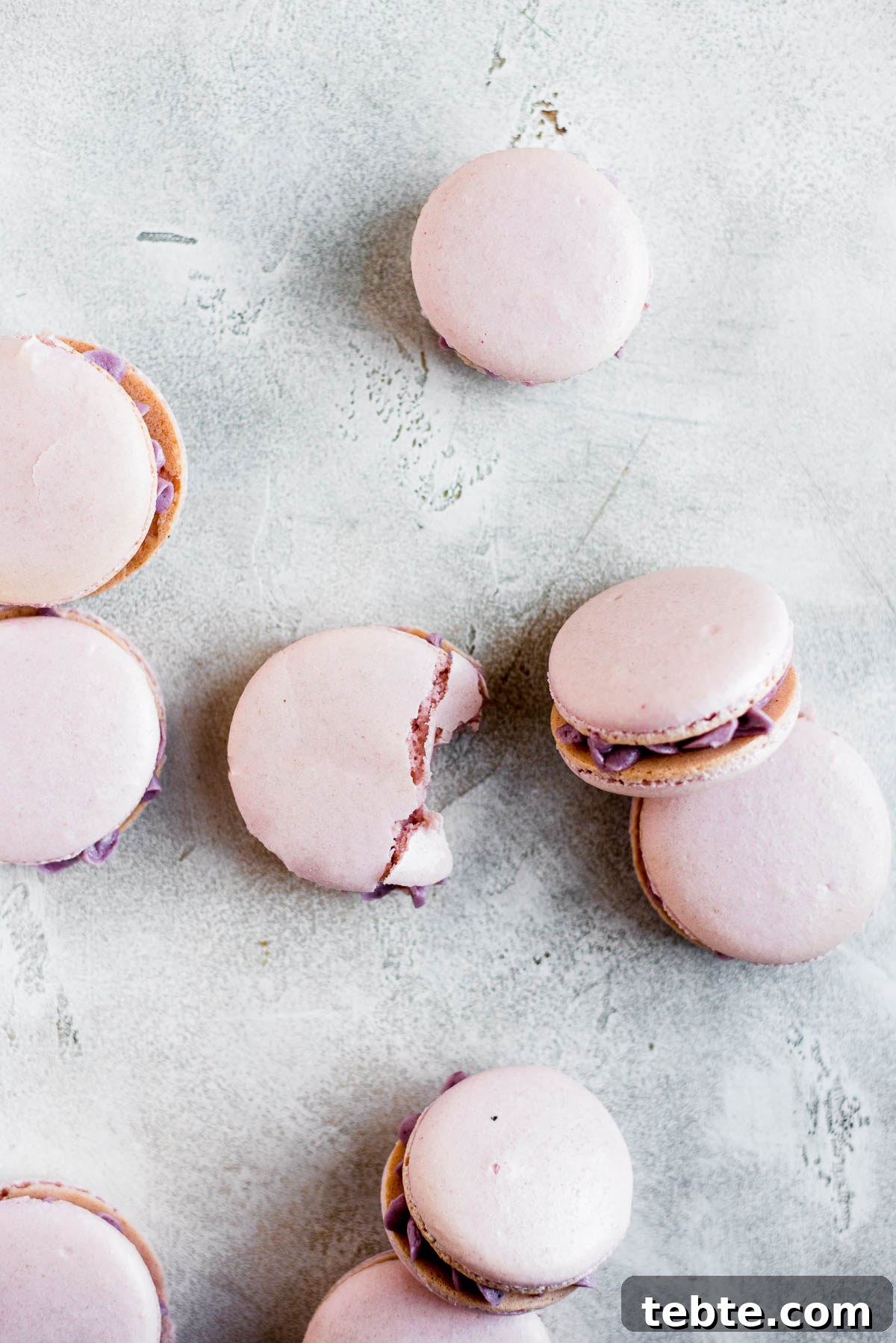
Perfect appearance is secondary. Even if shells are lumpy, hollow, or imperfect, what truly matters is flavor. If they taste great, they’ve succeeded.
Ready to Start Baking More Macarons?
Once you’re comfortable with this basic method, experiment with variations: flavored shells, different fillings, and seasonal combinations. Practice and small adjustments will help you refine technique and produce beautiful, delicious macarons.
Recipe Card
How to Make French Macarons
Amanda Powell
Pin Recipe
Ingredients
- 200 g confectioners’ sugar
- 100 g almond flour
- 120 g room temperature egg whites
- ⅛ teaspoon salt
- 40 g sifted granulated sugar
- 1 – 2 drops food coloring
- 1 – 2 teaspoons vanilla extract
- Frosting
Instructions
-
Process powdered sugar and almond flour in a food processor until very fine, about one minute. Sift the mixture, discarding any large pieces.
-
Wash and thoroughly dry the mixing bowl and whisk. Wipe with lemon juice if desired to remove any residual fat.
-
Whip egg whites on medium-low until foamy, then add salt and increase speed to medium-high. When soft peaks form, add granulated sugar and beat until just before stiff peaks. This takes roughly 3–7 minutes total depending on your mixer.
-
Turn off the mixer, then add the sifted almond mixture, food coloring, and vanilla. Fold gently, scraping sides and bottom, until batter reaches the ribbon stage where it slowly flows back into the bowl.
-
Stop mixing as soon as the proper consistency is reached. Let the batter rest uncovered for about 30 minutes so a skin forms.
-
Preheat the oven to 325°F. Line baking sheets with silicone mats and fit a piping bag with a round tip. Pipe shells, tap trays to remove bubbles, and pop any remaining bubbles with a toothpick.
-
Let piped shells rest 45–60 minutes until a skin forms on top. Bake one sheet at a time on the middle rack for 5 minutes, rotate the sheet, then bake another 5 minutes. Cool briefly on the sheet, then transfer to a wire rack to cool completely.
-
Once cool, pair shells, pipe filling onto half the shells, sandwich and store in an airtight container.
Notes
- Avoid any yolk in the egg whites; even a small amount of fat prevents proper whipping.
- Thoroughly clean and dry mixing tools. Wiping with lemon or vinegar removes residual grease.
- If the ribbon disappears immediately, the batter is too loose and needs less mixing next time.
- Be patient and enjoy the process—perfect macarons take practice, but they will taste great along the way.
Nutrition