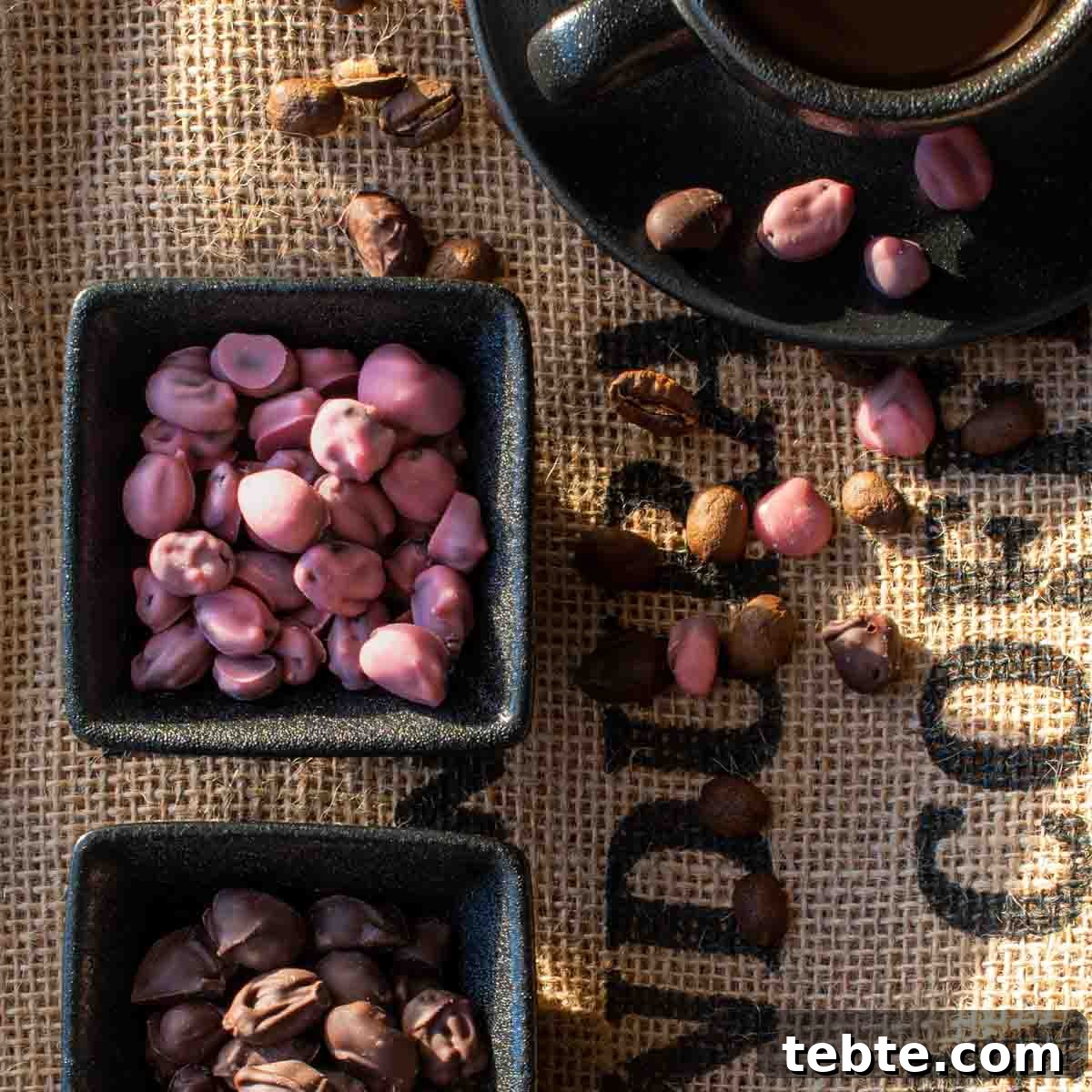
Since forever, chocolate and coffee have been a heavenly pairing. These homemade chocolate-covered coffee beans are an easy, delicious treat you should definitely try.
They make a crunchy accompaniment to coffee after a meal, a portable snack for busy days, or a small indulgence to keep at your desk.
These beans are simple to prepare and can be coated in any chocolate you prefer — dark, milk, white, or ruby. Our favourite pairing is ruby chocolate for its subtle berry notes and attractive colour, but use whatever you love.
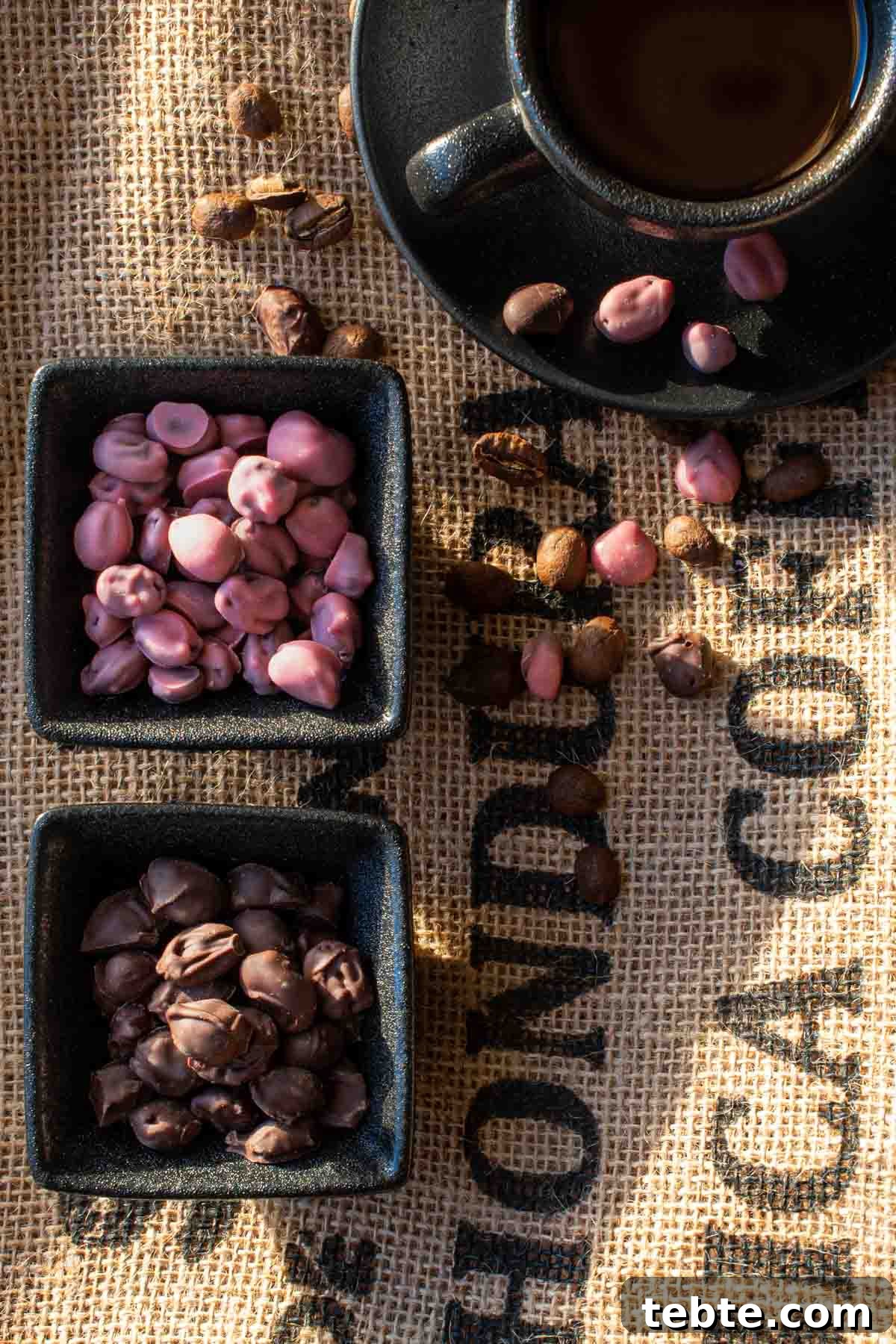
What you’ll love about this recipe
- Making chocolate-coated coffee beans at home is easier than you might think and much more affordable than store-bought options.
- You can use any chocolate you prefer or mix different types for variety.
- Keep a jar on hand for a quick pick-me-up during the day.
- They are naturally gluten-free.
Key ingredients and substitutions
Whole coffee beans
For the best balance of flavour and aroma, choose high-quality Arabica beans. Arabica tends to be sweeter and more nuanced, so it complements chocolate without overwhelming it. Robusta beans are stronger, more bitter and contain more caffeine, which can dominate the chocolate coating. Freshly roasted, medium-to-light roast Arabica beans will allow the coffee character to shine through the chocolate.
Chocolate
Pick the chocolate you enjoy most. Ruby chocolate gives a lovely berry note and pretty colour, but dark, milk or white chocolate all work well. Higher-quality chocolate yields better flavour and appearance, though you don’t need to buy the most expensive bar. If you want a glossy finish, temper the chocolate before coating or dust the finished beans with good-quality cocoa powder.
- Milk chocolate – sweet and creamy, a crowd-pleasing match for coffee.
- Dark chocolate – bold and sophisticated, it stands up to robust coffee flavours.
- White chocolate – sweet and delicate, it contrasts nicely with the coffee’s intensity.
- Ruby chocolate – fruity and slightly tart, it creates an interesting chocolate-fruit-coffee blend.
How to make chocolate covered coffee beans
- Prepare your workspace by laying out parchment or wax paper on the countertop and setting two forks nearby.
- Melt the chocolate using a double boiler: place a heatproof bowl over a pan of simmering water, ensuring the bowl does not touch the water. Alternatively, melt in the microwave in 15-second bursts, stirring between intervals to avoid burning.
- When the chocolate is fully melted, remove it from the heat and add all the coffee beans at once.
- Stir the beans in the melted chocolate with a spoon or spatula until each bean is completely coated.
- Using one fork to lift the coated beans and the second fork to drop them individually, place the beans onto the prepared paper. Separate any that stick together gently with the forks.
- Let the chocolate set at room temperature for about 20 minutes. For faster setting, arrange the beans on a tray and chill briefly in the fridge.
- If you want a thicker coating, repeat the dipping process once the first layer has set.
Serving suggestions
- Dust finished beans with good-quality cocoa powder for a refined look.
- Serve in small bowls after dinner as an elegant bite-sized dessert.
- Pair with fresh fruit like strawberries or orange segments for contrast.
- Top coffee or chocolate ice cream with a few chocolate-covered beans for texture and flavour.
- Create holiday-coloured batches using tinted white chocolate for themed gifts or parties.
- Display on a dessert table, in clear jars for an office snack, or as a topping for coffee-flavoured cakes and cupcakes.
Gifting ideas
- Package beans in clear cellophane bags or small boxes tied with ribbon for edible presents.
- Add custom labels or tags for a personal touch.
- Mix different chocolate types or coffee bean varieties for an assorted gift box.
- Include a small bag of specialty coffee for a thoughtful gourmet gift.
Storage
Store chocolate-covered coffee beans in an airtight container in a cool, dry place. Properly stored, they will keep for up to three months, though they’re best enjoyed within a few weeks for peak flavour and crunch.
FAQ
A single coffee bean contains roughly 6 mg of caffeine on average. The chocolate adds a negligible extra amount of caffeine.
Yes — if you are sensitive to caffeine, the beans can provide a noticeable stimulant effect and may keep you awake if eaten in excess.
This varies by grind and brew strength, but a 350 ml cup typically contains the equivalent of about 90–150 beans.
Yes, the basic recipe is gluten-free, provided the chocolate used does not include gluten-containing additives.
More recipes using coffee
- Chocolate Chip Coffee Cookies
- Chocolate Orange Cake (SUPER moist!)
- Iced coffee with condensed milk
- Creamy 3-Ingredient coffee mousse (eggless)
Recipe

Chocolate covered coffee beans
Ingredients
- 20 gram coffee beans – medium to light roast works best
- 60 gram chopped chocolate – dark, milk, white or ruby
Instructions
-
Prepare your work area by laying out parchment or wax paper on the countertop and set two forks within reach.
-
Melt the chocolate in a double boiler or microwave in 15-second bursts, stirring between intervals to avoid burning.
-
Remove the melted chocolate from heat and stir in all the coffee beans so they are fully coated.
-
Lift a few coated beans with one fork and use the second fork to drop them individually onto the paper. Gently separate any that stick together.
-
Allow the chocolate to set for about 20 minutes at room temperature, or chill briefly in the fridge to speed up setting.
-
Optional: repeat the coating process for a thicker chocolate layer once the first coating has set.
Nutritional data disclaimer
Nutritional information is provided by a third party and may vary depending on brands and exact ingredients used. Use the values as an estimate and consult a professional for personalised dietary advice.
Nutrition
|
Carbohydrates: 36g
|
Protein: 2g
|
Fat: 21g