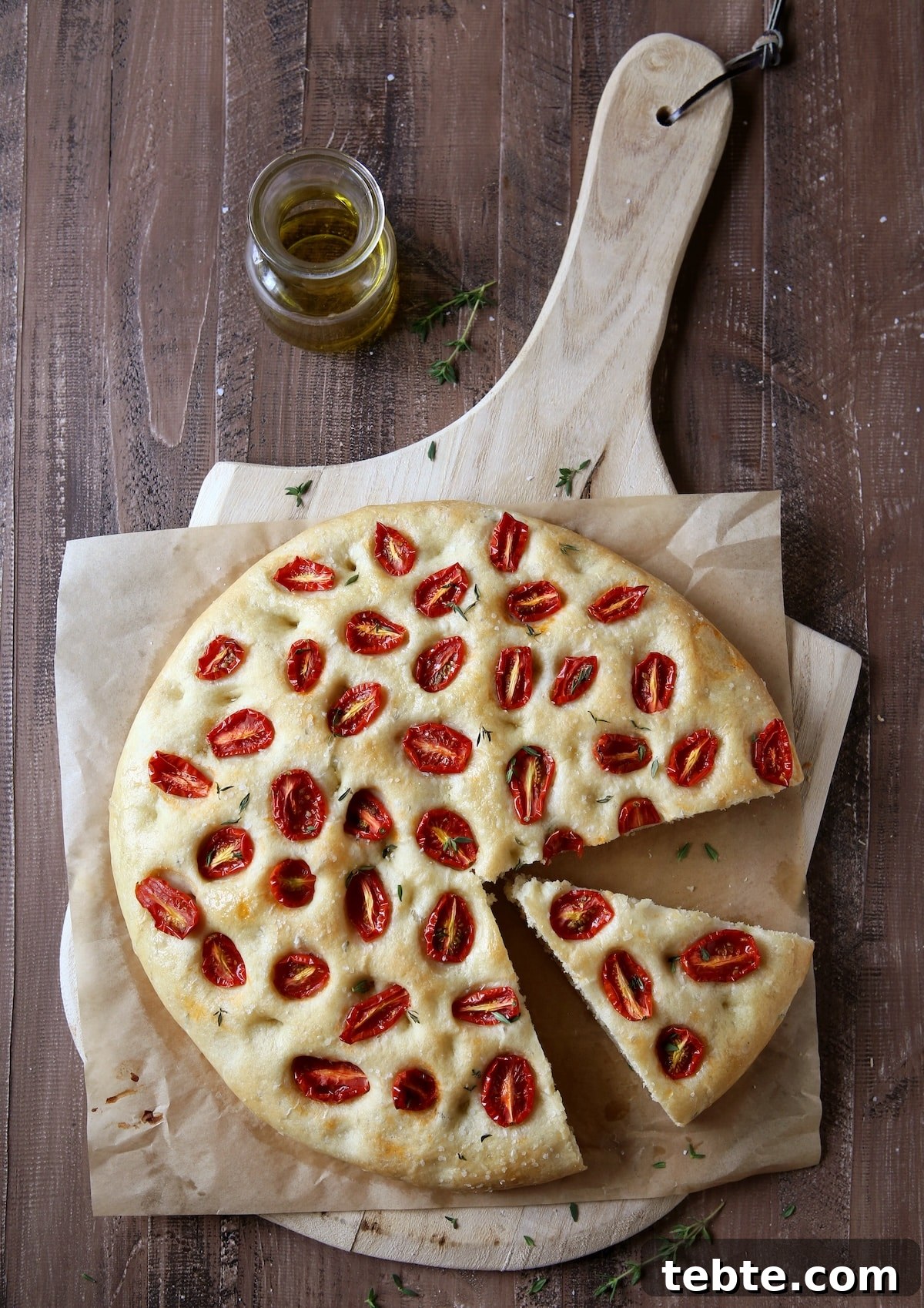
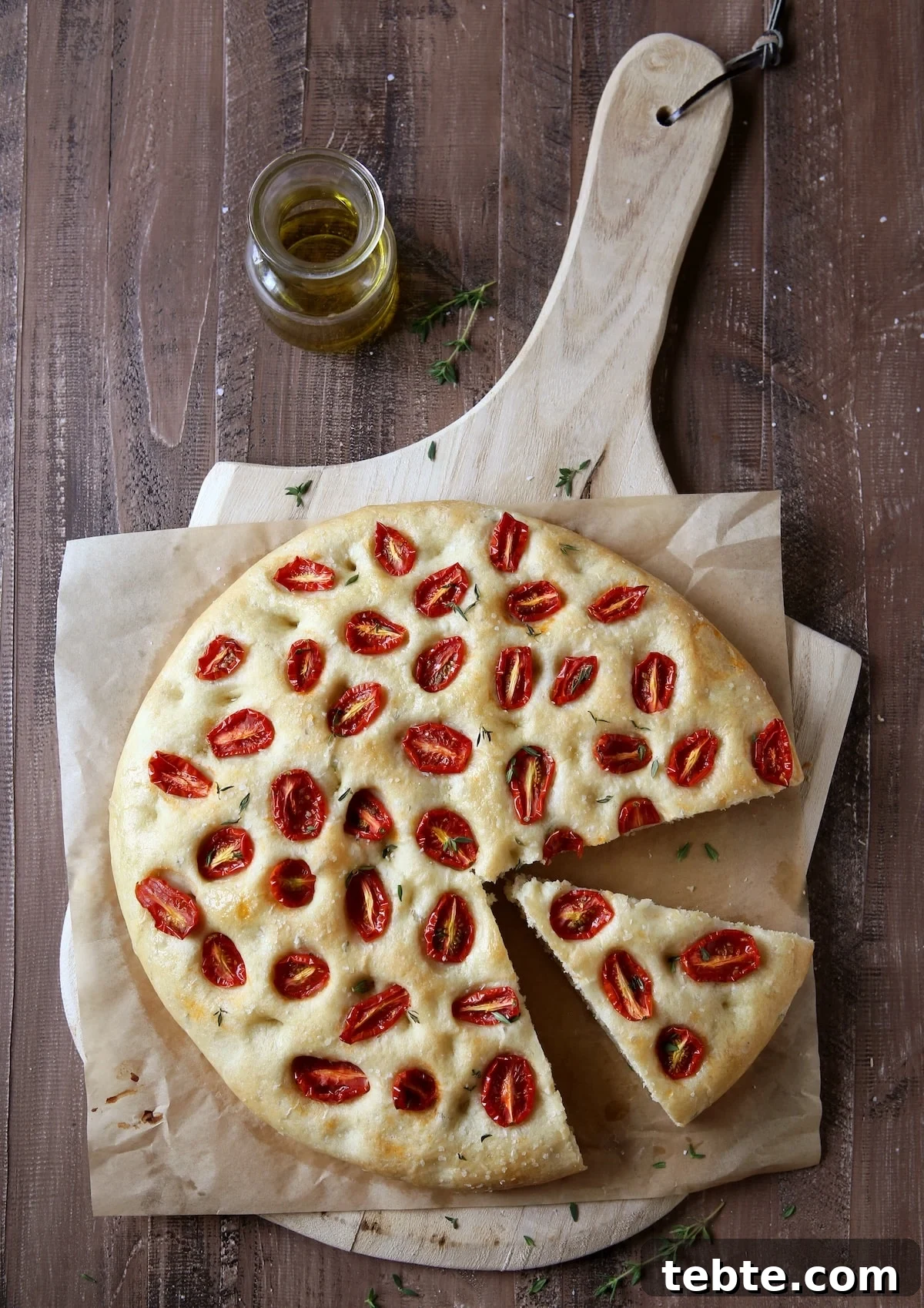
A flavorful, chewy, and tender focaccia topped with oven-roasted cherry tomatoes and fresh thyme. This simple, rustic bread highlights ripe summer tomatoes and fragrant herbs, making it perfect as an appetizer, sandwich base, or a savory snack to enjoy any time of day.
This summer I skipped planting a garden for the first time in years. With a big move and a new family member, I didn’t want to take on building a new garden from scratch. Fortunately, the local farmers market supplied everything I missed from my usual harvest—no weeding required. Still, I found myself missing the daily bounty of cherry tomatoes I would normally pick from my own plants.
Even though my tomatoes now come from the market instead of the backyard, they’re still in season and at their best. This roasted tomato focaccia is my way of celebrating that short window when tomatoes are sweetest. The bread is light and chewy with an open crumb and slightly crisp edges. Fresh thyme folded into the dough and scattered on top pairs beautifully with the concentrated sweetness of oven-roasted cherry tomatoes.
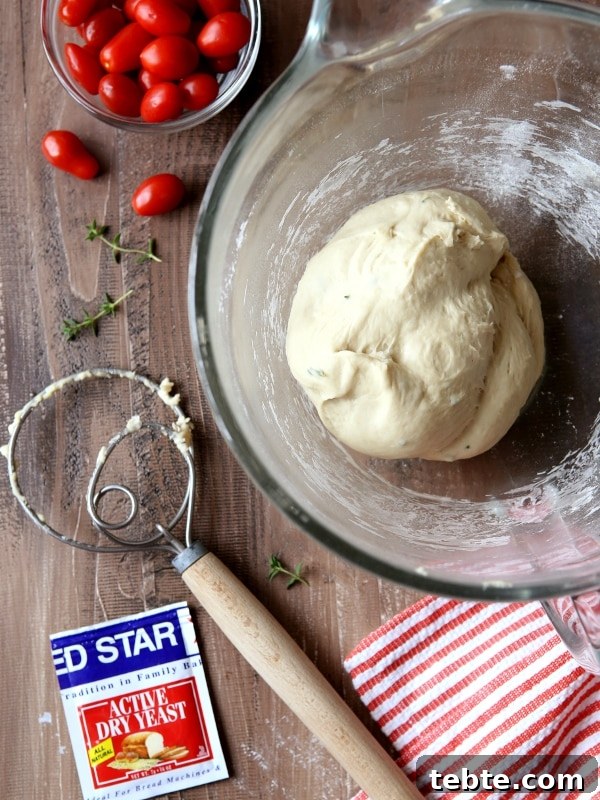
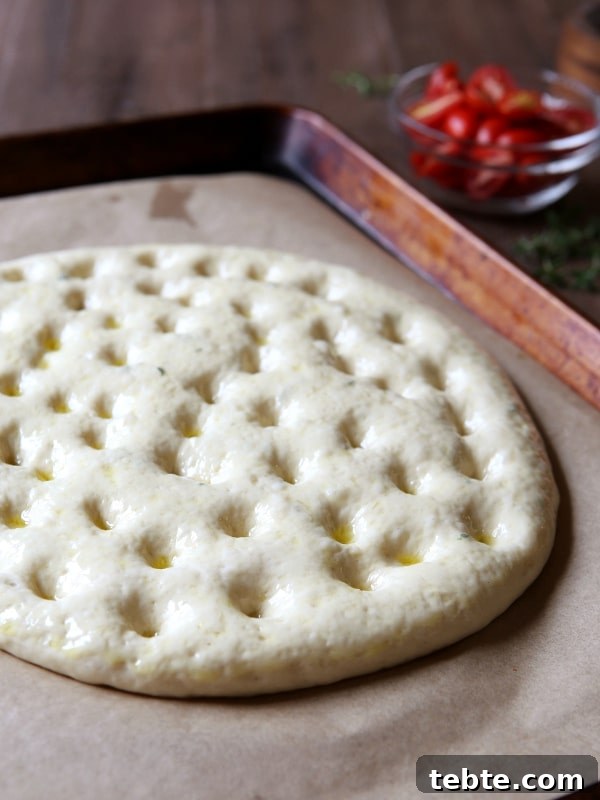
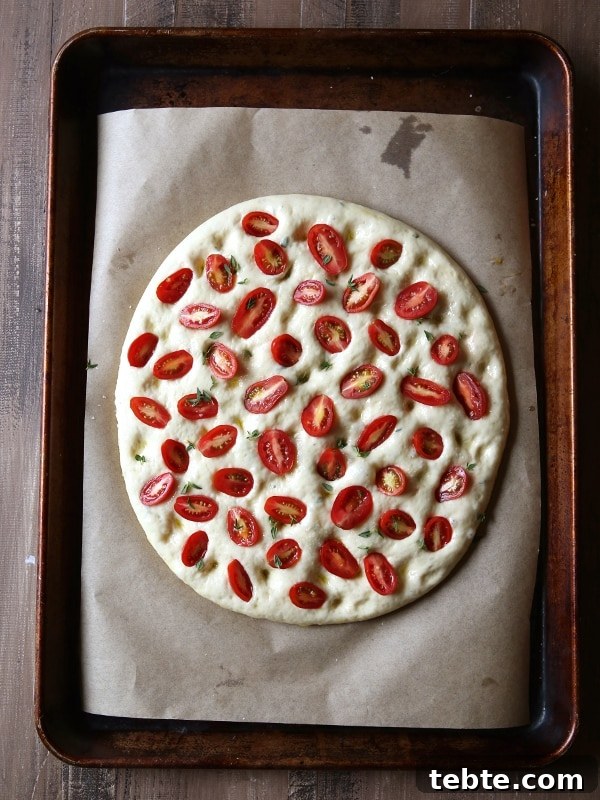
The dough is straightforward and forgiving: water, olive oil, bread flour, a touch of sugar, yeast, and salt, with a tablespoon of fresh thyme stirred in for aroma. After the first rise, the dough is punched down, shaped roughly, allowed a brief second rise, then dimpled with your fingers, brushed with olive oil, and studded with halved cherry or grape tomatoes. A final sprinkle of thyme and coarse salt before baking turns the tomatoes into intensely flavored, slightly jammy bursts scattered across the surface.
In the oven the tomatoes dry and concentrate, their natural sugars caramelizing slightly and turning each bite into a bright, savory-sweet mouthful. The thyme adds a savory herbaceous lift that keeps the focaccia from feeling heavy. This focaccia is excellent served warm with a drizzle of additional olive oil, alongside a fresh salad, or as the foundation for a sandwich layered with cheese, greens, and roasted vegetables.
Whether you have an abundance of garden tomatoes or you’re picking up a pint at the market, this recipe is a reliable way to showcase summer produce. The method is flexible: if you prefer a lighter crust, bake a few minutes less; for a deeper roasted tomato flavor, use slightly larger or more tomatoes. The focaccia is best the day it’s baked but can be kept wrapped at room temperature for a couple of days and refreshed lightly heated before serving.
baking tip: Why does yeast dough need to rise?
Allowing yeast dough to rise gives the yeast time to ferment the sugars in the flour. During fermentation the yeast produces carbon dioxide, which becomes trapped in the dough’s gluten network and causes the dough to expand. This process creates volume and contributes to a light, open crumb.
The first rise, often called bulk fermentation, develops volume and larger gas pockets. After shaping, a second rise—proofing—redistributes gas and creates smaller, more uniform bubbles that yield a finer texture in the finished bread. To check if the dough has risen enough, press gently with a fingertip: if the indentation remains, the dough is ready; if it springs back quickly, it needs more time.
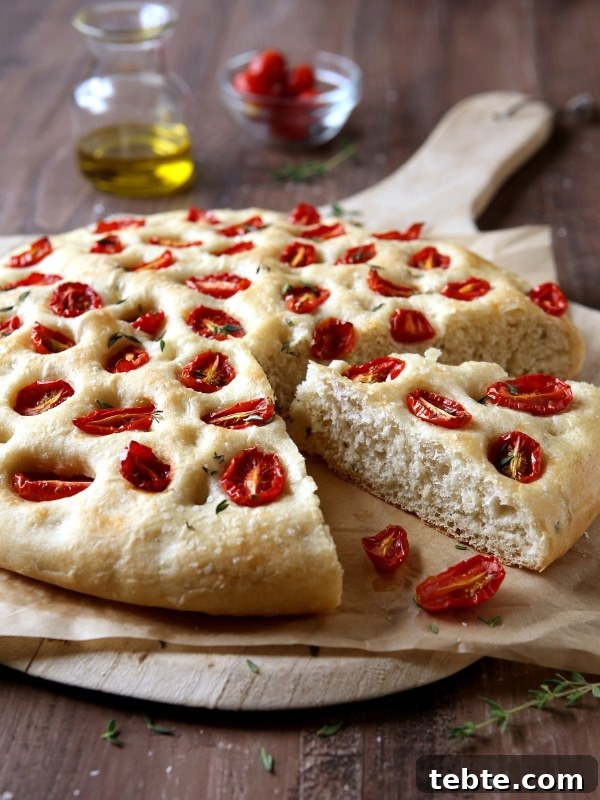

Roasted Tomato Focaccia Bread
Ingredients
- 1 cup water (250 ml)
- 1 tablespoon olive oil
- 2–2 1/2 cups bread flour (240–300 grams)
- 1 teaspoon coarse salt
- 1 tablespoon granulated sugar
- 1 packet active dry yeast (2 1/4 teaspoons)
- 1 tablespoon fresh thyme, divided
- 1 cup cherry or grape tomatoes, halved (about 150 grams)
- Additional olive oil, for brushing
- Coarse salt, for sprinkling
Instructions
- Heat the water and 1 tablespoon olive oil in a small saucepan over medium heat until it begins to steam. Remove from heat and cool until the temperature reaches about 120–130°F (warm to the touch), about 5 minutes.
- In the bowl of a stand mixer fitted with a dough hook, combine 1 cup of the bread flour with the salt, sugar, yeast, and half of the fresh thyme. Add the water mixture and mix until a wet dough forms, scraping down the bowl as needed.
- Add the remaining bread flour, 1/4 cup at a time, mixing until the dough clears the bowl and is tacky but not sticky to the touch. You may not need the full 2 1/2 cups of flour.
- Knead the dough for 5–7 minutes until smooth and elastic. Place the dough in a greased bowl, turn to coat the surface with oil, cover, and let rise in a warm place until doubled in size, about 1 hour.
- Punch down the dough and knead briefly to remove large air bubbles. Shape the dough into a rough 14-inch circle on a sheet pan or baking sheet. Cover and allow a short second rise for about 15 minutes.
- Using your fingers, dimple the surface of the dough by pressing all the way down to the pan. Brush generously with olive oil, then gently press the halved tomatoes into the dough. Sprinkle with the remaining thyme and a generous pinch of coarse salt.
- Bake in a preheated oven at 375°F (190°C) until the focaccia is golden brown, about 20–25 minutes. Remove from the oven and let cool slightly. Serve warm or at room temperature.
- Focaccia is best the day it is made but will keep wrapped at room temperature for a couple of days. Reheat briefly before serving for best texture.
I’d love to hear about it! Leave a rating or review below, or share a photo on social media with the recipe name and tag to show how yours turned out.
Note: This recipe was developed with professional yeast and testing in mind. All opinions are the author’s own.