This post may contain affiliate links. As an Amazon Associate I earn from qualifying purchases.
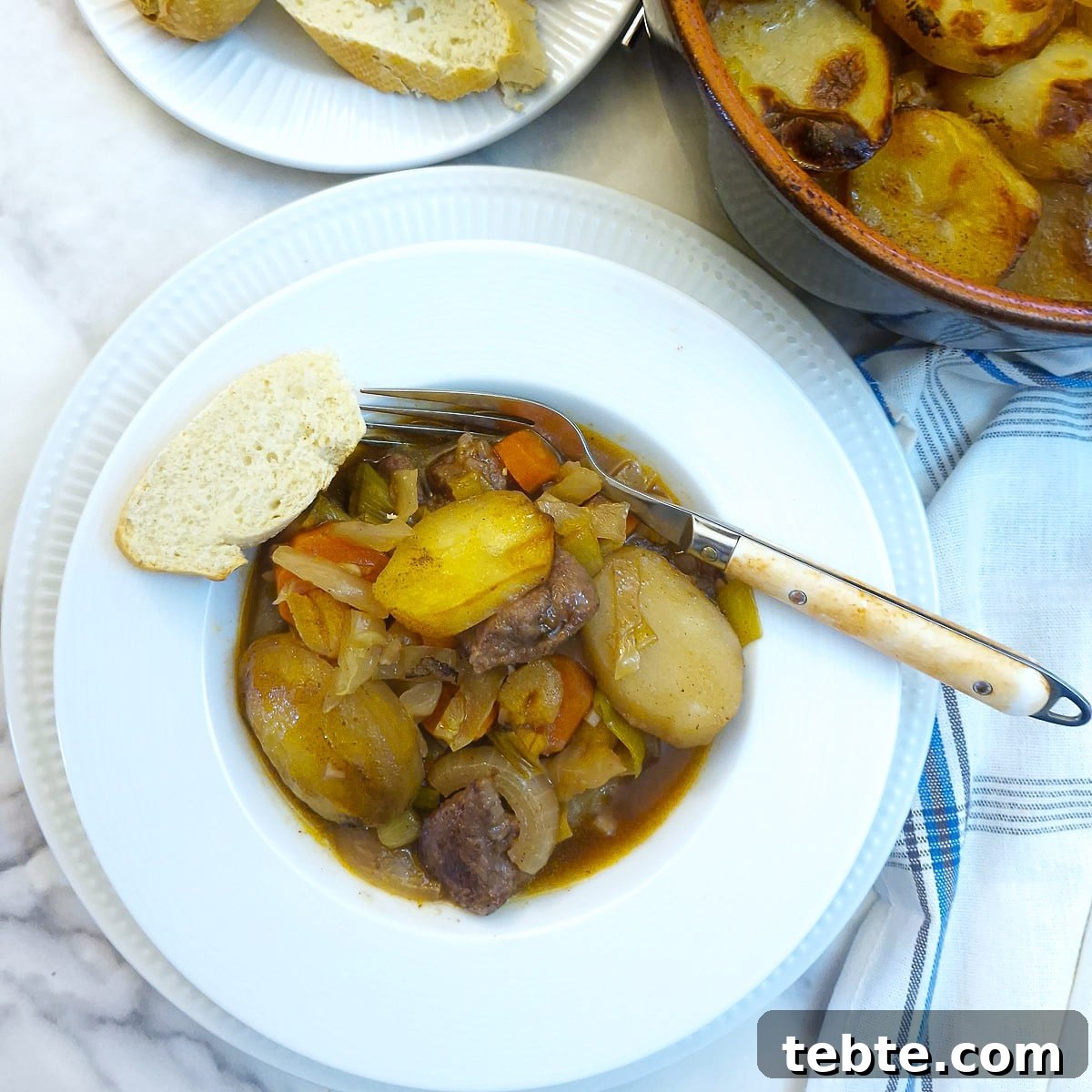
A lamb potjie is a comforting dish of tender lamb chunks slow-braised with layers of vegetables, sliced potatoes and warming spices. It’s simple to prepare and becomes a satisfying one-pot supper—serve with rice or crusty bread to soak up the rich cooking juices.
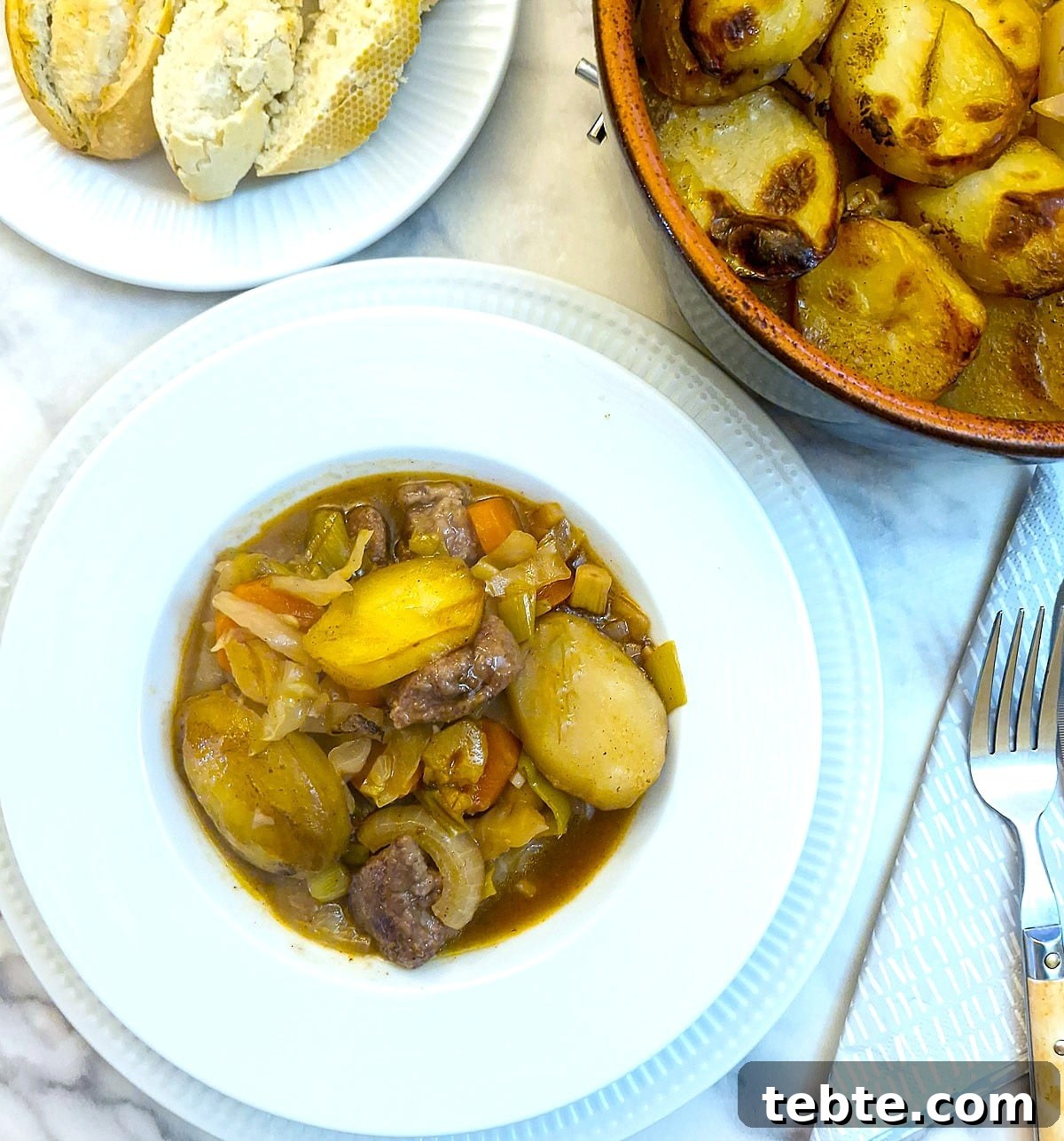
This South African-style lamb stew shows how everyday ingredients can produce remarkable flavour. I’ve adapted a traditional potjie into an oven-baked version so you can get those potjie flavours without needing an open fire. If you prefer, you can still make the recipe outdoors in a cast-iron cauldron—see the notes later for outdoor cooking tips.
What is a potjie?
A potjie (or potjiekos) is a classic South African stew traditionally cooked slowly over coals in a three-legged cast-iron pot with a tight-fitting lid. Ingredients are layered rather than mixed, the lid stays on while it simmers gently, and the stew is left undisturbed so each layer keeps its texture and flavour. Typical proteins include beef, chicken or lamb, though you’ll sometimes see venison or ostrich.
My oven version keeps the spirit of potjie cooking—layers, low heat and minimal intervention—while making it practical in a standard kitchen.
Lamb potjie at a glance
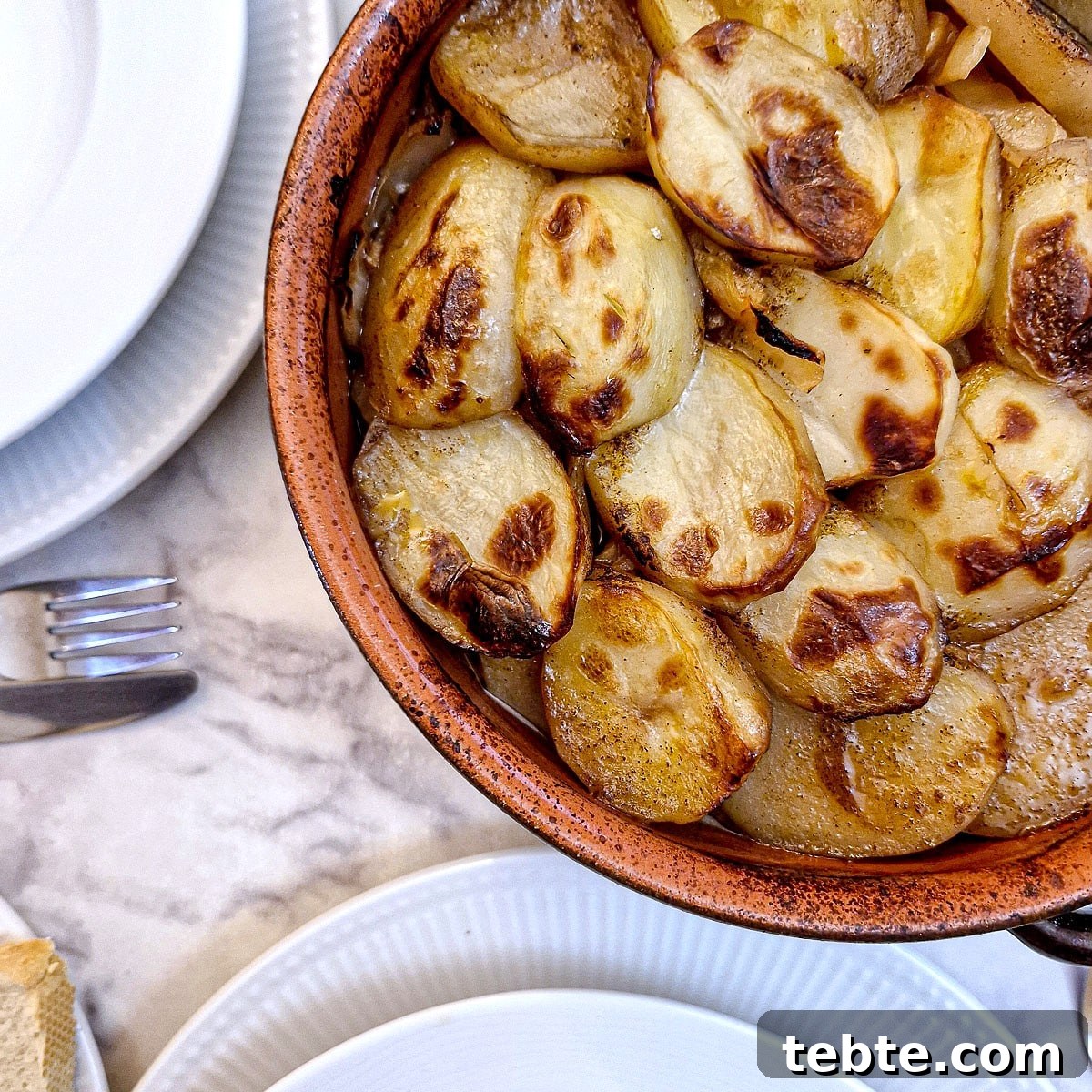
- Method: Brown the lamb, layer vegetables and potatoes in a deep casserole, pour in the stock mixture and bake low and slow for 2–2½ hours, then remove the lid to brown the potato topping.
- Main ingredients: Lamb, onions, leeks, carrots, cabbage, potatoes, dried apricots, spices and stock.
- Prep time: About 30 minutes.
- Cook time: Around 2½ hours.
- Serves: 4.
- Difficulty: Easy.
Why try this lamb potjie
- Everyday ingredients, big flavour: No fancy items required—just simple pantry staples that combine beautifully.
- Set-and-forget cooking: Once assembled and covered, the oven does the work. Remove the lid only at the end to brown the potatoes.
- One-pot meal: Protein, vegetables and starch all cook together, producing a hearty family supper.
- Even better the next day: Flavour deepens in the fridge, making leftovers especially tasty.
- Hints of sweetness: Dried apricots add subtle fruity notes—optional but highly recommended.
- Oven-friendly potjie: All the charm of traditional potjie cooking adapted for a kitchen oven.
Ingredients overview
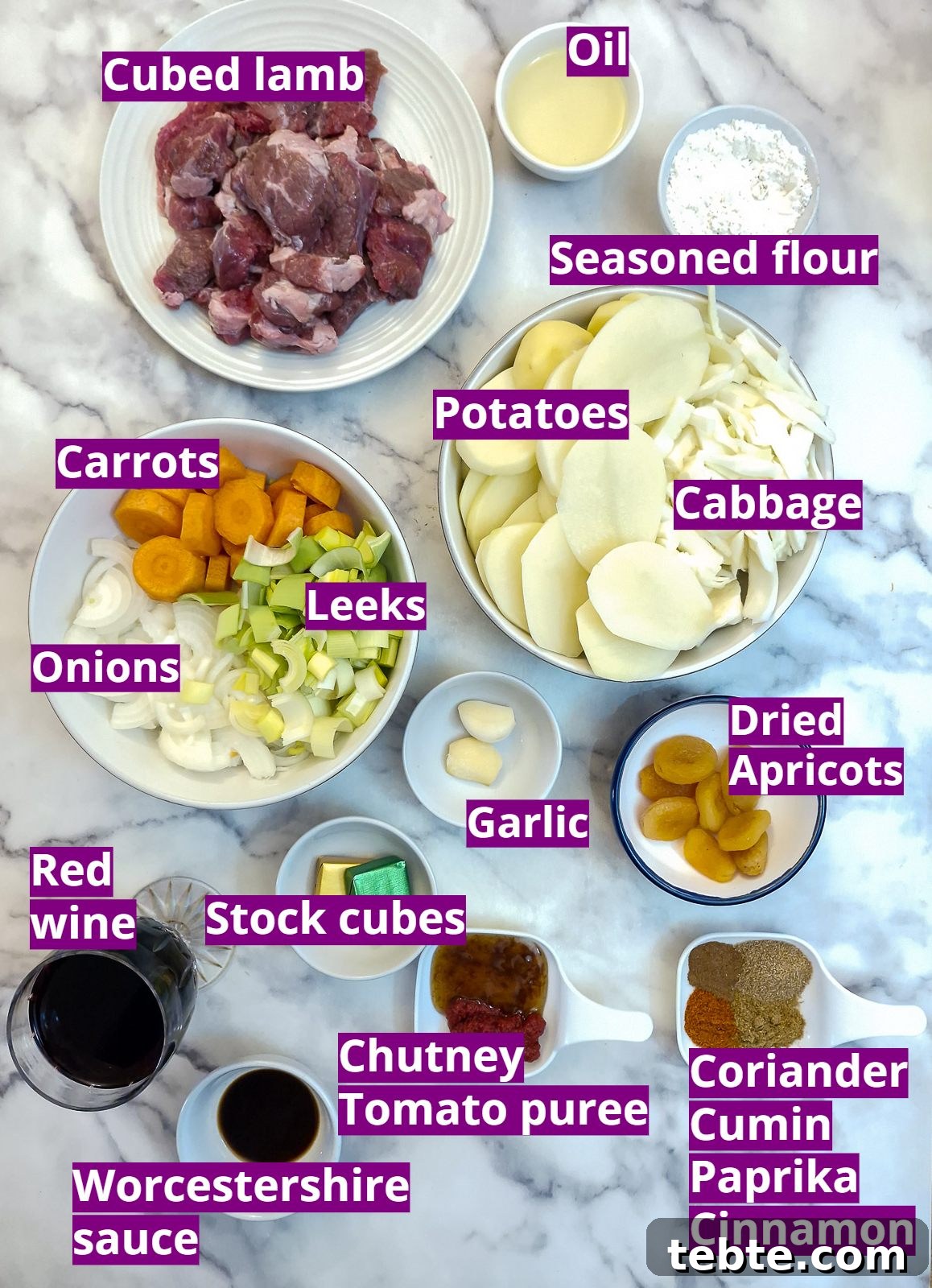
The ingredient list is straightforward: a cut of lamb, aromatic vegetables, a few warming spices, stock and condiments. Exact quantities and the printable recipe are included at the bottom of this post.
Meat
- Boneless lamb leg or shoulder: Cut into chunks. Both work well because the long, slow cook will render meat tender.
- Seasoned flour: A light coating of flour mixed with salt and pepper helps with browning and flavour.
- Neutral oil: Use a high smoke-point oil such as rapeseed or sunflower for searing.
Vegetables
You can swap vegetables to suit what you have, but keep roughly to the quantities given so the balance of layers cooks well. Layering—not mixing—is the key to the potjie style.
- Onions, leeks and garlic: The first layer; sliced and fragrant.
- Carrots and dried apricots: Carrots sliced into rings; apricots chopped for sweet pockets in the stew.
- Cabbage: Thinly sliced to form a middle layer.
- Potatoes: Peeled and thickly sliced to sit on top and steam during the long cook; brown them at the end if you like a golden finish.
Spices and flavourings
- Red wine or beer: Deglazes the pan and adds depth—substitute with grape or apple juice or extra stock for alcohol-free cooking.
- Warming spices: Ground cumin, coriander, paprika and a touch of cinnamon give a fragrant, rounded profile.
- Stock cubes: Use chicken or vegetable stock to make the cooking liquid; beef stock can overpower lamb, so avoid it here.
- Chutney, Worcestershire and tomato puree: These add sweet, savoury and umami notes to the gravy. The chutney provides the South African fruity twist; omit or replace if you prefer.
Oven method: step-by-step
This oven adaptation reproduces the layered, slow-cooked character of a potjie. Follow each step and resist stirring while it cooks.
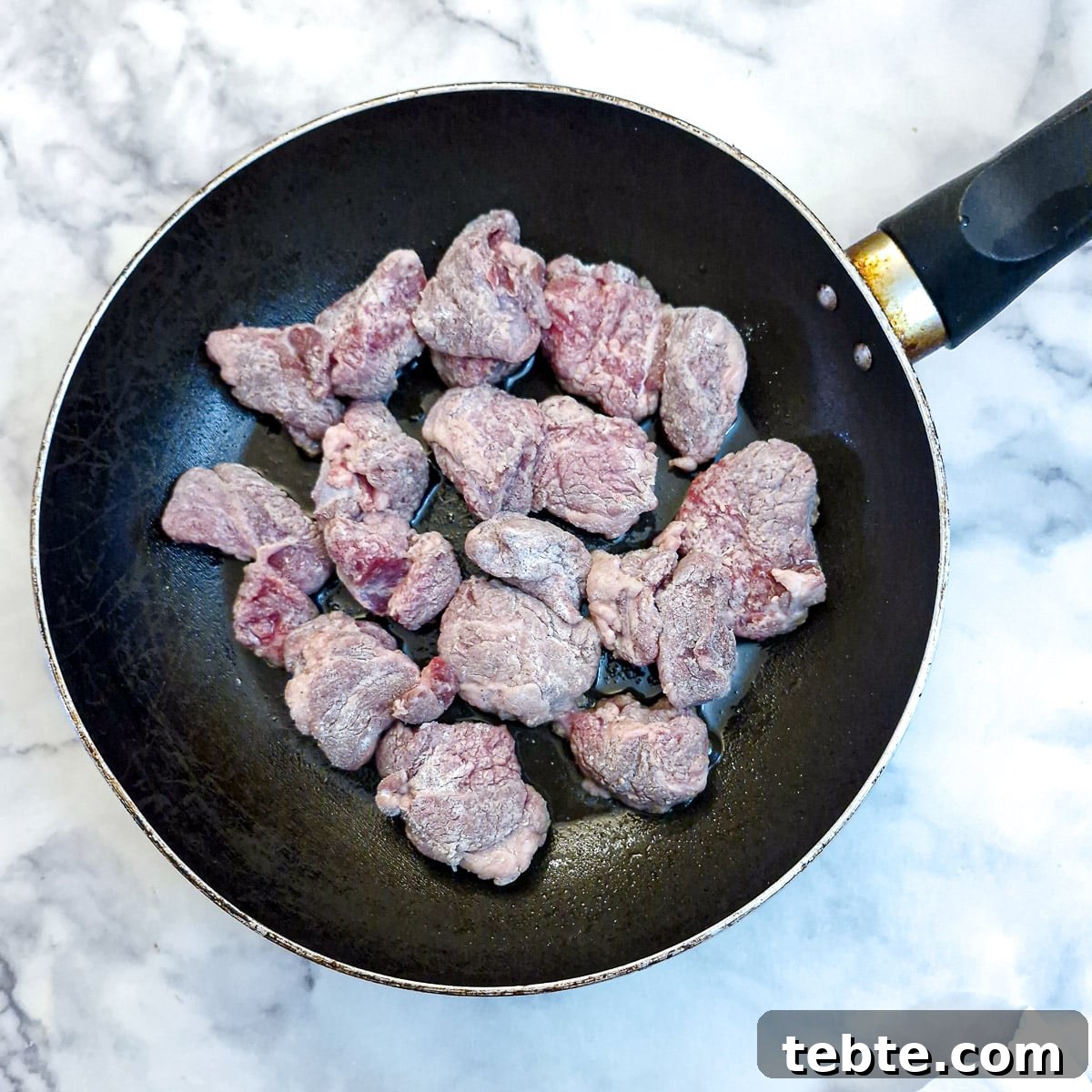
1. Pat the lamb dry and coat in seasoned flour. Heat oil in a frying pan until hot and sizzle a piece of lamb to test the pan.
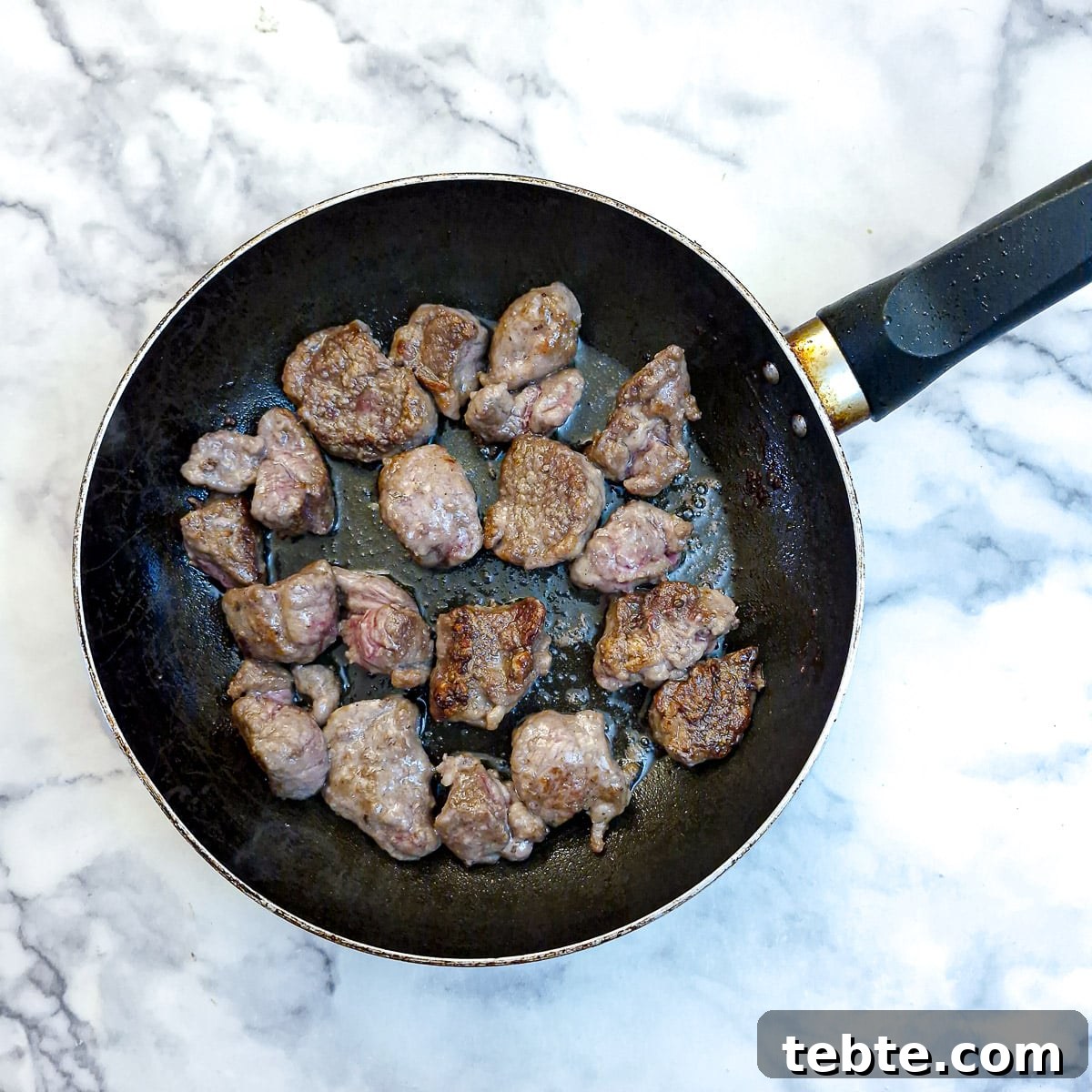
2. Sear the lamb pieces 2–3 minutes per side until well-browned, then transfer to a deep casserole dish.
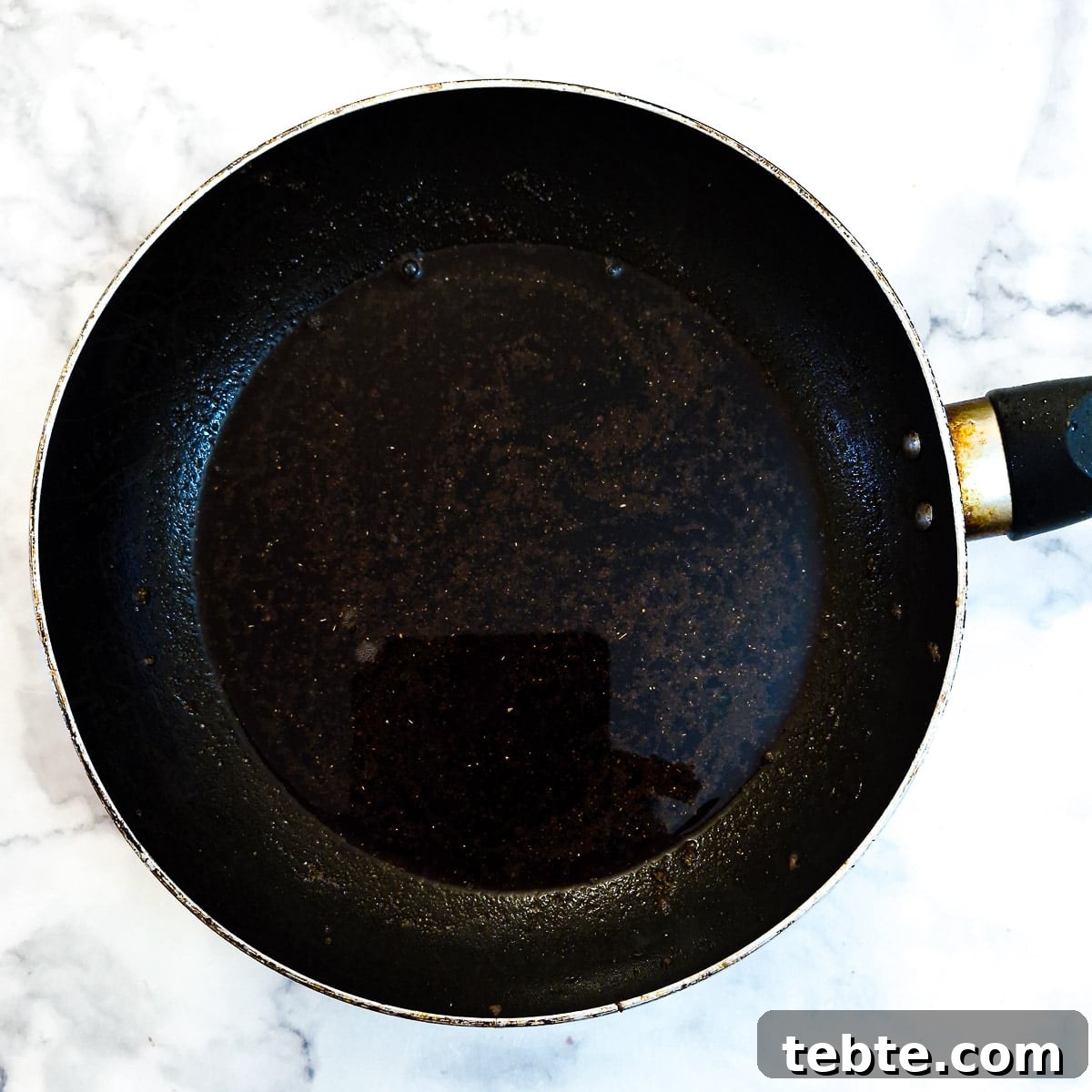
3. Lower the heat, add the ground spices and stir for about a minute to release their aroma. Pour in the wine or beer to deglaze the pan, scraping up browned bits, and pour this over the lamb.
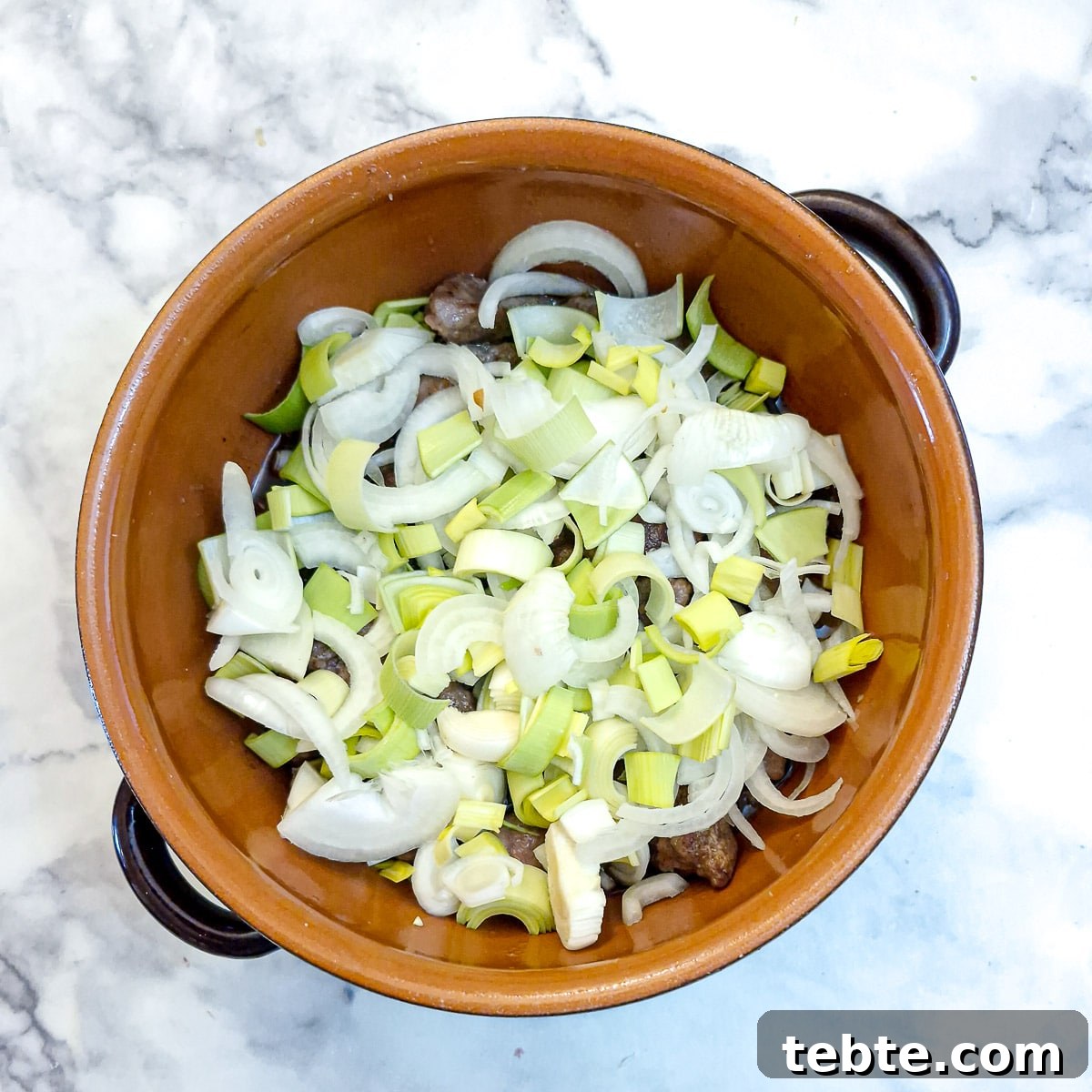
4. Layer the sliced onions, leeks and crushed garlic over the meat. Season each layer very lightly with salt and pepper.
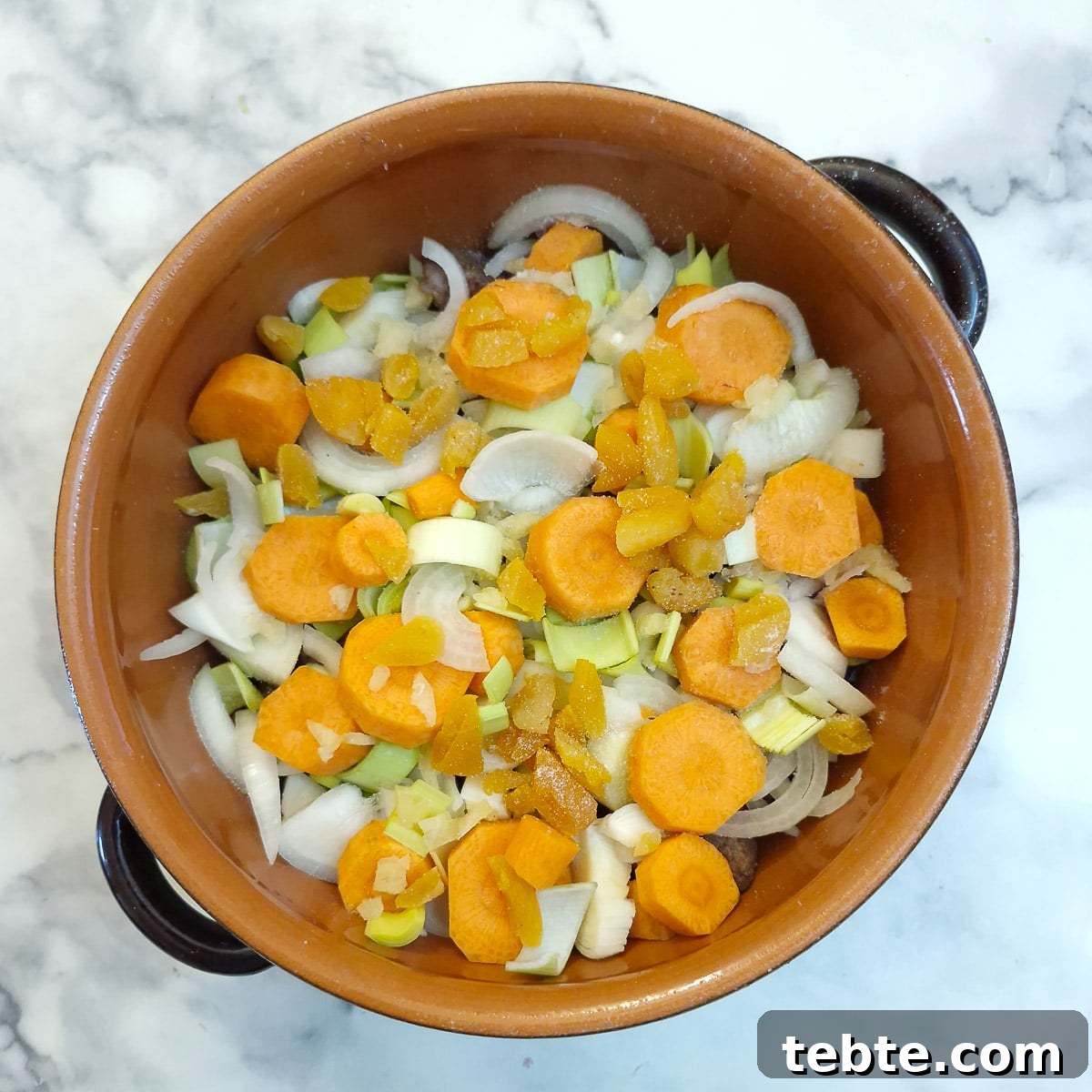
5. Add the carrot rings and chopped apricots as the next layer, again seasoning lightly.
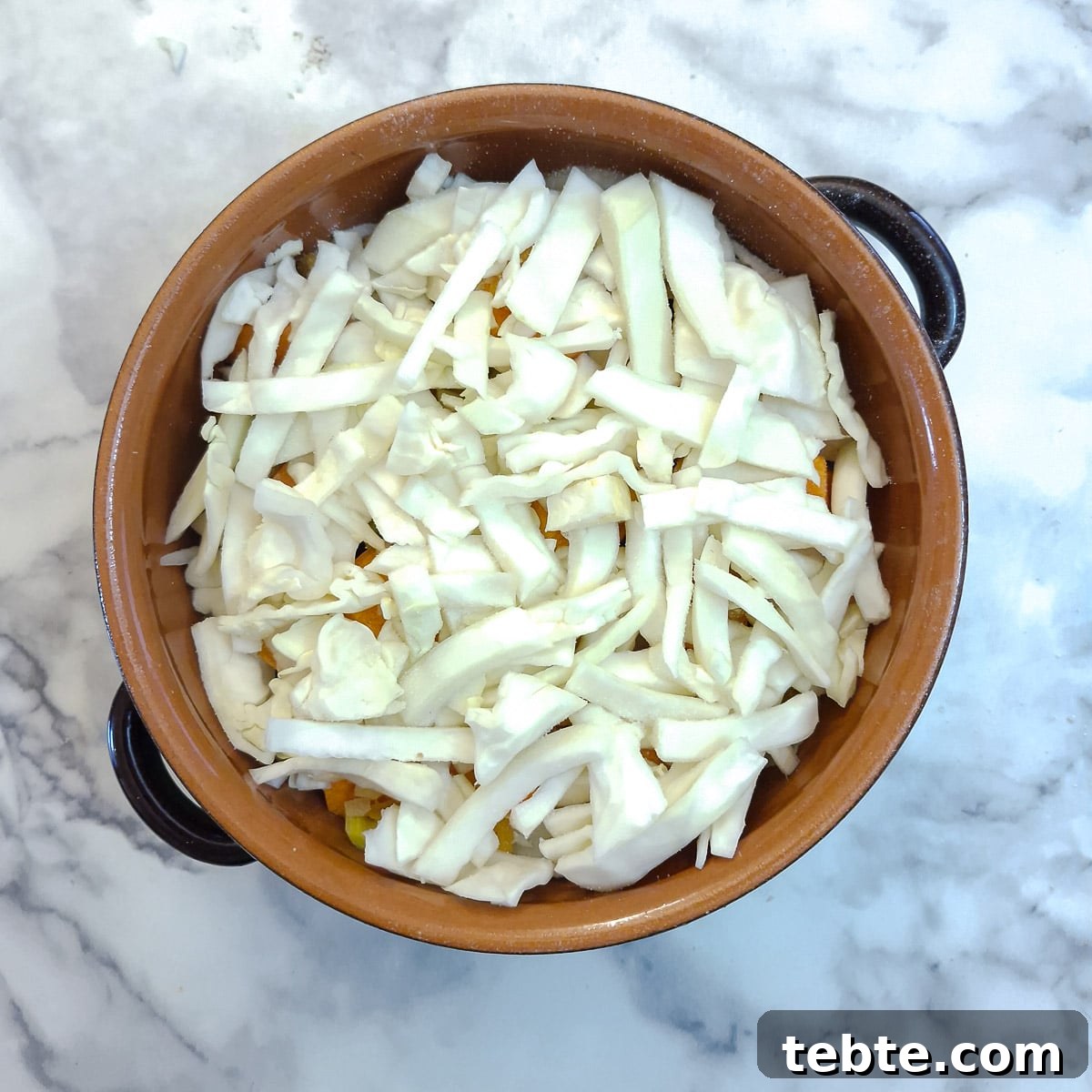
6. Add the sliced cabbage layer and season sparingly.
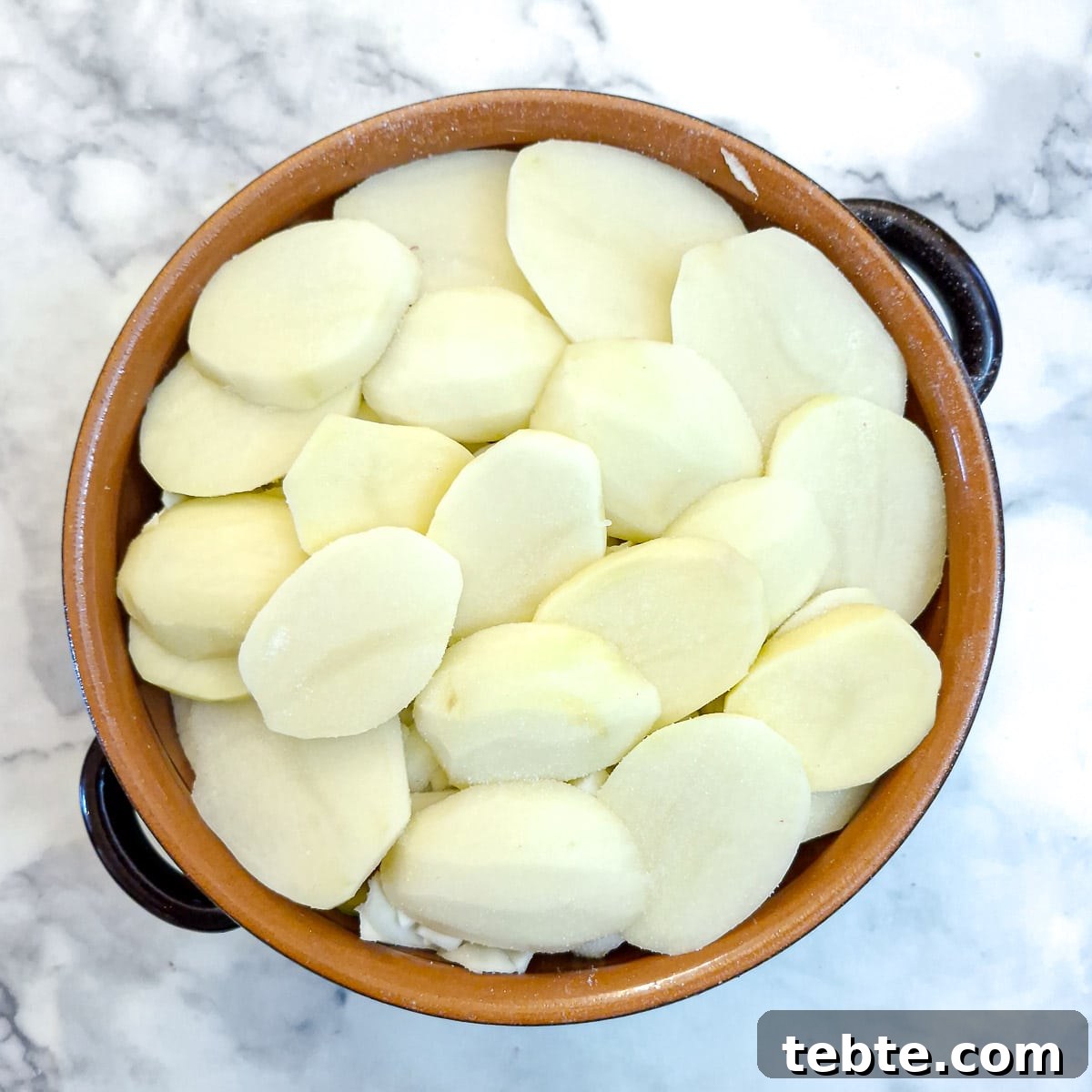
7. Arrange the thickly sliced potatoes on top, overlapping slightly. Season the potato layer lightly.
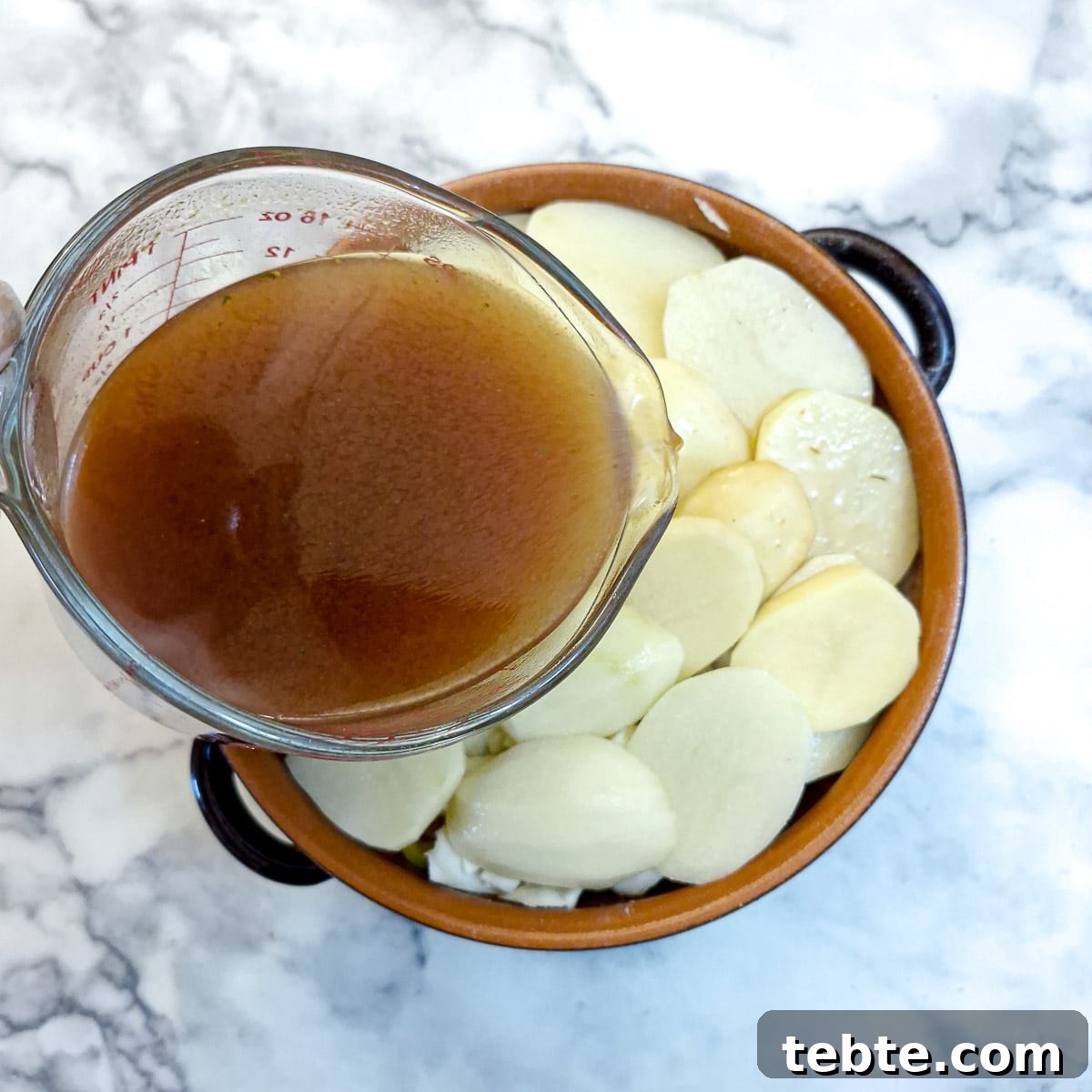
8. Dissolve stock cubes in boiling water and stir in Worcestershire sauce, tomato puree and chutney. Pour the stock around the meat and vegetables so it comes about halfway up the dish; reserve any extra for topping up during cooking.
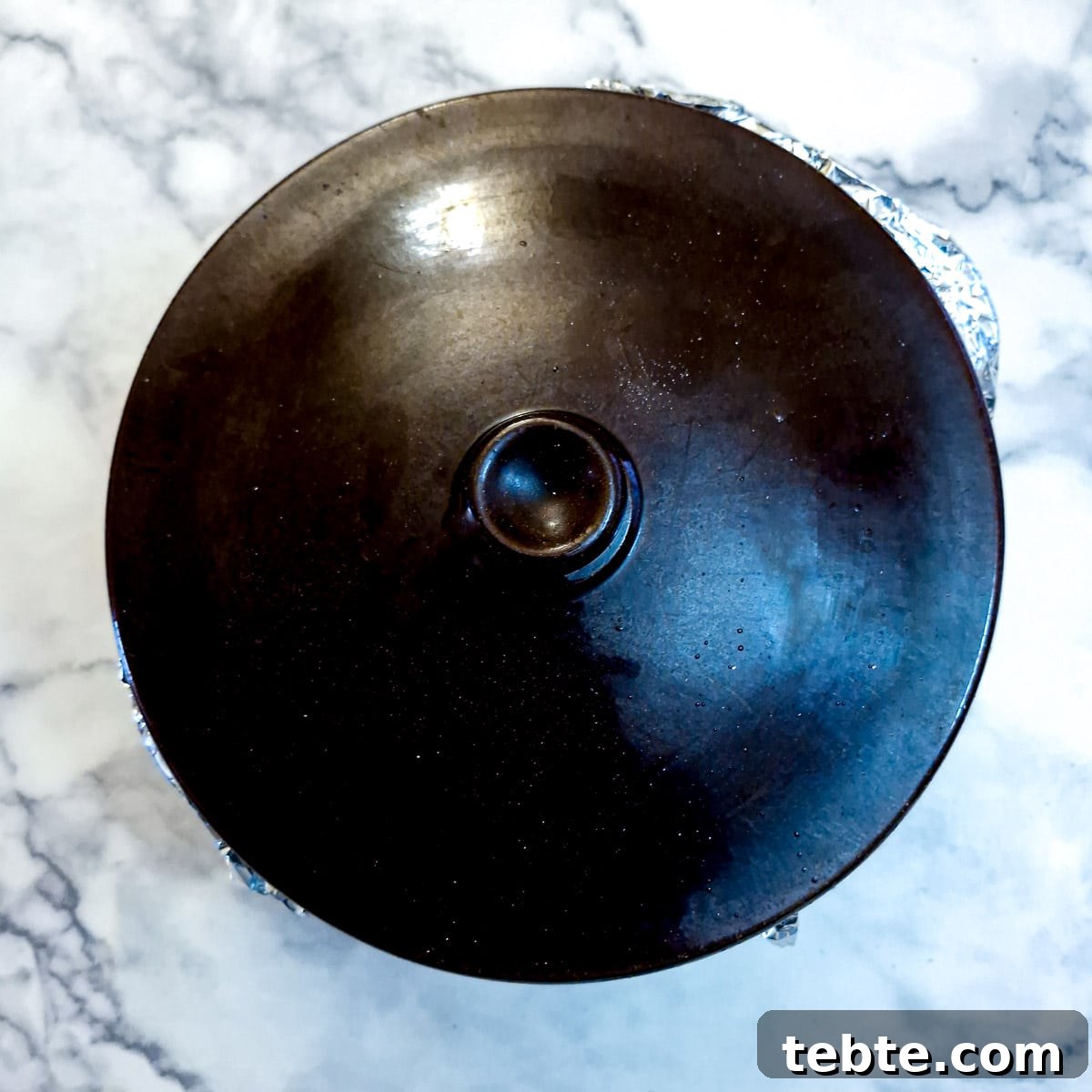
9. Seal the dish with a tight-fitting lid. If your lid is loose, press a cartouche of baking parchment over the potato layer and cover tightly with foil before adding the lid to keep steam in.
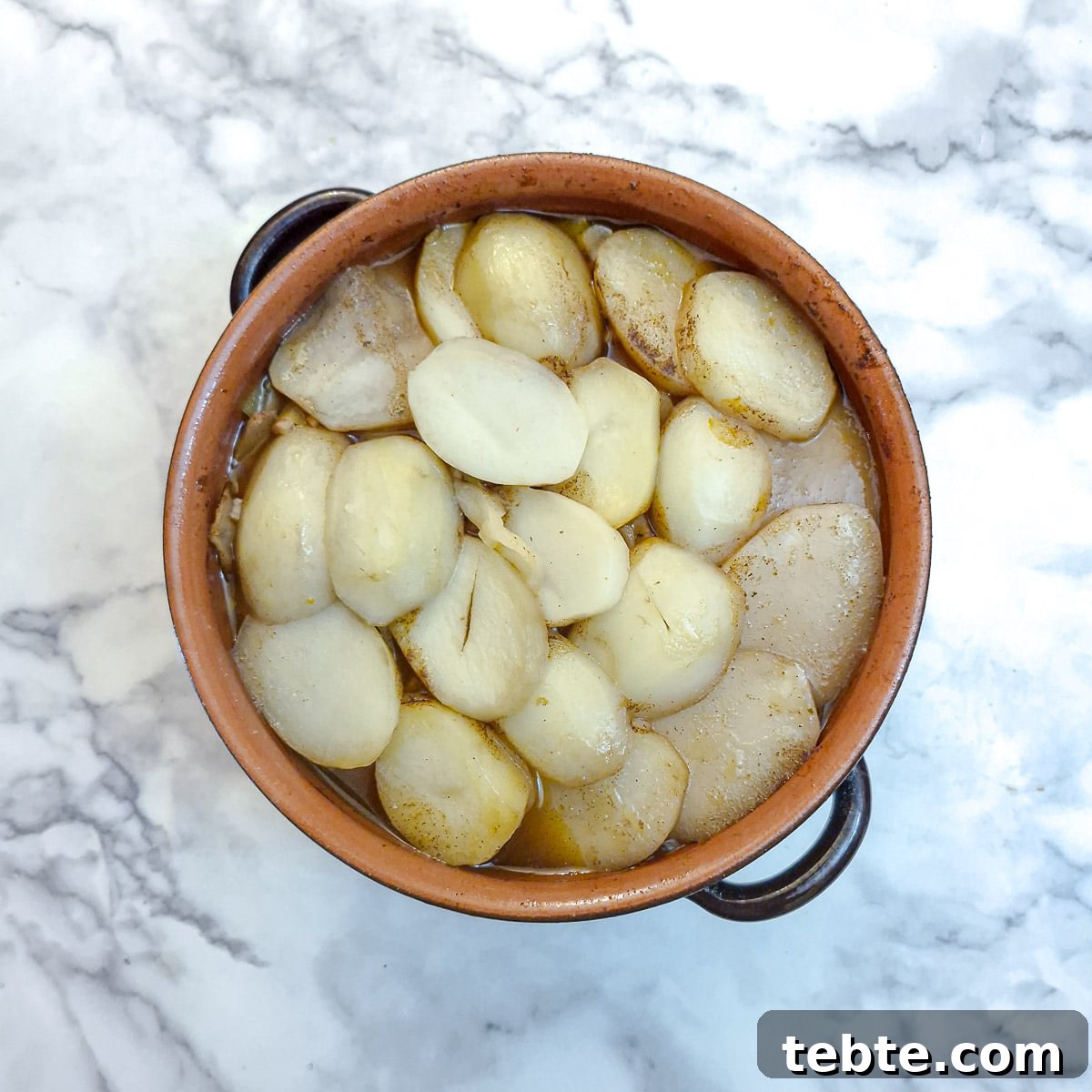
10. Bake at 150°C/300°F (conventional) or 140°C/285°F (fan) for 2–2½ hours. Check after about 1.5 hours and top up with reserved stock if the dish looks dry. DO NOT STIR while it cooks.
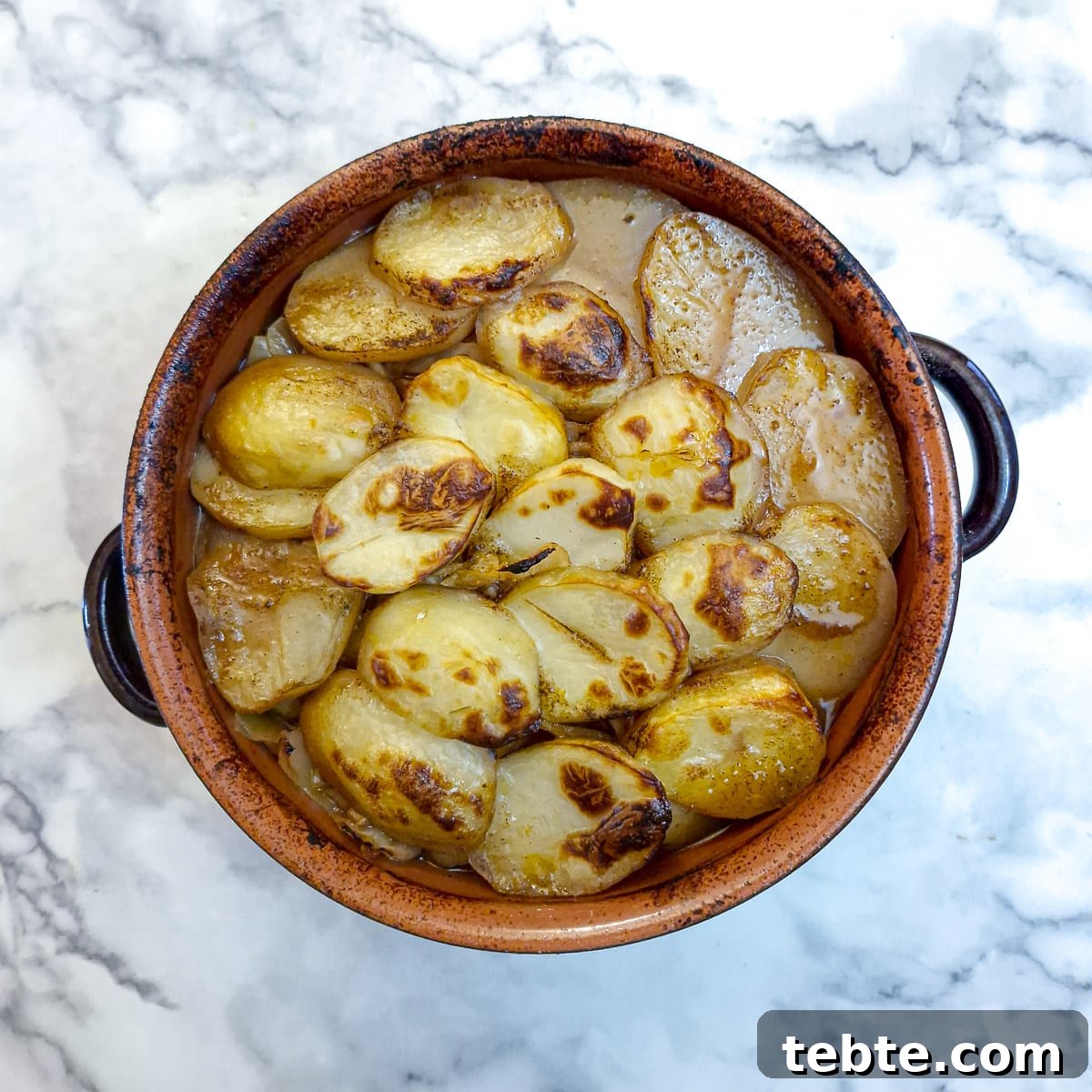
11. For the final 20 minutes remove the lid and increase the oven temperature to around 200°C/400°F so the potatoes can colour. Allow the casserole to rest 10–15 minutes before serving.
The gravy
The potjie produces a broth-like gravy rather than a thick sauce. It is rich in vegetable juices, stock and meat juices—perfect for dipping bread. If you prefer a thicker gravy, mix a tablespoon of flour into cooled stock before adding it (avoid adding flour to boiling liquid to prevent lumps).
How to serve
Serve the potjie straight from the casserole so everyone can take a mix of lamb, vegetables and potatoes with plenty of gravy. Crusty bread is ideal. Alternatively, serve with plain white rice or mielie pap for a traditional touch. A crisp green salad provides a fresh contrast and a bowl of chutney or Worcestershire sauce lets diners adjust sweetness or savoury tang to taste.
Tips for success
- Sear the meat: Browning lamb adds depth of flavour—don’t skip it.
- Bloom the spices: Fry spices briefly to release aromas before deglazing with wine or beer.
- Keep the layers: Assemble in layers and avoid stirring so textures remain distinct.
- Season lightly: Each layer gets a little seasoning; add conservatively to avoid over-salting.
- Control the liquid: Add enough stock to come partway up the ingredients; you can top up if needed as it cooks.
- Brown the potatoes: Removing the lid at the end and turning up the heat gives a more appealing finish.
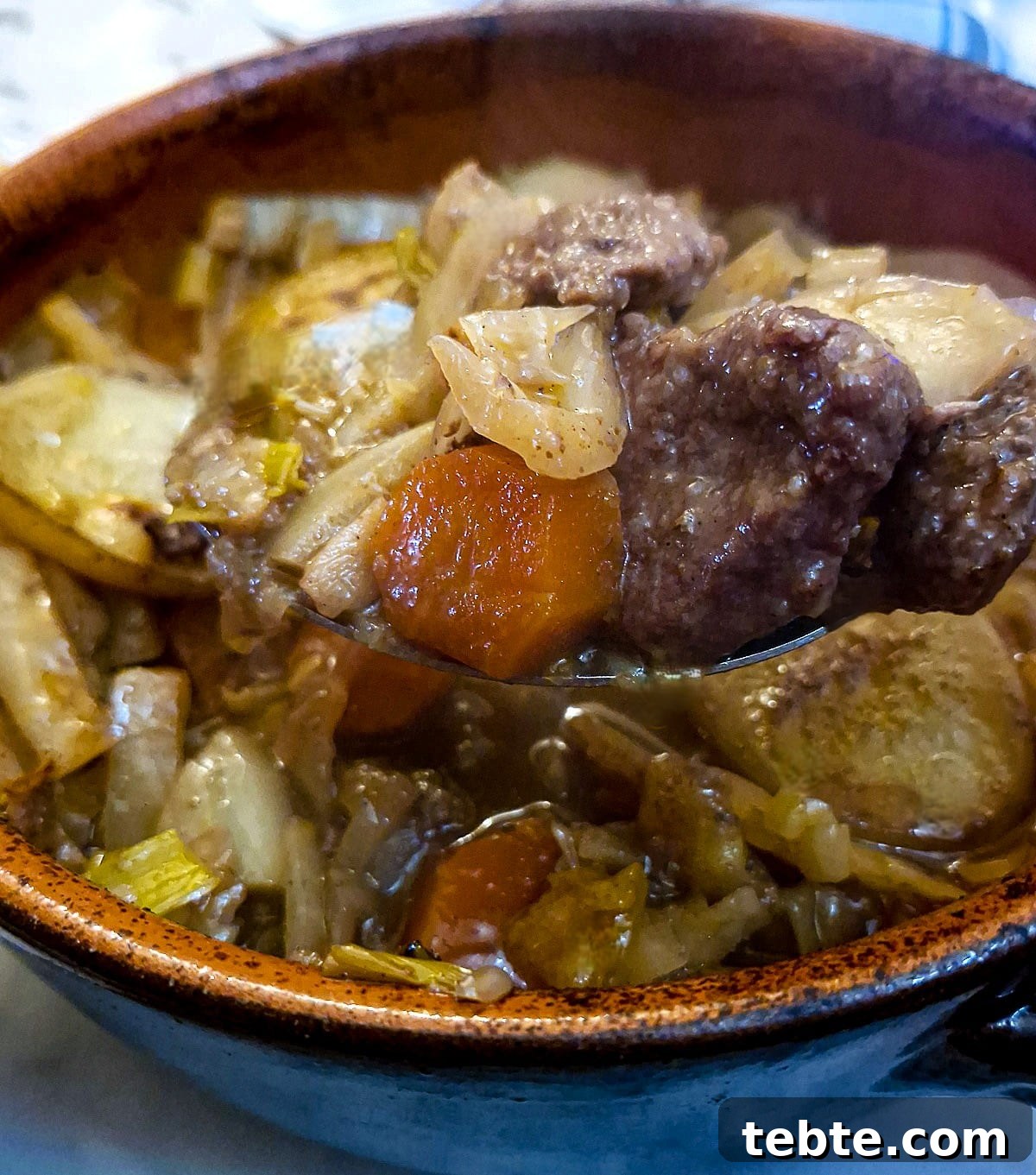
Variations
The potjie approach is flexible—adapt it to suit your pantry or mood. A few ideas:
- Tomato potjie: Add a tin of chopped tomatoes and reduce stock by a cup.
- Spicy version: Omit apricots and add chopped fresh chillies or dried chilli flakes.
- Fruitier: Add extra apricots, a tablespoon more chutney and a handful of sultanas; swap wine for orange juice for added brightness.
- Classic lamb: Omit chutney and apricots, add extra garlic and sprigs of rosemary.
- More veg: Add beans, butternut or sweet potato—softer veg will break down and enrich the gravy.
Equipment
A deep, lidded casserole dish (at least 4 inches / 6 cm deep) is essential to arrange layers and collect the vegetable juices that create the potjie’s flavourful gravy. If your lid isn’t tight, press a cartouche of baking parchment and foil over the surface before covering.
Storage and freezing
- Refrigerator: Store cooled leftovers in a covered container for up to 3 days.
- Freezer: Stews freeze well—portion and freeze for up to 3 months; defrost in the fridge before reheating.
- Reheating: Gently reheat on the stove until piping hot, or microwave portions for a few minutes.
FAQ
Traditionally, you cook a potjie over hot coals in a cast-iron cauldron. Brown the meat, then layer vegetables and potatoes, season lightly, add stock to come partway up the pot and cover. Simmer gently for a few hours without stirring; topping up coals keeps the temperature steady.
Yes—bone-in lamb adds extra flavour. If using bone-in pieces, allow an additional 30 minutes of cooking time and use a larger casserole.
A stew is usually combined and stirred, with ingredients mixed and often fully covered by liquid. A potjie is layered, cooked with less liquid, and left undisturbed so each ingredient keeps its identity.
Absolutely. Assemble layers in a deep lidded casserole and cook low and slow in the oven, keeping the dish sealed and avoiding stirring.
No. Stirring defeats the purpose of layering; leave the potjie undisturbed until serving.
Layering lets ingredients cook at their own pace: meat tenderises at the bottom, vegetables soften in the middle and potatoes steam on top, creating contrasting textures.
Build a bed of hot coals, brown meat and onions, add spices and deglaze, then layer vegetables and potatoes, pour in stock to partway up the pot, cover and cook over gentle heat for 2.5–3 hours without stirring. Add coals beneath as needed and rest before serving.
Save for later
If you want to keep this recipe for later, save the page or pin the image to a board so you can find it when you’re ready to cook.
Related recipes
For more South African-inspired dishes, check other recipes on the site. A few complementary dishes include tomato stews, chakalaka and boerewors preparations.
-
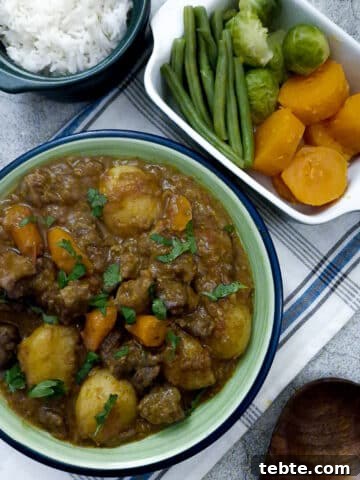
Tamatie bredie – tomato stew with lamb
-
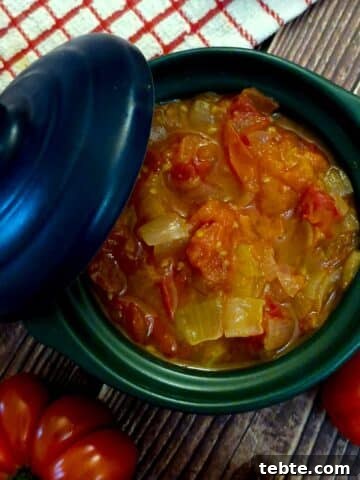
Quick and easy tamatie-smoor (South African tomato stew)
-
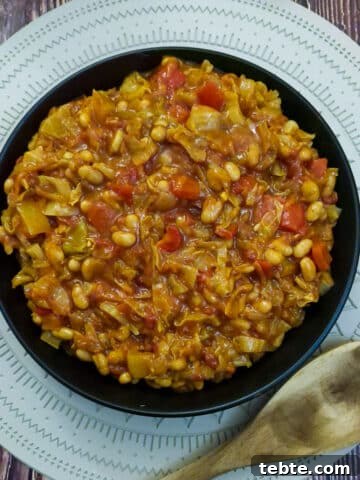
Easy chakalaka recipe – a traditional South African side dish
-
Boerewors puff pastry spiral

📋The recipe
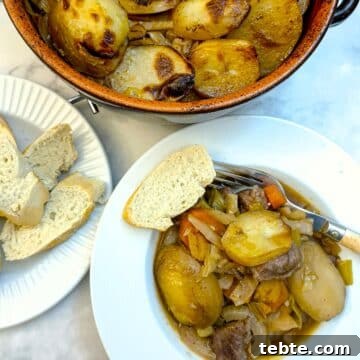
Lamb potjie with apricots – cooked in the oven
Equipment
- Large deep casserole dish with lid (at least 4 inches / 6 cm deep)
- Sharp knife and chopping board
- Frying pan to brown the lamb
- Measuring jug for stock
Ingredients
Lamb
- 1½ pounds / 700 g boneless lamb leg or shoulder, cut into chunks
- 3 tbsp flour
- 1 tsp salt
- ½ tsp black pepper
- 2 tbsp vegetable oil
Vegetables
- 2 large onions, peeled and sliced
- 1 large leek, halved lengthwise and sliced
- 3 cloves garlic, crushed or finely sliced
- 3 large carrots, peeled and sliced into rings
- ¼ medium white cabbage, roughly chopped
- 4 medium potatoes, peeled and thickly sliced
Spices
- 2 tsp ground coriander
- 2 tsp ground cumin
- 1 tsp paprika (sweet or smoked)
- 1 tsp ground cinnamon
Stock and flavourings
- ½ cup / 120 ml red wine or beer (optional)
- 2 cups / 480 ml chicken or vegetable stock (made from cubes)
- 2 tbsp Worcestershire sauce
- 2 tbsp tomato puree or paste
- 2 tbsp fruity chutney
- 10 dried apricots, quartered
- Salt and black pepper to taste
- 1 tbsp / 10 g flour (optional, to thicken gravy)
Instructions
Preparation
- Prepare and slice all vegetables. Keep garlic in a small bowl ready to add.
- Pat lamb dry and coat with seasoned flour.
Brown the lamb
- Heat oil in a pan until hot and sear lamb pieces 2–3 minutes per side until browned. Transfer to the casserole dish.
- Reduce heat, add spices and fry briefly to release aroma. Add wine or beer to deglaze the pan, simmer 2–3 minutes, then pour over the lamb.
Assemble
- Layer onions, leeks and garlic over the lamb and season lightly. Add carrots and apricots as the next layer, then cabbage. Season each layer sparingly.
- Arrange potato slices on top, overlapping slightly, and season lightly.
Add the stock and cook
- Dissolve stock cubes in boiling water and stir in Worcestershire sauce, tomato puree and chutney. For thicker gravy, cool the stock and whisk in flour before pouring in.
- Pour enough stock to come about halfway up the ingredients (just below the potatoes) and reserve any extra. Cover the casserole tightly.
- Preheat oven to 150°C/300°F (140°C/285°F fan). Bake covered for 2–2½ hours. Check once or twice and top up with reserved stock if the casserole looks dry. Do not stir.
- Remove the lid for the final 20 minutes and increase temperature to about 200°C/400°F to brown the potatoes. Rest 15 minutes before serving.
Notes
Recipe tips:
- Searing the meat and frying spices briefly add layers of flavour—worth the extra few minutes.
- Layer ingredients and avoid stirring during the long cook to preserve textures.
- Season lightly; you only need a small amount of salt for the whole dish.
- If the pot is drying during cooking, top up with the reserved stock rather than adding large amounts at once.
Storage: Refrigerate leftovers in a covered container for up to 3 days. Freeze portions for up to 3 months and thaw in the fridge before reheating. Reheat gently on the stove until piping hot or microwave for a few minutes.
Nutrition
| Carbs 46.3 g
| Protein 54.4 g
| Fat 24.3 g
Nutrition information is an estimate calculated with an online tool and is provided for guidance only.
If you enjoyed this recipe, please leave a comment and rating. For questions or feedback you can contact the author via the website.
Explore more recipes and variations on the site to find other South African favourites and easy weeknight meals.