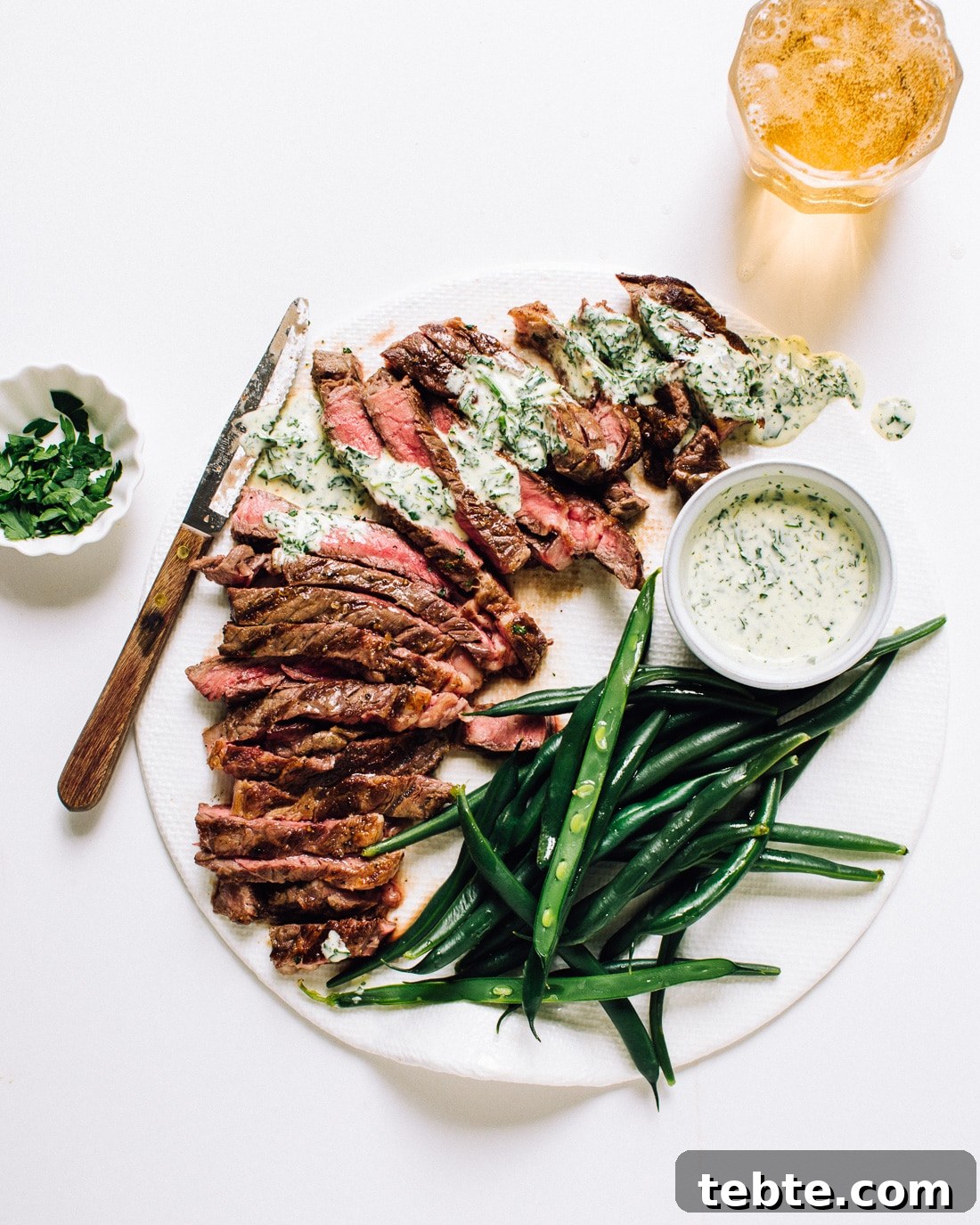
A juicy, flavorful flat iron steak recipe for the grill that turns out perfectly every time. Learn how to cook it like a pro with practical tips and a bright, creamy Peruvian green sauce (aji verde).
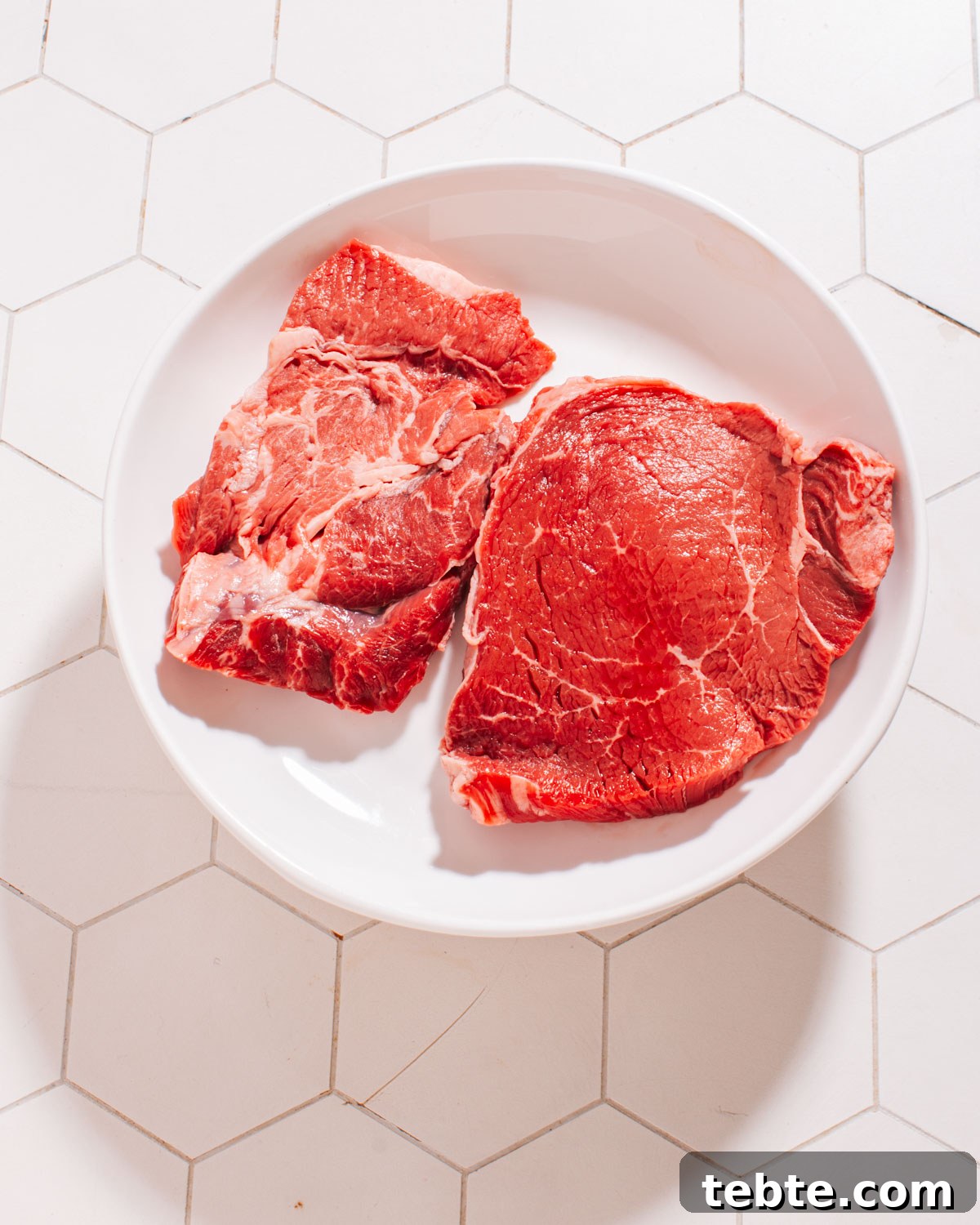
What is Flat Iron Steak?
Flat iron steak is cut from the shoulder (chuck) of the cow. While that area is traditionally tougher, the flat iron becomes tender after the removal of the central connective tissue. It has good marbling, giving it rich beefy flavor similar to a ribeye but generally at a lower price point.
It’s versatile — excellent for grilling, pan-searing, or broiling. For the best texture, cook it over high heat, then slice thinly against the grain. Flat iron is one of the most tender cuts, second only to filet mignon, offering a great balance of tenderness, flavor, and value.
Here’s What You Need
This recipe keeps the steak preparation simple and pairs it with a creamy, herb-forward Peruvian green sauce (aji verde). Gather the ingredients and tools below before you start.
Flat Iron Steak Recipe Ingredients
- Flat iron steak (see substitutes below if unavailable).
- Cooking oil: Use an oil with a high smoke point to get a good sear — avocado oil, light olive oil (not extra virgin), canola, or vegetable oil work well.
- Coarse salt and black pepper: Kosher salt and freshly cracked black pepper enhance the meat’s natural flavor and help form a tasty crust.
Substitutes for Flat Iron Steak
If you can’t find flat iron, these cuts are good alternatives:
- Hanger steak — similar tenderness and flavor with a slightly stronger beefy taste.
- Skirt steak — chewier but great for quick grilling or high-heat cooking.
- Flank steak — leaner and a bit tougher; slice thin against the grain for best results.
- Ribeye — more expensive but rich and tender with similar flavor intensity.
Adjust cooking time by thickness and desired doneness when using substitutes.
Tools Needed
Minimal gear required:
- Gas or charcoal grill, or a grill pan. A very hot cast-iron skillet will also work well.
- A brush (or paper towel) to coat the steak with oil and a small bowl for the oil.
- Cutting board and a sharp knife for slicing.
- An instant-read meat thermometer to check internal temperature for perfect doneness.
How to Make Flat Iron Steak: An Easy Guide
Step-by-step method used at home for consistent, delicious results.
Prepare the sauce
Add the sauce ingredients (cilantro, parsley, garlic, green chilies or jalapeño, lime juice, coarse salt, olive oil, and mayonnaise) to a small food processor or blender. Pulse until fairly smooth but still slightly textured.
Prepare the steak
Brush both sides of the steak lightly with oil and season generously with kosher salt and cracked black pepper.
Grill the steak
Preheat your grill or grill pan over high heat for 5–10 minutes until very hot. Place the steak over direct heat and let it sear without moving it. Only flip once the steak releases easily when you lift a corner with tongs and the bottom has a deep brown crust and distinct grill marks.
Finish cooking on the second side until the steak reaches the target internal temperature for your preferred doneness (see chart below). For medium-rare, aim for 125°F when you remove it from the heat; carryover cooking will raise the temperature a few degrees as it rests.
Rest and serve
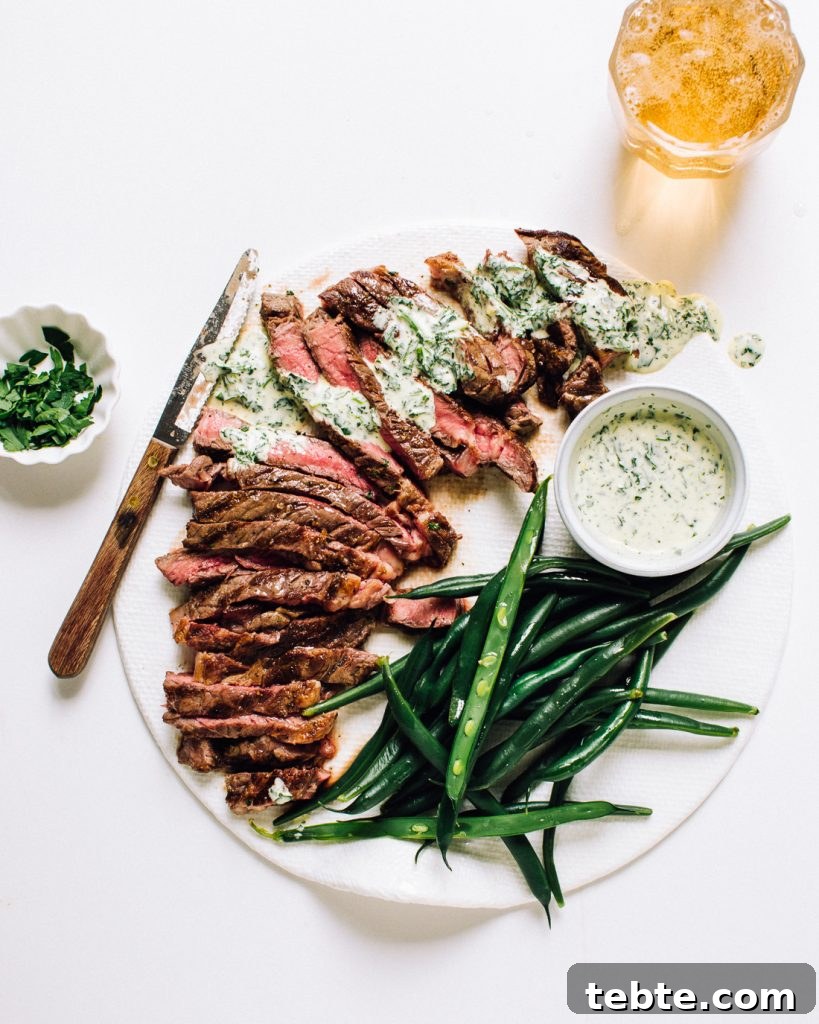
Transfer the steak to a cutting board and tent loosely with foil. Let it rest for about 5 minutes to let the juices redistribute. Slice thinly against the grain and drizzle the creamy Peruvian green sauce over the slices or serve it alongside.
Internal Temperature for Flat Iron Steak Doneness
Use an instant-read thermometer in the thickest part of the steak. Remove from heat about 5°F below target as the meat will continue to cook while resting.
Rare: 120–125°F
Medium-rare: 130–135°F
Medium: 140–145°F
Medium-well: 150–155°F
Well-done: 160°F+
5 Common Mistakes to Avoid
Common pitfalls and how to avoid them:
- Overcooking: Aim for medium-rare; overcooking makes the steak tough.
- Skipping the rest: Resting preserves juices; don’t skip the 5-minute tent.
- Under-seasoning: Season generously with salt and pepper for a flavorful crust.
- Cold grill or pan: Preheat thoroughly so the surface is shimmering hot for a good sear.
- Cutting with the grain: Always slice against the grain to shorten muscle fibers and improve tenderness.
Make-Ahead and Storage
Cooked flat iron steak keeps in the refrigerator for up to 3 days when stored in an airtight container. To reheat, warm gently in a skillet over low heat to avoid overcooking. Leftovers can also be frozen and later used in sandwiches, salads, or tacos after thawing.
How to Serve This Flat Iron Steak
Serve the steak with a generous drizzle of the creamy Peruvian aji verde or alongside other sauces like chimichurri or garlic butter. Complement the meal with classic sides:
- Creamy mashed potatoes
- Cornbread casserole
- Pan-fried asparagus or green beans
Leftover steak is excellent thinly sliced in sandwiches, on salads, or in tacos.
Final Notes & Pro Tips
- Patience on the grill: Let the steak sear without flipping too soon to build a flavorful crust.
- Consider marinating: If you want extra flavor and tenderness, marinate overnight in your favorite marinade with an acidic component.
- Use a meat thermometer: The thermometer is the most reliable way to hit your desired doneness.
- Resting is essential: Rest the steak to redistribute juices for a juicier bite.
- Slice against the grain: This shortens fibers and makes each bite more tender.
FAQs About Flat Iron Steak
Is flat iron steak very tender? Yes. It’s known for its tenderness and is excellent for grilling and pan-searing.
Can you eat flat iron steak rare? Yes, it can be eaten rare, but medium-rare is often recommended for the best balance of tenderness and flavor.
Is flat iron steak more tender than sirloin? Generally, yes — flat iron tends to be more tender because of its fine grain and marbling.
How do I know when it’s cooked right? For medium-rare remove at about 125°F and allow carryover to reach the final range. Use an instant-read probe in the thickest part.
Can I use a different cut? Yes. Flank, skirt, hanger, top blade, or ribeye can be used as substitutes; adjust cooking time accordingly.
How to make it more tender? Marinate with an acidic ingredient, rest after cooking, and slice against the grain to maximize tenderness.
Other Steak Recipes You’ll Love
Try other steak preparations like steak stir-fry, Instant Pot steak, Salisbury steak, or steak benedict for variety.
Easy Flat Iron Steak Recipe (with Creamy Peruvian Green Sauce)
Juicy flat iron steak served with a creamy Peruvian aji verde. Prep 10 minutes · Cook 8 minutes · Serves 4.
Ingredients
For Steak
- 1 lb flat iron steak
- 1 tbsp vegetable or high-smoke-point oil
- 1 tsp kosher salt
- 1/4 tsp black pepper
For Sauce (Aji Verde)
- 1/2 cup fresh cilantro
- 1/2 cup fresh parsley
- 3 medium garlic cloves
- 2 small green chilies or 1 jalapeño
- 1/2 lime, juiced
- 3/4 tsp coarse salt
- 1/4 cup olive oil
- 1/3 cup mayonnaise
Instructions
- Preheat a grill or grill pan over high heat for 5–10 minutes.
- Brush steak with oil and season generously with salt and pepper. Grill over direct heat until well seared on the first side and it releases easily. Flip and finish until internal temperature reaches about 125°F for medium-rare (adjust for desired doneness).
- While the steak rests, add all sauce ingredients to a small food processor or blender and pulse until fairly smooth but slightly textured.
- Transfer steak to a cutting board, tent with foil, and rest 5 minutes. Slice against the grain and serve with the green sauce drizzled over or on the side.
Notes
- If you don’t have a grill, use a very hot cast-iron skillet for an excellent sear.
- Season well for best flavor and always rest the steak to keep it juicy.
- Substitute cuts (hanger, skirt, flank, ribeye) will require small adjustments to cooking time and technique.
Nutrition (approx.)
Calories: 492 kcal | Carbs: 3 g | Protein: 22 g | Fat: 43 g (values are approximate)